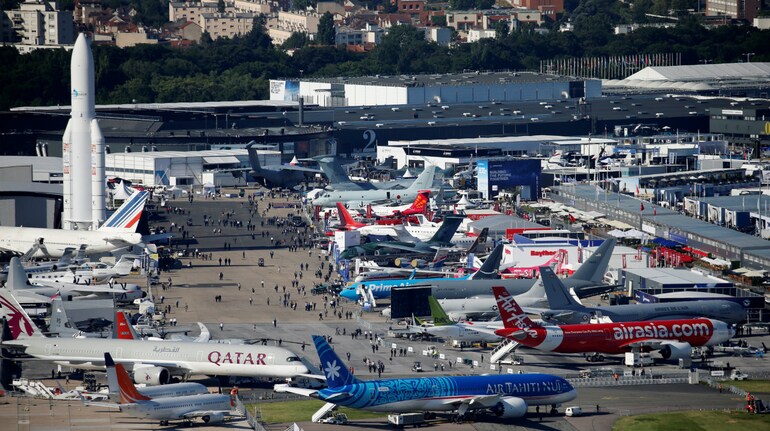

Air travel to and over the Middle East is facing renewed disruption as escalating geopolitical tensions prompt airlines to suspend services and reroute flights, underscoring how quickly security concerns in the region can ripple through global aviation networks.
On January 23, Air France said it would temporarily suspend flights to Dubai, citing the deteriorating security situation. The French carrier said it was “closely monitoring developments” across the Middle East and the airspace its aircraft typically overfly, stressing that safety considerations remain paramount.
Similarly, KLM, without providing any reason, said it is suspending flight operations to Middle East and will avoid flying through the airspace of several countries in the region.
The Dutch airline said will is halting flights until further notice to Tel Aviv, Dubai, Dammam, Riyadh and will not fly through Iraq, Iran, Israel and various other Gulf nations.
Airlines under pressure
While Air France and KLM are among the first European carriers to announce suspensions, the situation could have broader implications for European airlines with heavy Middle East connectivity or hub reliance, Asian carriers operating Europe–Middle East–US routes and Gulf-based airlines if airspace restrictions widen further.
Avoiding the airspace over some of the middle eastern countries will lead to longer flights, more fuel costs and disruption to services connecting to Europe, Asia and Africa.
The flight tickets could also become pricier, apart from all the hassles over cancellation of services.
Airlines globally have become increasingly sensitive to Middle East volatility due to the region’s role as a key aviation crossroads. Any escalation could force more carriers to suspend routes or undertake costly detours, with consequences for passengers, cargo flows and airline economics worldwide.
'We are also ready for everything': Iran on Trump's 'wipe off the face of earth' warning
For now, carriers say they are assessing the situation in real time, but the episode once again highlights how geopolitical shocks in the Gulf can swiftly translate into global aviation disruptions.
Growing tensions
President Donald Trump said on Thursday that a US "armada" was heading toward the Gulf and that Washington was watching Iran closely, even after downplaying the prospect of imminent military action and saying Tehran appeared interested in talks.
Trump has repeatedly threatened US strikes on Iran over the crackdown on the protest movement that recently erupted across the Islamic republic.
The prospect of military action appeared to recede last week after the White House said Tehran had halted planned executions of demonstrators, but Trump on Thursday confirmed continuing military preparations.
With agency inputsDiscover the latest Business News, Sensex, and Nifty updates. Obtain Personal Finance insights, tax queries, and expert opinions on Moneycontrol or download the Moneycontrol App to stay updated!
Find the best of Al News in one place, specially curated for you every weekend.
Stay on top of the latest tech trends and biggest startup news.