
Amid the escalating tensions in West Asia arising out of the US-Israel war with Iran, Qatar’s Minister of State for Foreign Affairs Mohammed bin Abdulaziz Al-Khulaifi urged all parties to end the military operation and return to the negotiating table.
During a news interview, to a question on how US is managing to help mitigate the crisis, Khulaifi said, "Attacks on Qatar must immediately stop. The line of communication is open with the US. We support the pathway of peace and believe in resolving conflicts through peaceful means. I urge all parties end the military operation and return to the negotiating table."
Stating that the war is not just limited to Israel and Iran but is spiralling into Qatar and other countries in the Middle East, the minister said, "Now, we are not just talking about Qatar but are also talking about the concerns of regional parties as well. Aggression on Qatar and GCC countries are legitimate concerns. Those concerns have been discussed internationally with our partners as well."
The Gulf Cooperation Council (GCC) is a political and economic alliance of six countries in the Persian Gulf region ---Saudi Arabia, UAE, Qatar, Kuwait, Oman and Bahrain---that was created to facilitate cooperation on security, economy, and regional policies.
It controls a large share of the world’s oil and gas, hosts major US military bases and plays a big role in global energy prices. Countries such as Qatar and Saudi Arabia are among the world’s biggest energy exporters.
On being asked that apart from shaking up the global markers and energy sector, what other repurcussions may follow if the war continues, Khulaifi said, "GCC security is not only a regional concern, it's a global concern. Over the years, GCC countries have been contributing towards the stability of global markets through our energy infrastructure, international trade, diplomacy as well as an international engagement."
"Limiting the GCC countries from fulfiling that role would have a major impact on the global market...what it the need of the hour is a global solution that can protect the movement or the supply chain from the GCC to the world," said Khulaifi.
The recent Iranian attacks on Qatar and other Gulf countries are part of the US-Israel strikes on Iran. On February 28, Iran launched a large barrage of missiles toward Qatar, most of which were intercepted by Qatari air defenses.
The missiles were aimed at strategic sites, including near Hamad International Airport and the Al Udeid Air Base, the largest US military base in the Middle East. Iran’s strategy was to signal that if Gulf countries allowed the US to attack Tehran from their territory, they can also be targeted.
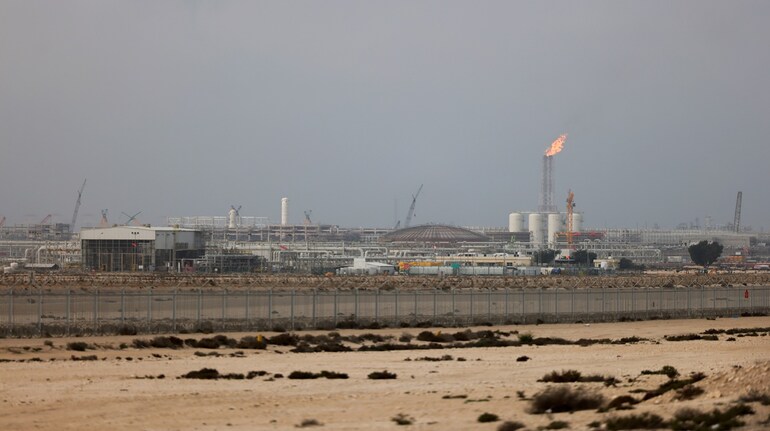
Iran did not just fire missiles and drones but also targeted energy infrastructure across the Gulf, affecting global oil and gas markets worldwide. The Qatar government condemned the Iranian strikes on its territory. However, it avoided declaring a war and urged de-escalation.
Discover the latest Business News, Sensex, and Nifty updates. Obtain Personal Finance insights, tax queries, and expert opinions on Moneycontrol or download the Moneycontrol App to stay updated!
Find the best of Al News in one place, specially curated for you every weekend.
Stay on top of the latest tech trends and biggest startup news.