




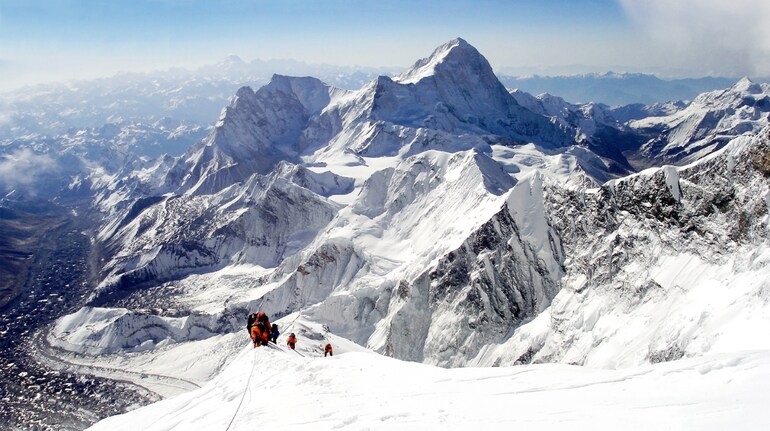
Nepal has scrapped a long-running scheme that required climbers on Mount Everest to bring back a minimum amount of garbage or lose a refundable deposit, with officials admitting the policy failed to reduce waste on the world’s highest peak, the BBC reported.
Authorities said the refundable deposit, about Rs 3.3 lakh per climber (around $4,000), had become an administrative burden and delivered “no tangible result,” even as rubbish continued to pile up on the mountain.
Why the deposit rule failed
Under the scheme, climbers were required to bring down at least 8 kg of waste to recover their deposit. But officials told the BBC that most of the trash returned came from lower camps, while garbage continued to accumulate at higher elevations where monitoring is weak.
“From higher camps, people tend to bring back oxygen bottles only,” Tshering Sherpa, chief executive officer of the Sagarmatha Pollution Control Committee, told the BBC. Tents, food packaging and cans were largely left behind, he said.
Each climber generates up to 12 kg of waste during expeditions that can last six weeks, according to officials cited by the BBC.
Monitoring gaps at high altitude
Local authorities said the lack of enforcement beyond a single checkpoint above the Khumbu Icefall undermined the scheme.
“Apart from the checkpoint, there is no monitoring of what climbers are doing,” Tshering Sherpa told the BBC, adding that this allowed waste to accumulate in the most sensitive zones of the mountain.
What replaces the scheme
Nepalese authorities now plan to introduce a non-refundable clean-up fee, likely set at the same level of about Rs 3.3 lakh per climber, once approved by parliament, the BBC reported.
The money will be used to establish a checkpoint at Camp Two and deploy mountain rangers to monitor climbers in higher camps and ensure waste is brought down.
Sherpa community backs the change
Local leaders said the Sherpa community had long questioned the effectiveness of the deposit system.
“We were not aware of anyone who was penalised for not bringing their trash down,” Mingma Sherpa, chairperson of the Pasang Lhamu rural municipality, told the BBC. The new fee would create a dedicated fund for clean-up and enforcement, he said.
Why the stakes are rising
Although there is no formal audit of waste on Everest, estimates cited by the BBC suggest tens of tonnes of garbage—including human waste that does not decompose at freezing altitudes—remain on the mountain.
With around 400 climbers and many more support staff attempting Everest each year, officials say the pressure on the mountain’s fragile ecosystem is only increasing.
Discover the latest Business News, Sensex, and Nifty updates. Obtain Personal Finance insights, tax queries, and expert opinions on Moneycontrol or download the Moneycontrol App to stay updated!
Find the best of Al News in one place, specially curated for you every weekend.
Stay on top of the latest tech trends and biggest startup news.