-
My Account


















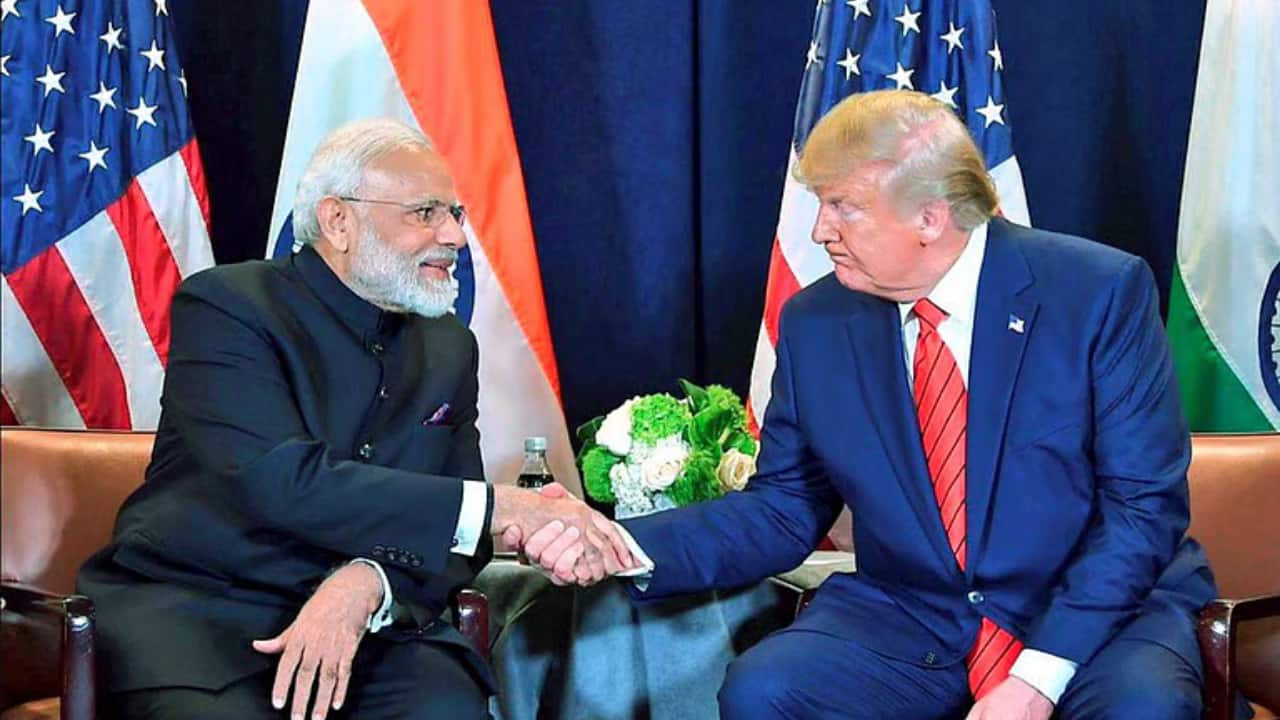
India US Trade Deal
The trade relationship between India and the United States is one of the most significant bilateral partnerships in the world. As of 2026, the US remains India’s largest trading partner, with the two
...Read more- India–US Trade Deal Is Here! Markets Explode, Rupee Soars | What Changes Now?
After 10 long months, the India–US trade deal is finally sealed. US tariffs on Indian goods drop sharply, exporter stocks surge, the Nifty breaks key levels, and the rupee makes a stunning comeback. Is this the turning point for Indian markets and FPI flows? Surabhi Upadhyay of Moneycontrol explains the details.
- Trump Tariffs On Steel And Aluminum Double To 50% Amid Global Backlash | N18G
On June 4, Donald Trump’s decision to double tariffs on imported steel and aluminum from 25% to 50% took effect, intensifying his global trade war. Announced on May 30, Trump justified the move as a step to further protect U.S. steel and aluminum industries, claiming they are “coming back like never before.” The tariffs sparked immediate backlash from key U.S. trading partners. Canada’s Chamber of Commerce and United Steelworkers union condemned the decision, warning of harm to cross-border supply chains and Canadian workers. The European Commission criticized the move for increasing global economic uncertainty and hinted at retaliation. Australia also denounced the tariffs as unjustified. Meanwhile, U.S. steelmaker Cleveland-Cliffs Inc. saw a 26% stock surge, with investors betting on increased domestic profits. As the U.S. is the world’s largest steel importer (excluding the EU), the tariff hike is expected to raise steel prices broadly, impacting industries and consumers alike.
- Fed Not In Rush To Adjust Rates Amid Economic Risks Due To Trump Tariffs | N18G
The Federal Reserve decided to keep interest rates steady on March 19, 2025, while still anticipating a rate cut of 0.5% by the end of the year. Fed Chair Jerome Powell emphasized that the central bank is not rushing to make any changes, citing unusually high uncertainty about economic conditions, particularly due to the Trump administration’s tariffs. Powell noted that weaker economic growth and rising inflation require conflicting policy responses, but the current stance is deemed appropriate to manage these risks. The Fed raised its inflation forecast for the year to 2.7%, up from 2.5%, while revising down its economic growth projection from 2.1% to 1.7%, with a slight increase in unemployment expected. The outlook for 2025 is muddled, and most policymakers share concerns over higher inflation and lower growth risks. Stock markets responded with slight gains, and U.S. interest rate futures suggest a strong possibility of rate cuts by June.
- White House says US in period of 'economic transition'
In a recent White House briefing, Press Secretary Karoline Leavitt addressed the state of the U.S. economy following a significant plunge in the stock market. Leavitt explained that the country is currently undergoing an "economic transition," emphasizing President Trump’s ongoing commitment to restoring American manufacturing and global dominance. With tariffs on steel and aluminum set to take effect tomorrow, Leavitt reiterated the administration's stance and its focus on revitalizing U.S. industry. Watch as the White House responds to tough questions about the economic outlook and the president's role in this volatile moment.
- Trump announces start of tariffs on Canada, Mexico | Stock markets tumble | Canadians react | N18G
On March 3, 2025, U.S. President Donald Trump announced that 25% tariffs on goods from Canada and Mexico would take effect on March 4, 2025, with reciprocal tariffs starting April 2. Trump dismissed any chance of avoiding these tariffs, even if Mexico and Canada addressed issues like fentanyl flows into the U.S. The tariffs, covering over $900 billion worth of annual imports, have raised concerns about their impact on the North American economy, which is highly integrated. Following Trump’s announcement, U.S. stocks fell sharply, and both the Mexican peso and Canadian dollar lost value. The tariffs will be enforced by U.S. Customs and Border Protection, starting at 12:01 a.m. EST on March 4. Additionally, a 10% tariff will apply to Canadian energy products. Economists and CEOs predict significant economic setbacks as a result of these tariffs, heightening fears of a potential trade war in the region.
- Trump vows more tariffs, to announce 25% tax on autos, drugs and chips | N18G
Donald Trump has announced new tariffs, including a 25% levy on imported cars, drugs, and chips, with plans to increase the rates later in the year. He claims these tariff measures are encouraging major global companies to return manufacturing to the U.S. Trump also stated that more details on the auto tariffs will be revealed on April 2, following a report from his cabinet members. Trump has long complained about unfair treatment of U.S. automotive exports, noting that the EU imposes a 10% tariff on vehicles, which is higher than the U.S. rate. The U.S. also charges a 25% tariff on imported pickup trucks to protect domestic manufacturers. The tariffs on drugs and chips will begin at 25% and rise over time, with no set start date yet. Additionally, Trump has imposed a 10% tariff on all Chinese imports and set a March 12 start date for tariffs on steel and aluminum.
- Trump Pauses Tariffs on Canada and Mexico After Border Security Deal, China Tariffs Proceed | N18G
Trump announced a 30-day delay on tariffs for Canada and Mexico after securing commitments on border security. Mexico agreed to deploy 10,000 soldiers to curb fentanyl smuggling, while Canada pledged $1.3 billion for border security, including appointing a "fentanyl czar." Markets initially plunged but rebounded after the tariff pause. Meanwhile, a 10% tariff on Chinese imports remains, with Trump warning of increases if fentanyl exports persist. China dismissed US concerns and plans to challenge the tariffs at the WTO. Despite the postponement, Trump signalled further tariff actions may follow, keeping trade tensions high. High-level negotiations continue.
- Commodities@Moneycontrol | Gold off 14-month peak as US-Mexico averted a trade war
Here are the major happenings from the commodities market
- Commodities@Moneycontrol | Global markets hit by Trump’s tariff threat to China
Here's a roundup of the key happenings in the commodities market.
- Donald Trump tariffs on US allies draw retaliation threats
Stock prices slumped amid fears of a trade war, with the Dow Jones industrial average falling nearly 252 points, or 1 percent, to 24,415.84.
- Govt worry on lower tariffs inconsistent with policy: Trai
Telecom Commission's arguments that reduced tariffs and promo offers are lowering government revenue and hitting financials of the sector are "inconsistent" with public policy objectives, regulator Trai has said.
- Need different tariffs to combat steel imports: JSW Steel
In order to avoid the safe guard duty, the Chinese are under pricing the products, so there has been no relief for the domestic steel producers as such, said Seshagiri Rao, Joint Managing Director of JSW Steel.
- Telecom tariffs may rise, stocks to rally post auction: UBS
Now that telcos have secured spectrum for 20 years, albeit at a higher price, tariffs may rise and fundamentals may improve for the telecom sector, UBS telecom analyst Suresh Mahadevan says. Telecom shares too may rally.
- Hope cos are bidding for coal blocks with eyes open: Swarup
In less than a week, auctions of 11 blocks for the power sector have netted around Rs 60,000 crore. In all, 204 coal blocks will be auctioned in a phased manner, following the Supreme Court‘s order canceling the earlier allocations.
- See tariffs increasing; to reduce debt significantly: RComm
In an interview to CNBC-TV18, Gurdeep Singh, CEO, Consumer Business, Reliance Communications, says he sees tariffs increasing and expects revenue per minute to firm up.
- Big takeaways from India-US trade talk
The biggest takeaway is that India and United States (US) have decided to reengage on trade related issues. 20 video conferences scheduled over the next one year on issues ranging from investments to IPR to services to tariffs. On totalisation agreement, according to sources, there has been good progress.
- Cos can't pass higher bidding price to users: Coal secy
Details on the floor price will be known by December 22, said Anil Swarup, secretary, coal ministry.
- All seven states will sign FRP by fiscal end: India Ratings
Salil Garg of India Ratings says both Haryana and Rajasthan have already raised tariffs in the past one year and going forward he is confident the other states will soon follow suit.
- Idea raises prepaid tariffs by 20% in MP, Chhattisgarh
Idea Cellular has raised prepaid tariffs by 20% in Madhya Pradesh and Chhattisgarh, reports CNBC-TV18's Reema Tendulkar quoting sources. Accordingly, tariff now stands at 1.2 paise per 2 seconds and all Idea acquisitions post September 7 are being offered new rates.
- Telecom policy 2011: Experts discuss Sibal’s 100-day agenda
In an interview with CNBC-TV18, Sanjeev Krishan, PwC, Supreme Court advocate, Gopal Jain CNBC-TV18’s Economic Policy Editor Siddharth Zarabi discussed Sibal's plans for the telecom sector and his 100-day agenda.



