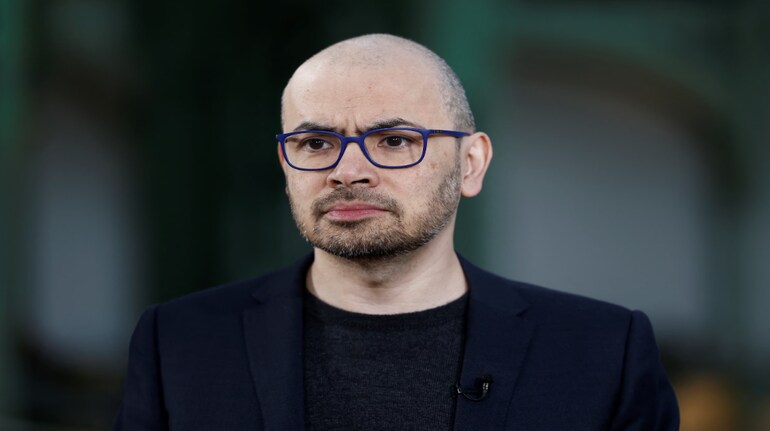

China may not be as far behind the United States in artificial intelligence as many people think. In fact, according to Demis Hassabis, CEO of Google DeepMind, Chinese AI models are now only “a matter of months” behind their US and Western counterparts.
Hassabis made the remarks while speaking on CNBC’s podcast The Tech Download, which launched on Friday. His comments challenge the long-held belief that China is still years behind the US in the global AI race. According to Hassabis, the gap has narrowed much faster than expected over the last couple of years.
“Maybe they’re only a matter of months behind at this point,” he said, adding that Chinese models appear much closer to the AI frontier than people assumed one or two years ago.
China’s progress became especially clear last year when AI lab DeepSeek released a powerful model that surprised the global tech industry. What stood out was that the model delivered strong performance despite using less-advanced chips and costing far less to build than similar American systems. Since then, Chinese tech giants like Alibaba, along with startups such as Moonshot AI and Zhipu, have continued releasing increasingly capable AI models.
Still, Hassabis believes there’s an important difference between catching up and truly leading. While Chinese firms have shown they can get close to the cutting edge, he says they haven’t yet proven they can create entirely new breakthroughs.
“The question is, can they innovate something new beyond the frontier?” Hassabis said. He pointed to the transformer architecture—developed by Google researchers in 2017—as an example of the kind of breakthrough that reshaped modern AI. That innovation now underpins systems like **OpenAI’s ChatGPT and Google’s Gemini.
Other tech leaders have also acknowledged China’s rapid progress. Jensen Huang, CEO of Nvidia, has said the US is “not far ahead” in the AI race, noting that China remains strong in infrastructure and model development, even if the US leads in chips.
However, access to advanced semiconductors remains a major challenge for Chinese firms due to US export restrictions. While domestic chipmakers like Huawei are trying to fill the gap, their technology still lags behind Nvidia’s top offerings. Some analysts believe this could eventually widen the gap again.
Hassabis, though, says the real challenge may not be technology but mindset. He compared DeepMind to a “modern-day Bell Labs,” focused on deep scientific innovation rather than simply scaling what already exists. “To invent something new is about 100 times harder than copying it,” he said, adding that this remains the true next frontier in AI.



Discover the latest Business News, Sensex, and Nifty updates. Obtain Personal Finance insights, tax queries, and expert opinions on Moneycontrol or download the Moneycontrol App to stay updated!
Find the best of Al News in one place, specially curated for you every weekend.
Stay on top of the latest tech trends and biggest startup news.