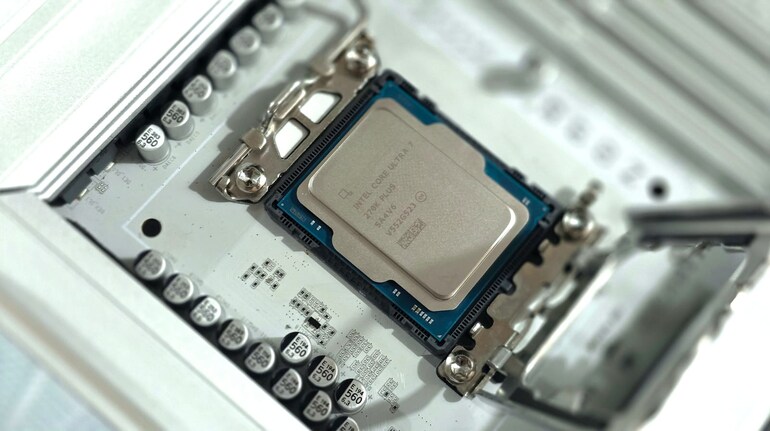

The shift to Intel’s Core Ultra desktop lineup marks more than just a generational update. With the Core Ultra 200S Plus series — including the Core Ultra 7 270K Plus and Core Ultra 5 250K Plus — Intel is trying to reset expectations across segments.
On paper, both chips look like iterative upgrades with hybrid core designs and higher clocks. But in real-world use, the focus feels different. Instead of chasing peak benchmark numbers, Intel is aiming for balance — improving gaming performance, strengthening productivity, more powerful AI performance and the best part is making that performance more accessible through aggressive pricing.
After using both processors across daily tasks, gaming sessions, and heavier workloads, the shift becomes evident. One targets users looking for near high-end performance without paying flagship prices, while the other brings that experience into the midrange, making capable desktop computing far more attainable than before. Here’s how both the processors performs in real-world conditions beyond the benchmark numbers.
Intel Core Ultra 7 270K Plus: Performance-first approach
Let’s start with the elephant in the room – the Core Ultra 7 270K Plus. This is where Intel’s course correction is most visible. On paper, it looks like a refresh. In real-world use, it feels closer to what Arrow Lake should have been from the beginning.
| Specification | Details |
| Cores / Threads | 24 cores (8P + 16E) / 24 threads |
| Max Turbo Frequency | Up to 5.5 GHz |
| Base Frequency | P-core: 3.7 GHz, E-core: 3.2 GHz |
| Cache | 36MB L3 + 40MB L2 |
| Power | 125W base / 250W turbo |
| Memory Support | DDR5 up to 7200 MT/s (max 256GB) |
| Integrated GPU | Intel Graphics (4 Xe cores, up to 2 GHz) |
| AI Performance | 36 TOPS (CPU + GPU + NPU) |
| Socket | LGA1851 |
| PCIe Support | PCIe 5.0 + 4.0 (24 lanes) |
In everyday workloads, this processor stands out for its consistency. Whether you are handling heavy multitasking, compiling code, rendering projects, or running multiple applications simultaneously, the chip rarely feels strained. It maintains responsiveness even when pushed with sustained workloads, which is where many mid-to-high-end CPUs begin to show limitations. The good thing is that’s not the case here with the 270K Plus.
For content creators, the experience is particularly stable. Video exports, timeline scrubbing, and background rendering all benefit from the chip’s improved internal communication speeds. The increase in interconnect bandwidth and memory support doesn’t show up as a flashy feature, but it reduces small delays that usually add up in longer workflows. You notice it when switching between tasks or working with large project files rather than in a single benchmark score.
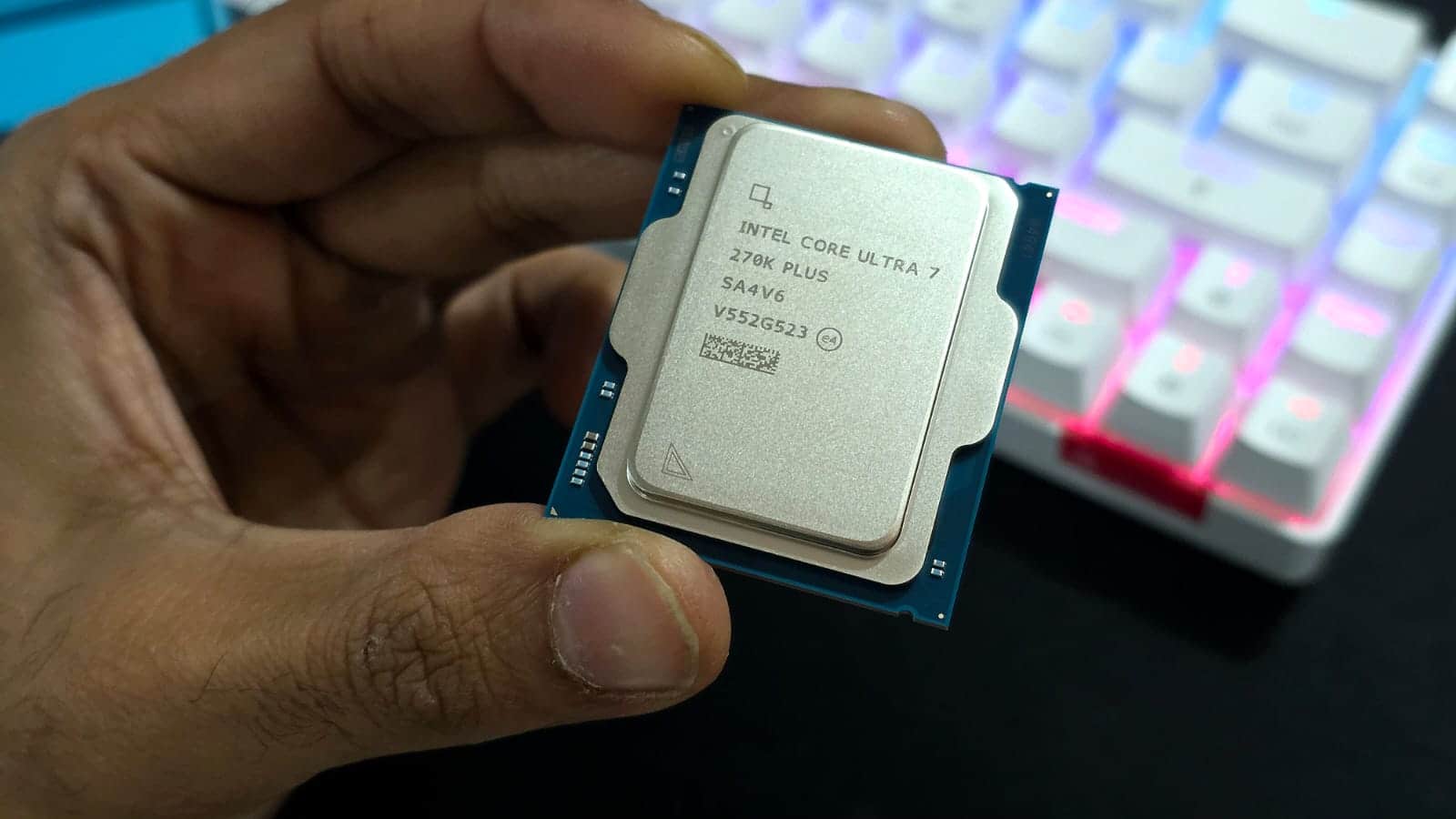 Intel Core Ultra 7 270K Plus
Gaming is where the 270K Plus tells a more nuanced story. Compared to earlier Arrow Lake chips, there is a clear improvement. Frame pacing is smoother, and the chip no longer feels like it is holding back the GPU in the same way. In modern titles, especially when paired with high-end graphics cards, the experience is stable and predictable.
That’s not it, even this becomes clearly evident while dealing with more complex graphics demanding applications and editing tools. I tried CAD rendering and the speed and performance despite being an integrated GPU, there was no delay or lag. Even editing high resolution photos and 4K videos feel smooth.
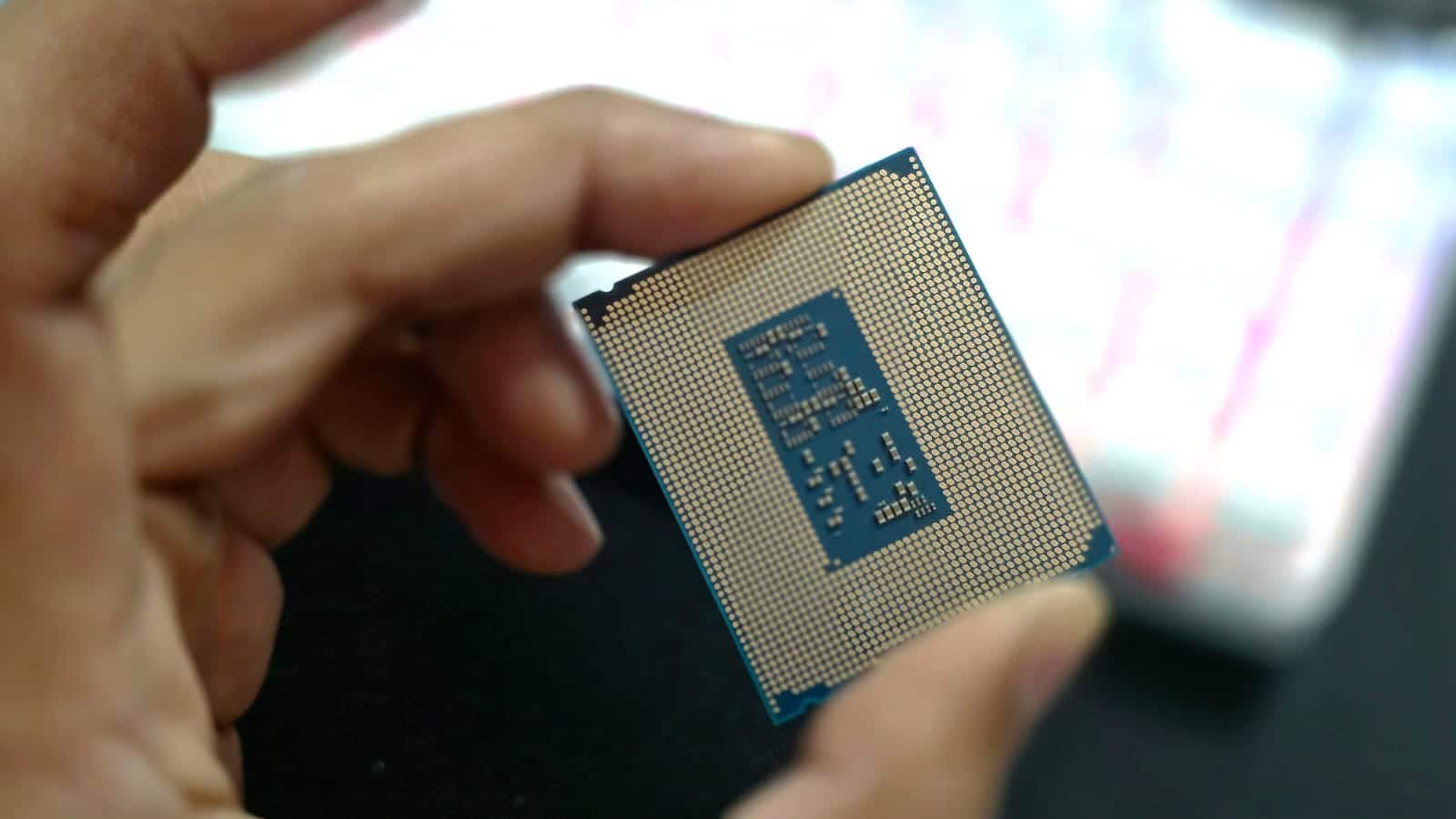 Intel Core Ultra 7 270K Plus
One of the more interesting additions is Intel’s Binary Optimization Tool (iBOT). While still in its early stages, it introduces a new layer of optimisation that works quietly in the background. You are unlikely to notice it directly, but in supported applications, things feel slightly more efficient. Load times, responsiveness, and certain in-game behaviours can feel marginally improved.
The processor also includes an integrated GPU based on Intel’s Xe LPG architecture, with four Xe cores and 64 Matrix Engines. While not designed for modern AAA gaming, it is capable enough for lighter titles and everyday workloads, adding flexibility for systems without a dedicated GPU.
About efficiency – it is not the most efficient when pushed hard. Power consumption can go up to 250W under load, and the chip benefits from a strong cooling setup. While, a processor packing this level of performance – it is kind of fine.
With the LGA 1851 socket nearing the end of its lifecycle, the 270K Plus exists in a space where you are buying for today rather than planning long-term upgrades. For some users, that won’t matter. For others, it’s a consideration that sits in the background while making a decision.
Still, in day-to-day use, the 270K Plus delivers a balanced experience. It doesn’t dominate every category, but it performs well enough across all of them to feel like a reliable choice for high-performance builds.
Intel Core Ultra 5 250K Plus: Redefining the midrange
| Specification | Details |
| Cores / Threads | 18 cores (6P + 12E) / 18 threads |
| Max Turbo Frequency | Up to 5.3 GHz |
| Base Frequency | P-core: 4.2 GHz, E-core: 3.3 GHz |
| Cache | 30MB L3 + 30MB L2 |
| Power | 125W base / 159W turbo |
| Memory Support | DDR5 up to 7200 MT/s (max 256GB) |
| Integrated GPU | Intel Graphics (4 Xe cores, up to 1.9 GHz) |
| AI Performance | 30 TOPS (CPU + GPU + NPU) |
| Socket | LGA1851 |
| PCIe Support | PCIe 5.0 + 4.0 (24 lanes) |
If the 270K Plus feels like a correction, the Core Ultra 5 250K Plus feels like a challenger. At $199 (approx Rs 20,000)m this processor doesn’t behave like a typical midrange chip. From the moment you start using it, the experience feels closer to higher-tier hardware. Everyday tasks are handled effortlessly, and even heavier workloads don’t push it to its limits as quickly as expected.
The biggest strength here is multi-core performance. In Cinebench 2024, the 250K Plus outperforms the Ryzen 7 9850X3D and Ryzen 7 9800X3D in multi-threaded workloads, despite costing significantly less. Well, I am not going to discuss benchmarks in too much detail – that’s a separate review altogether. But, that advantage translates into real-world tasks like rendering, encoding, and batch processing.
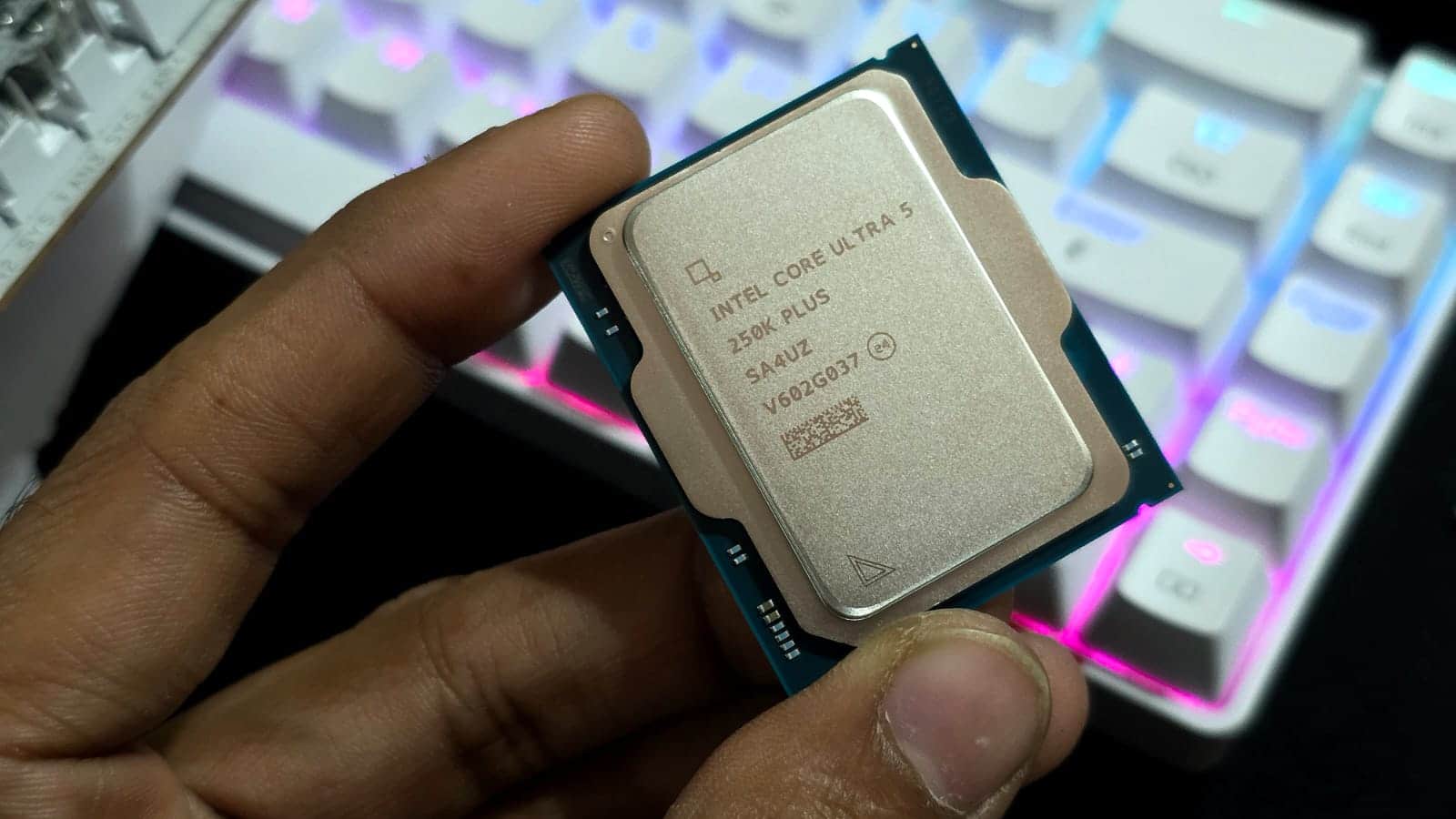 Core Ultra 5
In applications like Blender the chip continues to show strong performance, often beating more expensive processors. In content creation, it performs well in Premiere Pro and Photoshop as well. Even dealing with After Effects feels smooth and seamless too.
Gaming performance also improved here and it shows clear improvement over previous Intel midrange chips. In Cyberpunk 2077, the 250K Plus outperforms other Intel CPUs at 1080p and 1440p. That’s a notable result, especially at this price.
Unlike 270K Plus, efficiency is another strong point. With a peak power rating of around 159W, the chip is easier to manage thermally than higher-end models. In testing, temperatures stayed around 73°C under load, which is comfortable for sustained performance.
The integrated Xe LPG graphics also adds value. It’s capable enough for older games and basic workloads, and it performs better than the integrated graphics found in most AMD desktop CPUs. For entry-level builds or systems without a GPU, this becomes a practical advantage. And, even with dedicated GPUs, it is a strong processor to have for a budget gaming PCs.
What stands out most is how little the 250K Plus asks you to compromise. It doesn’t lead every category, but it performs well enough across all of them that you rarely feel limited. For most users building a midrange system, it becomes one of the easiest choices.
AI and optimisation
Both processors also hint at Intel’s broader push toward AI-assisted performance. While these aren’t AI-first chips in the way some mobile processors are, they do integrate AI capabilities through their architecture and features like iBOT.
In real-world use, this shows up in small ways — faster processing in supported apps, smoother background tasks, and slight efficiency gains in certain workloads. The integrated graphics, with its Matrix Engines, also contributes to AI-assisted tasks like media processing.
The gains are modest today, but the direction is clear. Instead of relying only on hardware improvements, Intel is layering software optimisation on top, which could become more significant over time.
Final impressions
The Core Ultra 7 270K Plus delivers a well-rounded high-performance experience that fits naturally into demanding workflows. It handles multitasking, content creation, and modern gaming with consistency, making it a dependable choice for users building powerful systems without stepping into flagship pricing. What stands out is how stable and predictable the performance feels across different use cases, which makes it easy to rely on in day-to-day scenarios.
The Core Ultra 5 250K Plus, on the other hand, brings that same sense of usability to a more accessible price point. It offers strong performance across productivity, gaming, and everyday tasks, making it a practical choice for most desktop builds. The balance it strikes between capability and efficiency ensures that it fits comfortably into a wide range of systems.
Together, both processors reflect a shift toward delivering usable, consistent performance that aligns closely with real-world needs.
For custom PC builders, the Core Ultra 7 270K Plus and Ultra 5 250K Plus fit well into mid to high-end builds where power efficiency and balanced performance in more important.
The manageable thermals mean less reliance on high-end cooling solutions, which can help control overall build costs. The integrated Xe LPG graphics also adds flexibility during initial setup or troubleshooting before a dedicated GPU is installed.
For builders targeting gaming or mixed workloads on a budget, these chips offer a stable foundation without forcing compromises on thermals, power draw, or day-to-day responsiveness.


Discover the latest Business News, Sensex, and Nifty updates. Obtain Personal Finance insights, tax queries, and expert opinions on Moneycontrol or download the Moneycontrol App to stay updated!
Find the best of Al News in one place, specially curated for you every weekend.
Stay on top of the latest tech trends and biggest startup news.