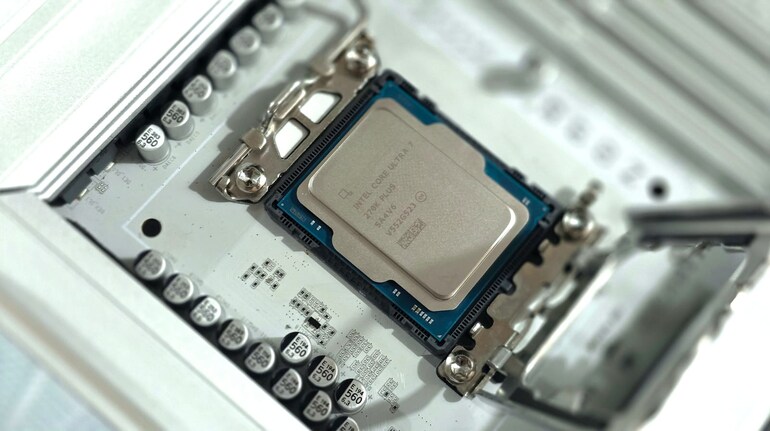

Intel is refining its desktop processor lineup with the Core Ultra 7 270K Plus, a chip that focuses on balance rather than outright disruption. Positioned in the $300 segment, it aims to deliver a mix of multi-core performance, stable thermals, and improved efficiency over previous generations. While the architecture itself is not entirely new, the execution feels more mature this time. Combined with updated interconnect speeds and platform-level optimisations, the processor positions itself as a strong option for users who prioritise productivity alongside consistent day-to-day performance.
Design and architecture
The Core Ultra 7 270K Plus follows Intel’s hybrid architecture with 8 performance cores and 16 efficiency cores. The P-cores boost up to 5.5GHz, while the E-cores reach 4.7GHz, supported by 36MB of L3 cache.
What changes here are internal refinements. The ring clock increases to 3.9GHz and die-to-die frequency jumps by 43% to 3GHz. These changes reduce latency between core clusters, which becomes noticeable in sustained multi-threaded workloads.
DDR5 support now extends up to 7200MT/s officially, though real-world gains beyond standard high-speed kits remain limited. Overall, this generation focuses more on consistency and scaling rather than architectural overhaul.
Test system and setup
The processor was tested on a high-end platform to remove bottlenecks:
Processor: Intel Core Ultra 7 270K Plus
RAM: 32GB DDR5 7200
Motherboard: Gigabyte Z890 AORUS PRO ICE
GPU: Nvidia RTX 5080
Storage: NVMe SSD
OS: Windows 11 Pro
This configuration ensures both CPU-heavy and GPU-bound workloads are accurately represented.
Productivity performance
The strongest aspect of the Core Ultra 7 270K Plus is its multi-threaded output, and your benchmark results reinforce that clearly.
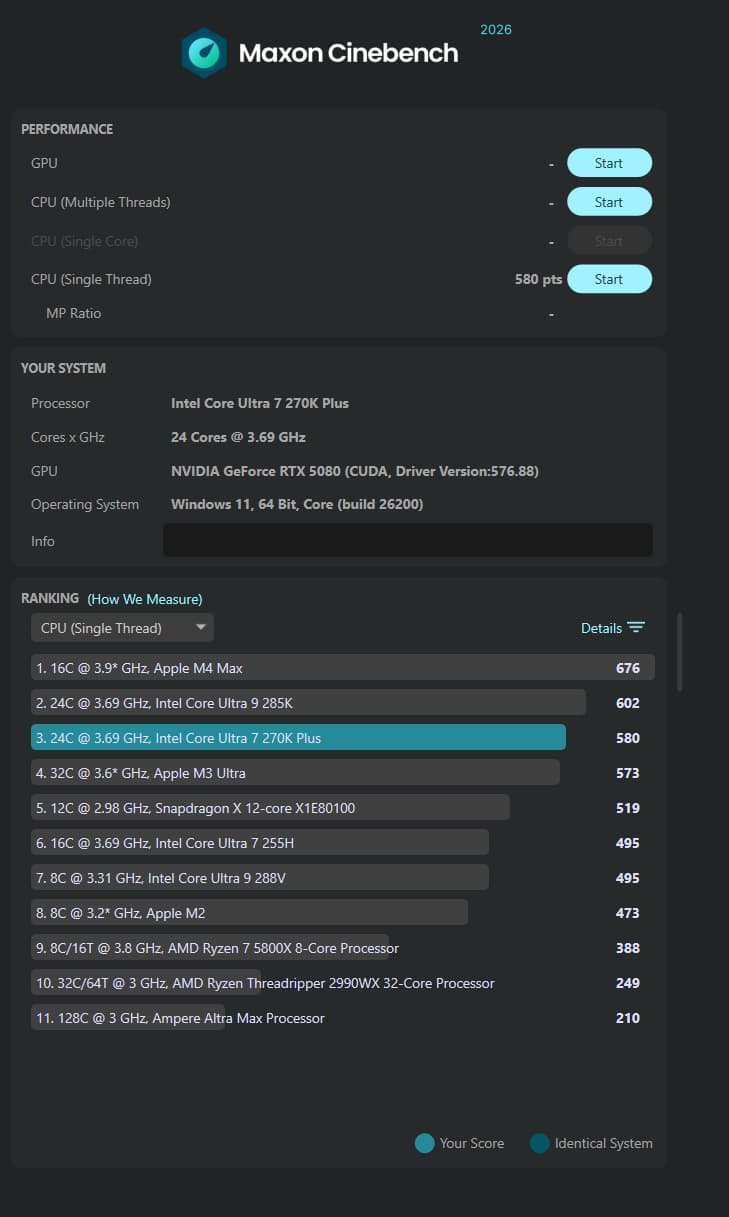
In Cinebench 2026, the processor scores 9630 points in multi-core, placing it among the top performers in its category and ahead of several higher-tier chips in the same ranking list. The MP ratio of 16.61x reflects strong scaling across cores.
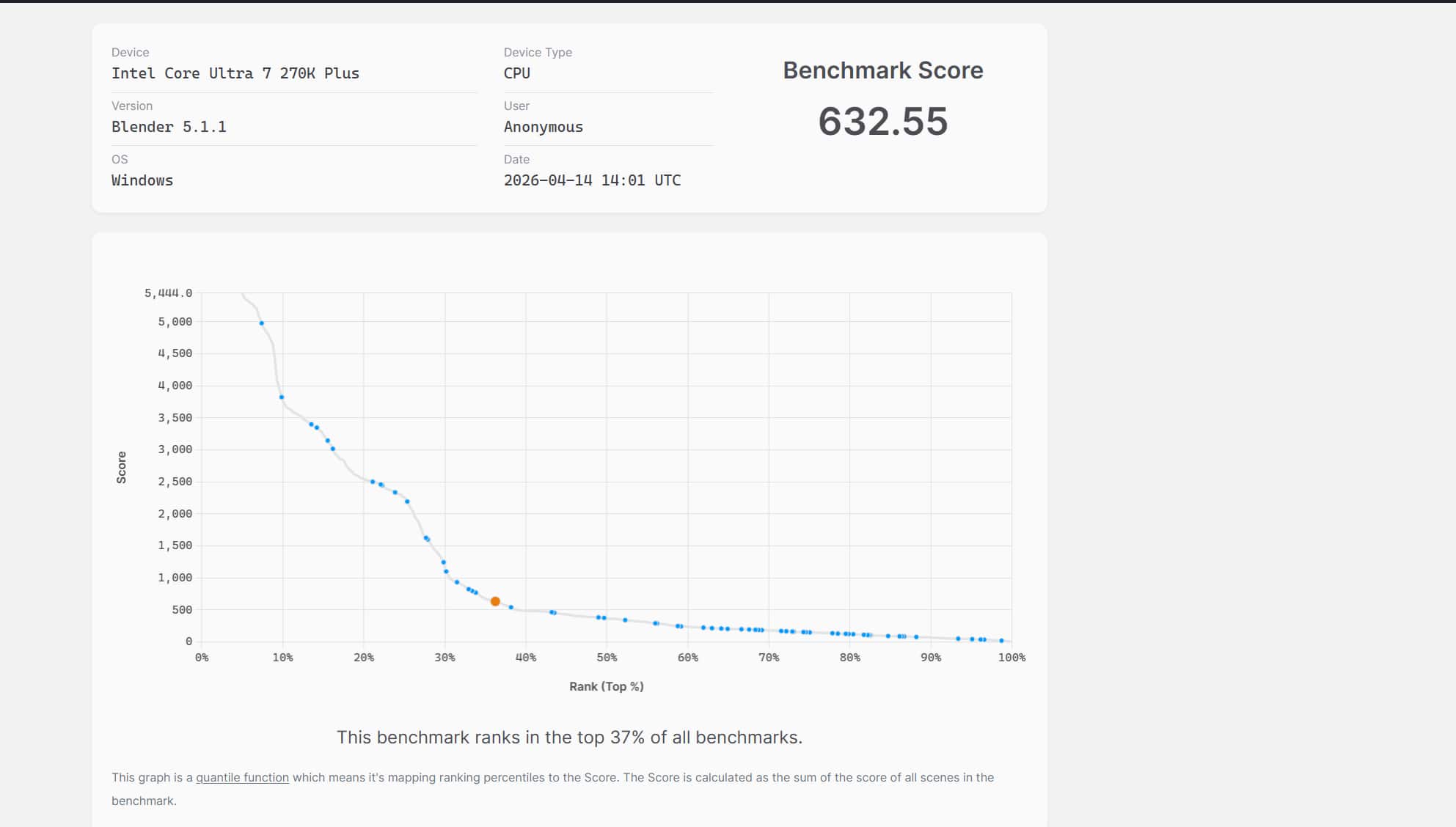
Blender performance further highlights this strength, with a score of 630, placing it within the top 37% of global results. This aligns with what synthetic benchmarks suggest — the CPU handles rendering workloads efficiently without major bottlenecks. Compression and sustained workloads also benefit from this architecture, and in practical terms, this translates to faster exports, shorter render times, and improved throughput in professional tasks.
Single-core and Multi-core performance
Single-threaded performance remains competitive. In Cinebench 2026, the chip scores 580 points, placing it third in the ranking list, just behind higher-end parts like the Core Ultra 9 285K. However, things change when it comes to multi-thread performance -- the Core Ultra 270K Plus got 9630 points which is more than even Core Ultra 9 285K's 9132 points and even Apple M4 Max processor's 7829 points.
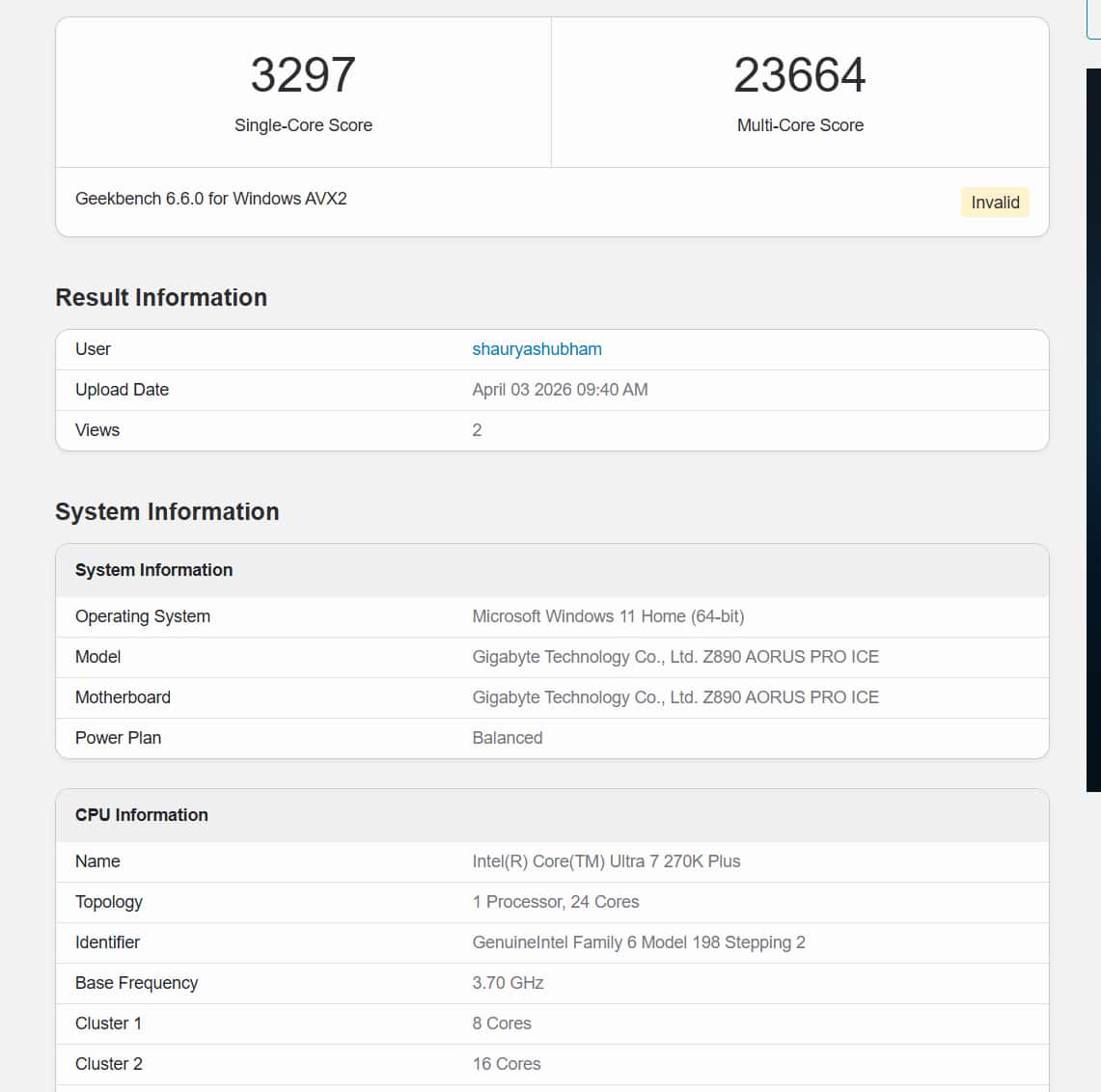
In Geekbench 6 test, the Single-core score is 3297 and Multi-core score is 23664. This shows, that Intel has put performance-first approach with the processor.
These numbers indicate strong responsiveness in lighter workloads, including application launches and general system navigation. The gains over previous Intel chips are incremental, but consistency is the key improvement here.
Also, in Blender 5.1.1 test, the processor got around 632.55 points which is puts its in the top tier performer.
Content creation performance
The behaviour across creative workloads remains mixed but predictable. In lighter applications, Intel still trails AMD slightly due to architectural differences. However, in heavier workloads, the 270K Plus shows clear advantages. This suggests that users working with video editing, 3D rendering, and batch processing will benefit more from this CPU compared to those focused on lighter photo editing tasks. I used Photoshop, Premiere Pro and even After Effects, the processor handled them pretty well without breaking a sweat or throttling under heavy load. To take things further, I also tried 3D rendering and I faced no issues there as well.
Gaming performance
Gaming performance remains stable rather than groundbreaking. Based on broader benchmark data, the processor delivers performance comparable to the Core i9-14900K and slightly ahead of the Ryzen 7 9700X in average FPS. More importantly, frame-time consistency is improved, which is reflected in stronger 1% lows. Even without dedicated GPU, lighter titles run pretty smooth and at a respectable frame rates.
I also tested the processor with RTX 5080 and in this, the Battlefield 6 delivered around 150fps in Ultra graphics settings.
In real-world usage with the RTX 5080, gaming feels consistent, with minimal stutter even under background load. The hybrid architecture ensures that background tasks do not significantly interfere with foreground gaming performance.
Power consumption and thermals
Efficiency improvements are noticeable compared to previous Intel generations.
Under load, thermals remain controlled with a high-end cooling solution. Your monitoring data shows CPU temperatures largely staying in the 40–52°C range during active workloads, with spikes remaining manageable.
Compared to older Intel chips like the 14900K, the 270K Plus delivers better performance while consuming less power. However, it still trails AMD in overall efficiency.
Software and platform optimisation
Intel’s Platform Performance Package plays an important role in extracting consistent performance. It manages scheduling, core utilisation, and power behaviour.
Additional tools such as Application Optimization and Binary Optimization contribute to performance gains in supported workloads, though their impact varies depending on the application.
Real-world experience
Beyond benchmarks, the system feels stable and responsive.
Boot times are quick, applications open without delay, and multitasking remains smooth. The hybrid architecture effectively distributes background tasks across efficiency cores, allowing performance cores to handle active workloads.
Even under mixed usage — such as running benchmarks while browsing and streaming — the system maintains usability without noticeable slowdowns.
Value and positioning
At its price point, the Core Ultra 7 270K Plus offers strong value for productivity users. It competes with processors that are significantly more expensive in multi-threaded workloads.
For gaming, while it performs well, AMD’s X3D chips still hold an advantage for users focused purely on gaming efficiency and peak frame rates.
Verdict
The Intel Core Ultra 7 270K Plus is a refined processor that improves on previous generations in meaningful ways. It does not introduce a major architectural shift but delivers better balance across performance, efficiency, and real-world usability.
Your benchmark results confirm its positioning: strong multi-core performance, competitive single-core output, and consistent everyday responsiveness.
For users prioritising productivity and overall system stability, it stands out as a practical choice. The trade-offs remain — higher power draw compared to AMD and a platform with limited upgrade scope — but for current-generation performance, the 270K Plus delivers where it matters.


Discover the latest Business News, Sensex, and Nifty updates. Obtain Personal Finance insights, tax queries, and expert opinions on Moneycontrol or download the Moneycontrol App to stay updated!
Find the best of Al News in one place, specially curated for you every weekend.
Stay on top of the latest tech trends and biggest startup news.