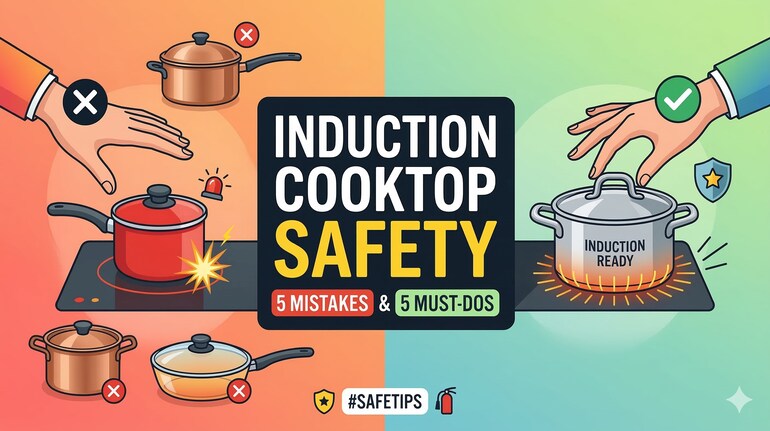
Induction cooktops have become common in many kitchens because they heat cookware using electromagnetic fields instead of direct flames. The technology transfers energy directly to compatible cookware, allowing faster heating and controlled cooking.
However, improper use can create safety risks such as overheating, glass surface damage, electrical issues, or fire hazards. Following basic operational practices can help prevent these problems. Understanding what to do and what to avoid is essential for safe and efficient use of an induction cooktop.
Use compatible cookware
Always check cookware compatibility before use. Induction cooktops require ferromagnetic materials such as cast iron, enameled cast iron, or magnetic stainless steel. A simple magnet test can confirm compatibility—if the magnet sticks firmly to the base, the cookware will work on induction.
Place cookware correctly before turning on the cooktop
Position the vessel at the center of the heating zone before activating the appliance. Proper placement ensures efficient heat transfer and prevents uneven heating.
Match cookware size with the heating zone
Choose cookware with a base diameter that matches the printed heating zone on the cooktop surface. A mismatch can reduce efficiency and affect cooking performance.
Ensure airflow around the appliance
Maintain at least 10 centimetres of space around the cooktop. The internal cooling fan requires airflow to prevent overheating during operation.
Clean the surface properly after use
Wait until the residual heat indicator turns off, then clean the glass surface with a soft cloth and cooktop cleaner. Keeping both the cookware base and glass surface dry also helps maintain performance.
Using incompatible cookware
Avoid cookware made of aluminum, copper, glass, or ceramic unless it has a magnetic base. These materials do not interact with the induction magnetic field.
Placing metal objects on the cooking surface
Do not place items such as spoons, forks, knives, lids, or aluminium foil on the cooktop. The magnetic field can transfer heat to these objects.
Sliding cookware across the glass surface
Dragging cookware across the glass can create scratches and damage the cooktop surface.
Blocking ventilation openings
Do not block the air intake or exhaust vents located at the bottom or rear of the appliance. Restricted airflow can lead to overheating.
Operating the cooktop with a cracked glass surface
Never use the appliance if the glass surface is cracked or broken. Liquids can seep into internal circuits and create an electrical hazard.
Users should avoid leaving the cooktop unattended while heating oil or fat. The appliance should also be unplugged after cooking and before cleaning. Devices such as televisions or microwaves should be kept several metres away to reduce electromagnetic interference.
People using medical devices such as pacemakers should consult a physician before standing close to an active induction cooktop.
Emergency response
If a fire occurs, switch off the power supply immediately and smother flames using a fire blanket or a Class B fire extinguisher. Water should never be used on grease fires. If smoke or unusual odors appear, disconnect the appliance and seek professional servicing.


Discover the latest Business News, Sensex, and Nifty updates. Obtain Personal Finance insights, tax queries, and expert opinions on Moneycontrol or download the Moneycontrol App to stay updated!
Find the best of Al News in one place, specially curated for you every weekend.
Stay on top of the latest tech trends and biggest startup news.