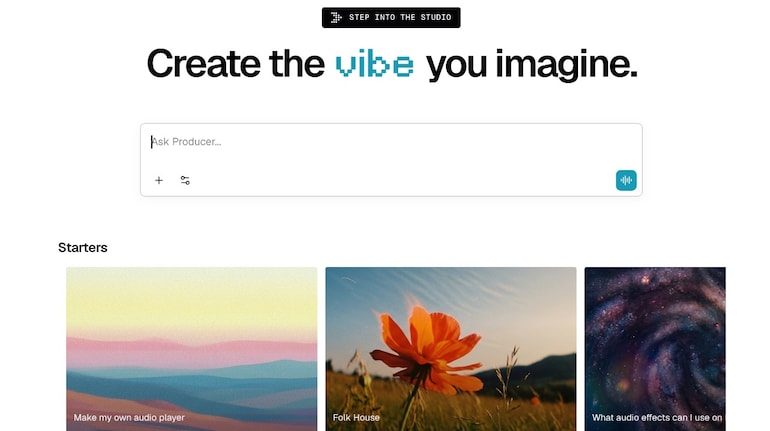

Google is making music production feel less like a technical craft and more like a prompt away from reality. The company has moved ProducerAI into Google Labs, expanding the AI-powered platform into a broader creative suite that combines sound generation, visuals and video in one place.
At the centre of the update is a preview version of Lyria 3, Google’s newest music-generation model.
Originally launched in July 2025, ProducerAI allowed users to collaborate with an AI agent to generate tracks, workshop lyrics and remix music from text prompts. Until now, it relied on its own models. By joining Google Labs, the platform gains access to a far larger AI toolkit.
A full-stack AI music studio
ProducerAI is now powered by multiple Google systems working together.
Lyria 3 handles music generation, enabling users to describe beats, moods or genres and have the AI build structured compositions. Gemini powers the conversational interface, guiding users through revisions and creative decisions.
Beyond audio, Google is extending the experience into visuals. Nano Banana generates album artwork, while Veo creates AI-generated music videos. The result is an end-to-end pipeline where a simple idea can evolve into a complete audio-visual project.
Google says all outputs will include SynthID watermarks, its embedded labelling system designed to flag AI-generated content. As synthetic music becomes increasingly difficult to distinguish from human-made tracks, watermarking is positioned as a transparency safeguard.
AI music meets industry scrutiny
The expansion comes at a sensitive time for the music industry. AI-generated tracks have begun appearing on mainstream charts, including Billboard rankings, raising questions about authorship, originality and copyright.
Companies like Sony have already developed detection tools aimed at identifying original songs used in AI-generated compositions. The tension reflects a broader shift: AI is no longer a novelty in music creation. It is becoming commercially relevant.
ProducerAI’s development has included collaboration with artists such as The Chainsmokers, Lecrae and Anjulie. Google frames the platform as an experiment and a creative partner rather than a replacement for musicians.
Lowering the barrier, raising the stakes
By integrating ProducerAI into Google Labs, the company is signalling that generative music is not just a side project. It is part of a larger push to make AI-assisted creativity mainstream.
The promise is clear: anyone can feel like a producer, regardless of technical skill. The open question is how the industry adapts as AI tools make professional-grade production accessible to millions.
If Lyria 3 and its companion models gain traction, the line between human and machine-made music may blur even further, turning experimentation into a new normal for creators and listeners alike.


Discover the latest Business News, Sensex, and Nifty updates. Obtain Personal Finance insights, tax queries, and expert opinions on Moneycontrol or download the Moneycontrol App to stay updated!
Find the best of Al News in one place, specially curated for you every weekend.
Stay on top of the latest tech trends and biggest startup news.