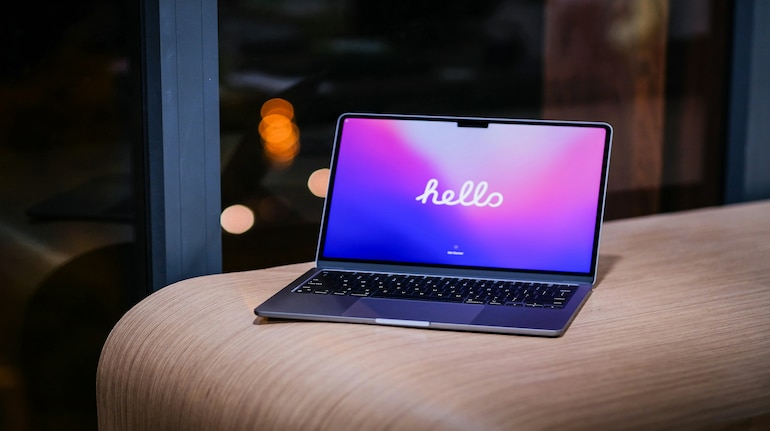

Face ID has been a core part of the iPhone experience for nearly a decade and has also made its way to the iPad lineup, yet the Mac continues to rely on Touch ID for biometric authentication. Over the years, this gap has sparked endless speculation about whether Face ID will ever arrive on the Mac. A new rumour now suggests that the long wait may eventually come to an end.
According to a recent post on Weibo by leaker Instant Digital, Apple is working on ultra-thin Face ID components for a future iPhone model referred to as the iPhone Air 2. The post focuses primarily on camera hardware, claiming the device will add a second rear camera in the form of a horizontally aligned ultra-wide lens. To make room internally, Apple is said to be customising a significantly thinner Face ID module sourced from its suppliers.
While the leak itself does not directly mention the Mac, the implications are hard to ignore. For years, the most widely accepted explanation for the absence of Face ID on MacBooks has been physical space. The lid of a MacBook is far thinner than that of an iPhone or iPad, leaving limited room for the array of sensors required for Face ID, including infrared cameras and projectors.
If Apple has indeed solved this problem by engineering an ultra-thin Face ID system for the iPhone Air, that same technology could be repurposed for other products. A slimmer Face ID module would be far easier to integrate into a MacBook display without making the lid thicker or compromising design aesthetics. It could also potentially fit into desktop displays such as the iMac, where bezel size has already been reduced significantly in recent generations.
Instant Digital himself notes that the MacBook angle is speculation rather than a confirmed detail. Still, the idea aligns with long-running assumptions about what has held Face ID back on the Mac. Apple has already shown a willingness to bring iPhone and iPad technologies to the Mac when the hardware makes sense, with Apple silicon being the most obvious example.
Timing is another interesting factor. The MacBook Pro is widely expected to receive a major redesign later this year. While most rumours focus on display technology, performance upgrades, and chassis changes, authentication improvements have not been a major part of the conversation so far. Face ID appearing as part of such a redesign would be a surprise, but not an impossible one.
That said, a more cautious expectation may be realistic. Even if Apple has the hardware ready, it may choose to debut Face ID on the Mac in a later product cycle once the ultra-thin components are proven in high-volume devices like the iPhone. Apple typically prefers to introduce major features gradually, refining them over time before expanding them across its ecosystem.
For now, Touch ID on the Mac remains reliable and deeply integrated into macOS workflows. But as Apple continues to push toward a more unified experience across its devices, the absence of Face ID on the Mac feels increasingly conspicuous. An ultra-thin Face ID module could be the missing piece that finally makes facial authentication on the Mac practical.
Nothing is confirmed yet, and Apple has not commented on any plans to bring Face ID to the Mac. Still, this latest rumour represents one of the more credible technical explanations for how it could happen. If Apple truly has cracked the hardware challenge, the idea of unlocking a MacBook with Face ID may no longer be a question of if, but when.


Discover the latest Business News, Sensex, and Nifty updates. Obtain Personal Finance insights, tax queries, and expert opinions on Moneycontrol or download the Moneycontrol App to stay updated!
Find the best of Al News in one place, specially curated for you every weekend.
Stay on top of the latest tech trends and biggest startup news.