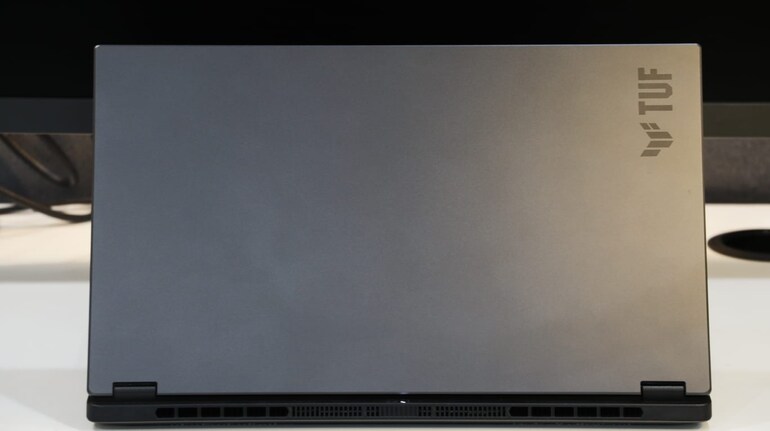

For years, the idea of a “gaming laptop” has been tied to one thing—a dedicated GPU. The Asus TUF Gaming A14 (2026) quietly challenges that assumption. On paper, it looks like a compact 14-inch machine with no discrete graphics, but in practice, it is trying to do something more ambitious. It aims to deliver a balance between performance, portability, and efficiency, while leaning into modern workloads like content creation and AI-assisted tasks.
At 1.48 kg, this is not the kind of laptop you associate with heavy workloads. Yet, with AMD’s Ryzen AI MAX+ 392 and Radeon 8060S graphics, it attempts to handle everything from editing timelines to moderate gaming without relying on traditional GPU-heavy configurations.
After using it for weeks and trying out several games and editing on it, here are my final thoughts.
Design and display
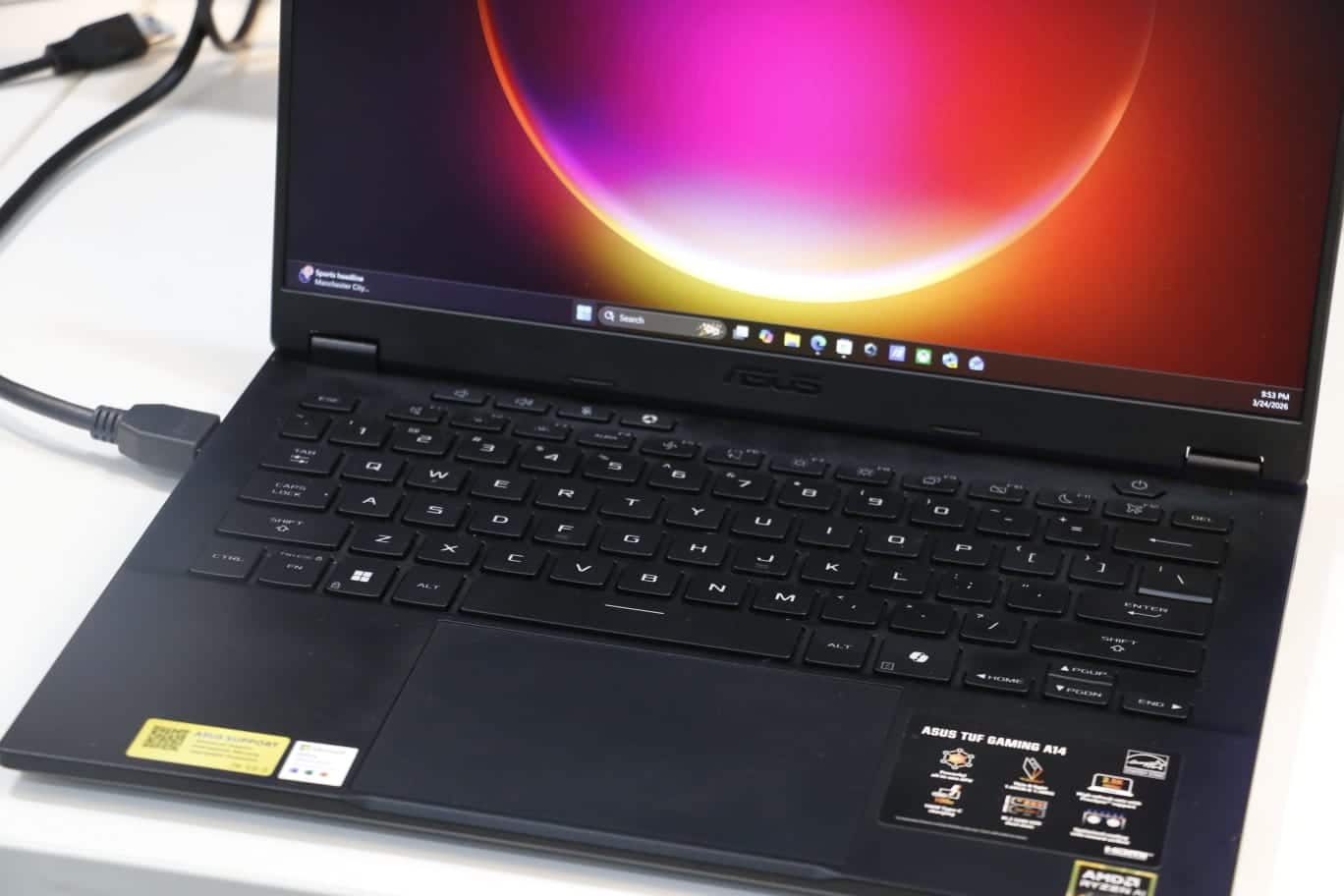
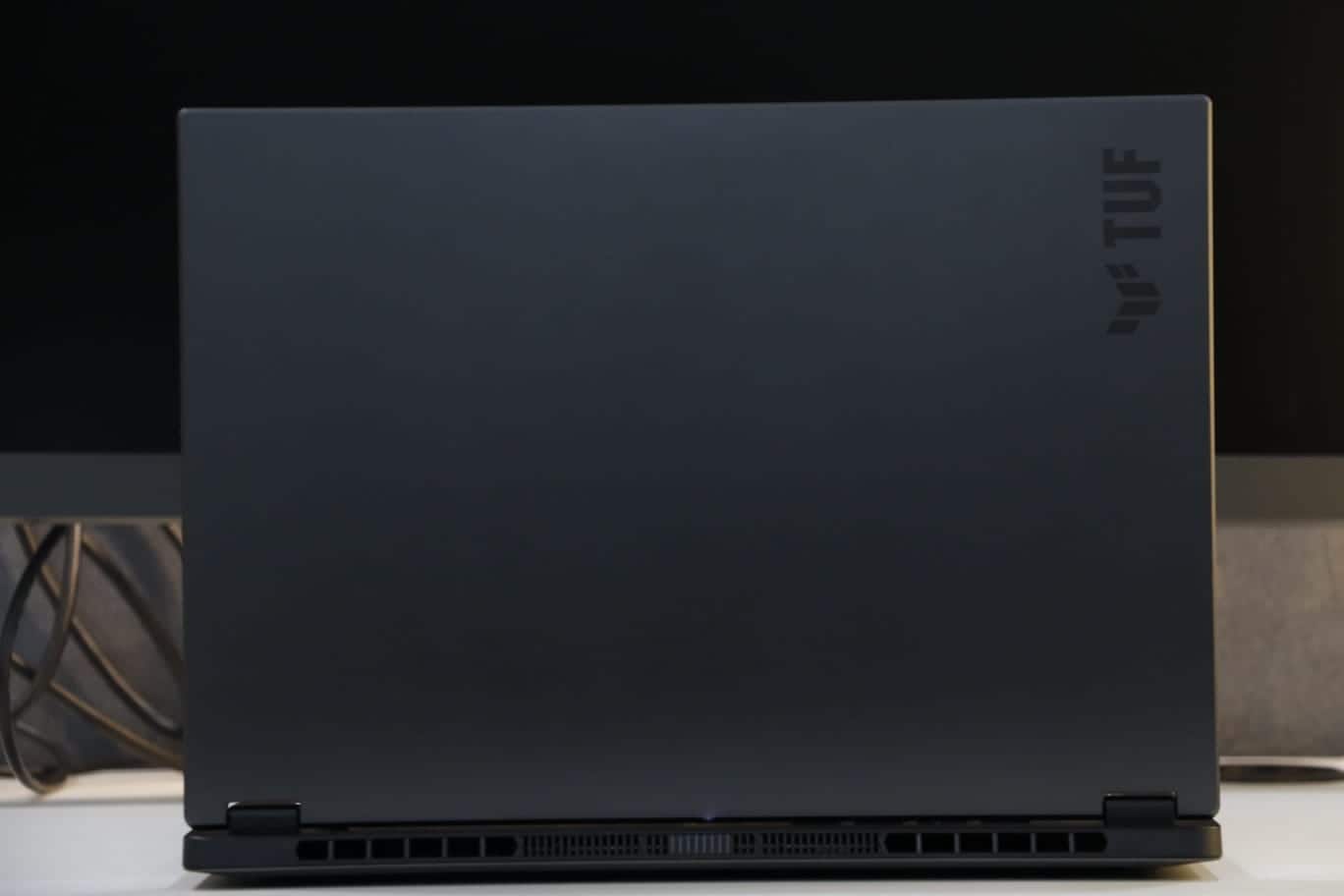
The TUF Gaming A14 feels closer to a productivity-first machine than a gaming laptop and no that’s not because it does not have a dedicated GPU. It is more because of the way it looks and feels. The laptop has a toned-down design and the compact footprint and relatively understated design make it easier to carry into meetings or workspaces without drawing attention. The MIL-STD-810H certification adds a layer of reassurance in terms of durability, especially for users who carry their laptop daily.
 Asus TUF A14
In literal terms, the MacBook Pro M5 weighs 1.55Kg and the TUF A14 weighs around 1.48Kg. Moreover, the thickness overall is also pretty comparable. The A14 is a 1.69 and which is pretty neck to neck for a machine that packs gaming capabilities.
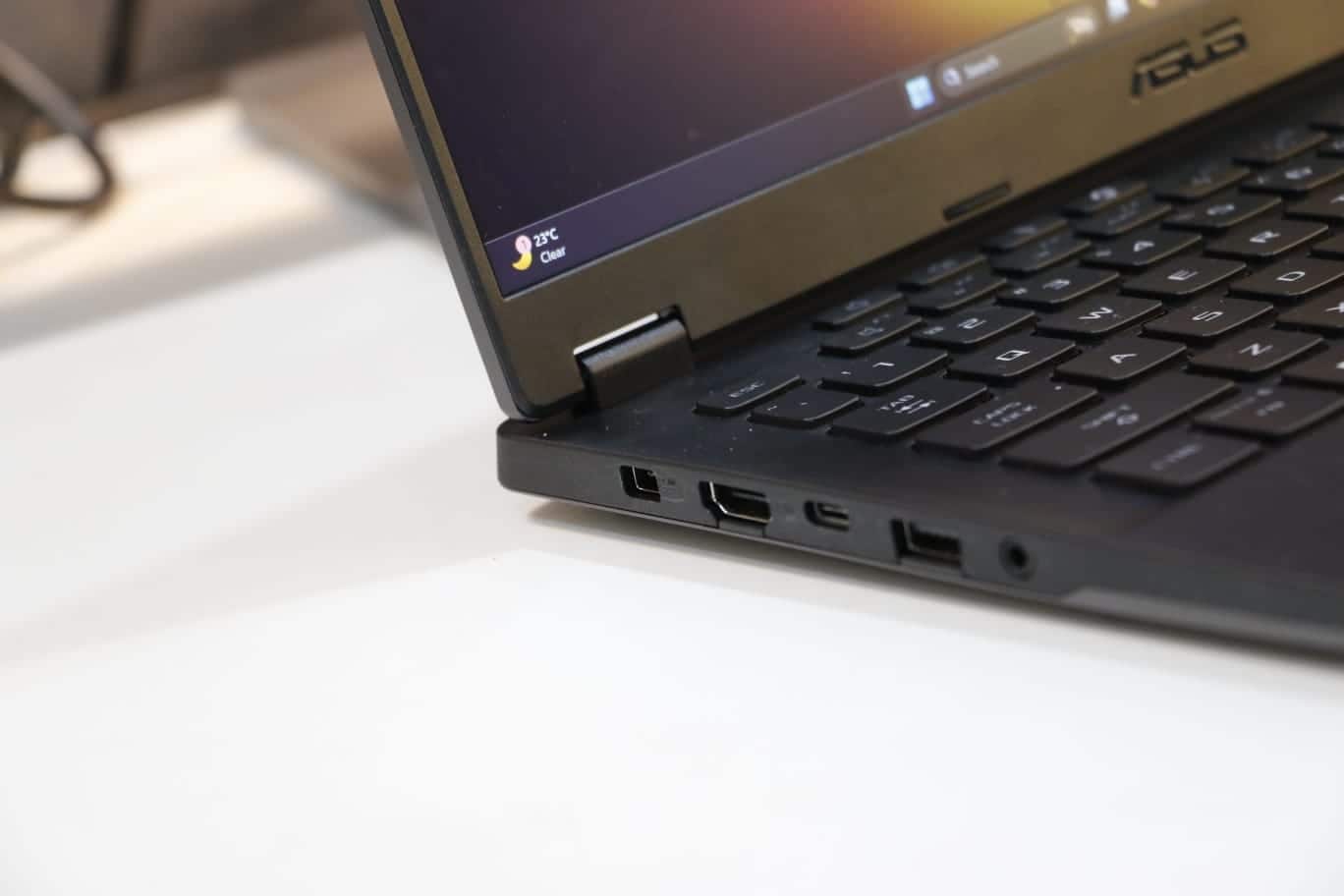
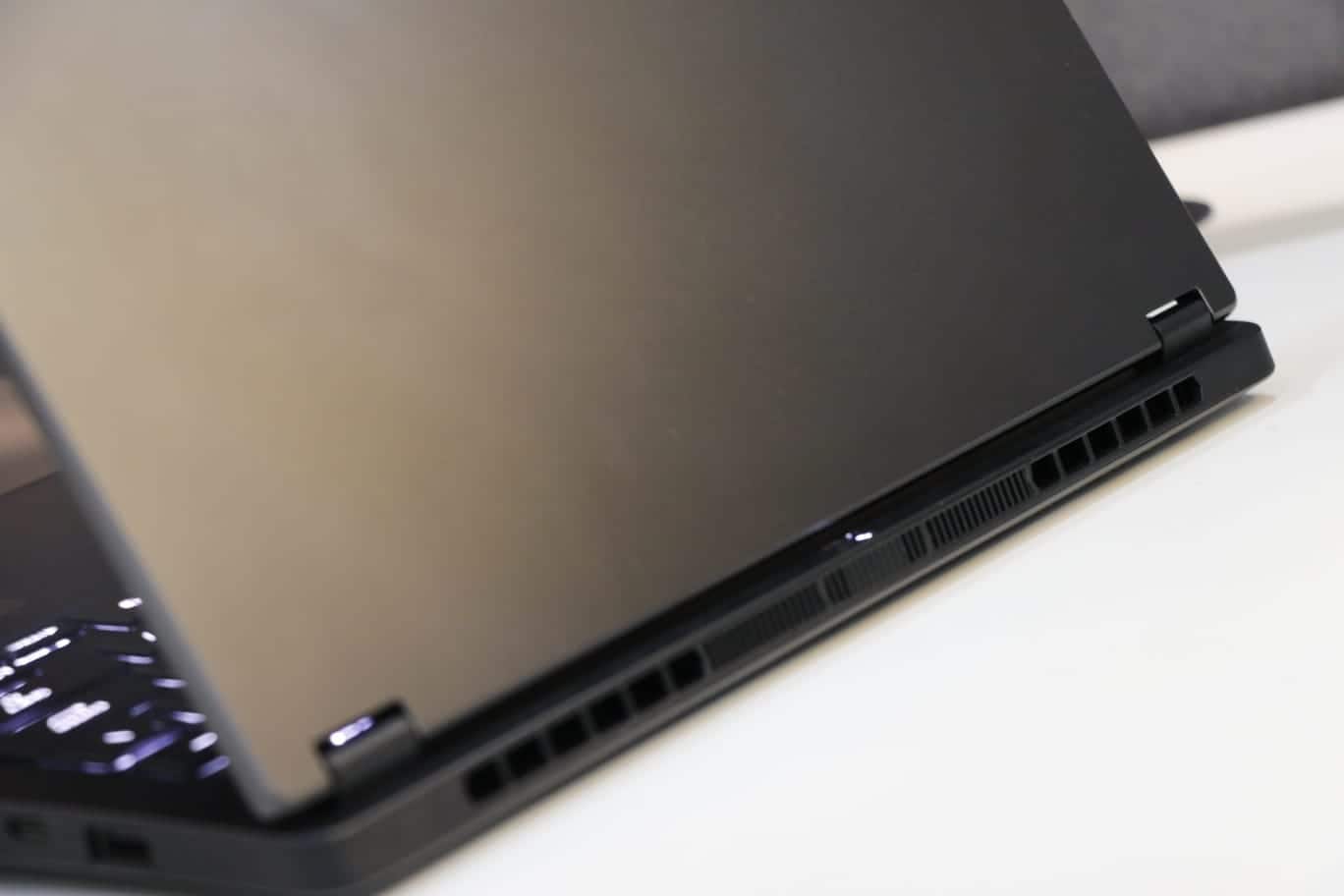
There’s no shortage of port selections as well. The laptop includes a 3.5mm combo audio jack, an HDMI 2.1 FRL port, and a microSD card reader with UHS-II support offering speeds up to 312MB/s. It also features two USB 3.2 Gen 2 Type-A ports with data transfer speeds of up to 10Gbps, along with one USB 3.2 Gen 2 Type-C port that supports DisplayPort output at up to 10Gbps. Additionally, there is a USB 4 Type-C port with support for DisplayPort and power delivery, delivering data speeds of up to 40Gbps.
 Asus TUF A14
That’s impressive and the added benefit is that one doesn't need to carry dongles around to connect the peripherals, monitor and projectors. The hinge is also well designed and feels solid while opening and closing and overall build is also solid with negligible body flex. The keyboard and trackpad follow Asus’ familiar approach—functional and reliable. There is no learning curve here, and extended typing sessions remain comfortable. And, the backlit is one of the brightest I’ve seen in 2026 at least.
 Asus TUF A14
.
The 14-inch display comes with a 2560×1600 resolution and a 165Hz refresh rate. In day-to-day use, this combination works well. The higher resolution ensures sharper text and more workspace for editing timelines or multitasking across windows. The 165Hz refresh rate, while aimed at gaming, also makes general usage—scrolling, animations, UI transitions—feel smoother.
Brightness sits between 400 and 430 nits, which is sufficient for indoor use and workable in brighter environments. The anti-glare coating adds to the overall experience and even outdoor visibility. Colour coverage at 100% sRGB makes it reliable for photo editing and general content work, though it stops short of the requirements for professional-grade colour grading. And, if you are into it, then you probably have a colour accurate monitor anyways.
Overall, the display feels well-balanced. It does not stand out in one area but supports a wide range of use cases comfortably.
Performance
At the heart of TUF A14 is the Ryzen AI MAX+ 392 processor, featuring 12 cores and 24 threads. What stands out is not just raw performance, but how consistently it performs within the constraints of a compact chassis is a thing to wonder about.
In synthetic benchmarks, the numbers reflect this balance:
3DMark Time Spy (CPU) comes in at around 10,170, while the CPU Profile test scores roughly 10,000. Cinebench 2024 delivers 1,408 in multi-core and 108 in single-core performance. Geekbench 6 results stand at 18,017 (multi-core) and 2,902 (single-core).
These numbers place the A14 in a position where it can compete with higher-power chips in short bursts and sustain stable performance over longer workloads. Keeping the numbers aside, the laptop is real-world and delivers smoother timelines in video editing software, faster exports, and reliable multitasking when working across multiple applications.
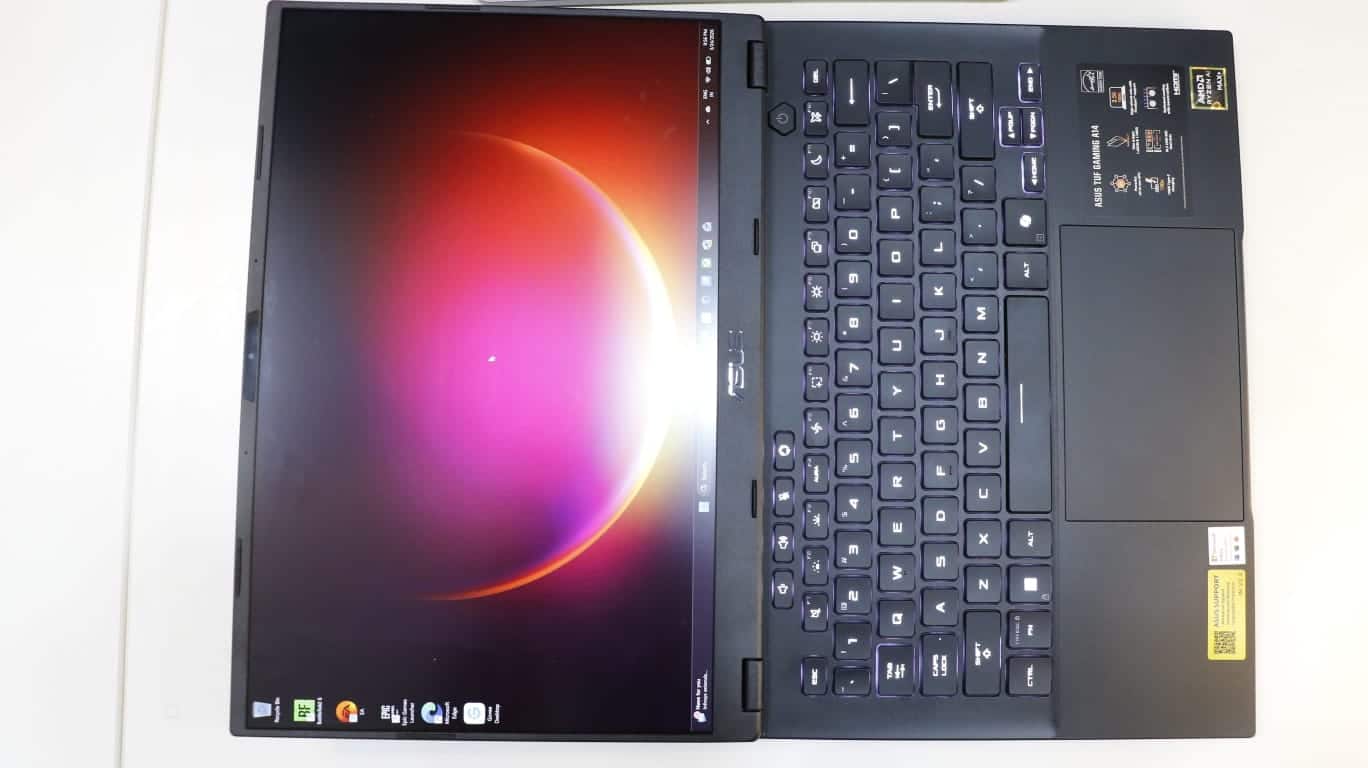 Asus TUF A14
During everyday usage—browser tabs, document editing, light editing workloads—the laptop feels responsive without noticeable slowdowns. It is only when pushing sustained, heavy workloads that you begin to see the limitations of a compact system, but even then, it remains stable rather than inconsistent.
The Radeon 8060S integrated GPU is one of the most interesting aspects of this laptop. Traditionally, integrated graphics have been a compromise. Here, it becomes a defining feature.
Let’s start with the creative workflows, this translates into usable performance in applications like Adobe Premiere Pro, DaVinci Resolve, and Photoshop. Timeline scrubbing remains smooth in 1080p and even some 4K projects, provided effects are managed carefully. GPU acceleration in tasks like rendering previews or applying filters is noticeably faster than older integrated solutions.
Photo editing benefits as well. Large RAW files, batch processing, and layered edits do not feel constrained by the hardware. LPDDR5X memory plays a significant role here, allowing multiple heavy applications to run simultaneously without hitting memory limits.
This is where the A14 finds its identity. It is not trying to replace a high-end workstation, but it offers enough performance to make serious creative work viable on a compact machine.
Gaming performance
While not positioned as a high-end gaming laptop, the A14 still handles gaming reasonably well. Most titles are playable at 1080p with medium to high settings.
In demanding games, maintaining smooth performance often requires upscaling technologies. Native performance can dip depending on the title, but with adjustments, the experience remains smooth and sharp.
Ray tracing is technically supported, but practical usage is somewhat limited. Enabling ray tracing in modern titles significantly impacts performance, making it more of an occasional feature than a standard setting.
 A14
A14
For casual and moderate gaming, however, the experience is consistent. Esports titles and less demanding games run comfortably, and even heavier titles can be managed with balanced settings or rather I say Medium settings.
.
One of the standout specifications is the 64GB LPDDR5X memory running at 8533 MT/s in a quad-channel configuration. For a 14-inch laptop, this is unusually high and directly benefits multitasking and creative workflows.
Storage includes dual M.2 slots, with 1TB included by default. This allows flexibility for expansion, especially for users dealing with large media libraries or project files.
Thermals remain controlled during regular use, and even under load, the system avoids aggressive throttling. This consistency contributes to a more predictable experience overall.
Battery life and efficiency
The 73Wh battery delivers around 8 hours of light usage. For a system with this level of performance, that is a balanced result.
Because the laptop relies on integrated graphics rather than a power-hungry discrete GPU, efficiency improves in everyday scenarios. Tasks like browsing, writing, and media consumption do not drain the battery aggressively.
Under heavier workloads—editing, rendering, or gaming—battery life drops as expected, but the system does not feel inefficient or unpredictable.
Verdict
At a starting price of Rs 1,79,999, the Asus TUF Gaming A14 (2026) positions itself as a compact performance laptop rather than a traditional gaming machine. It focuses on delivering a balance between portability, CPU performance, and integrated graphics capability, and largely succeeds in doing so.
In everyday use, the laptop feels responsive and consistent. It handles multitasking, content creation, and mid-end gaming without major compromises. The Ryzen AI MAX+ 392 and Radeon 8060S combination shows how far integrated graphics have progressed, especially when paired with high-speed memory.
 Asus TUF A14
That said, it is not built for high-end gaming or intensive GPU workloads, where limitations become evident. But within its intended use case, the A14 remains stable and dependable.
For users looking for a lightweight laptop that can manage work, creative tasks, and occasional gaming without added bulk, the TUF A14 offers a well-rounded and practical option that prioritises usability.


Discover the latest Business News, Sensex, and Nifty updates. Obtain Personal Finance insights, tax queries, and expert opinions on Moneycontrol or download the Moneycontrol App to stay updated!
Find the best of Al News in one place, specially curated for you every weekend.
Stay on top of the latest tech trends and biggest startup news.