
Andhra Pradesh expects its two upcoming quantum testing and reference facilities to pave the way for an indigenous quantum hardware ecosystem in India.
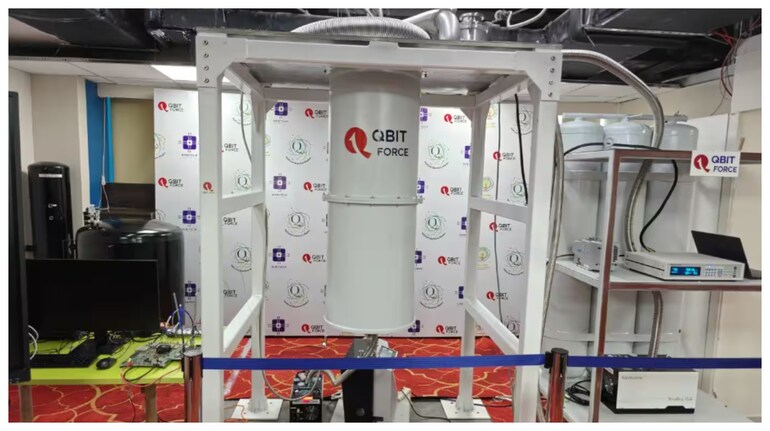
On April 14, coinciding with World Quantum Day, Chief Minister N Chandrababu Naidu is set to inaugurate two quantum computer test beds, one at SRM University in Amaravati and another at Medha Towers in Gannavaram.
These facilities, developed using locally developed components, will enable the testing and certification of quantum computing hardware.
The open-access facilities will be particularly beneficial for researchers, students, startups and companies working on quantum technologies, offering them a platform for experimentation and validation.
Qubitech, the startup which owns and operates the QU-414 quantum characterisation facility at Medha Towers, said it has been designed as a shared national resource open to researchers, academics, government laboratories, and industry partners.
It will provide hands-on access to cutting-edge quantum hardware infrastructure that was previously available only in a handful of facilities across the world.
Amaravati’s tech ambitions take shape
The move comes as CM Naidu seeks to bolster the technological prowess of Amaravati amidst an intense rivalry with neighbouring tech hubs like Bengaluru and Hyderabad. It also aims to place Amaravati on the global map as an emerging hub for quantum innovation and advanced research.
The state has set a target of manufacturing 100 indigenous quantum computers in two years for education, research, industry, and global export purposes.
"We have asked component manufacturers to come together, discuss, and share a common vision for building the quantum hardware ecosystem," said CV Sridhar, Mission Director, Andhra Pradesh State Quantum Mission.
Officials said that nearly 85 percent of quantum hardware components can already be manufactured domestically, with a clear roadmap to 100 percent localisation in the coming years. The state has engaged with over 40 companies and institutions such as Defence Research and Development Organisation (DRDO), Indian Institute of Science (IISc), and Tata Institute of Fundamental Research among others for this purpose.
This launch will make it the first state in India to host a dedicated quantum test and certification ecosystem, officials said.
Amaravati Quantum Valley push
The move is part of the state's ambitious Amaravati Quantum Valley initiative and is expected to significantly boost research, innovation, and industry collaboration in the rapidly evolving quantum domain.
The Andhra Pradesh government is developing a Quantum Valley in Amaravati as a major part of India's National Quantum Mission, which was launched in April 2023, with a total outlay of Rs 6,000 crore for a period up to FY31.
Last year, CM Naidu and state officials had laid out plans for a Quantum Valley ecosystem in Amaravati, including a dedicated quantum computing centre, research park, and a new education programme.
In May 2025, the government partnered with TCS, IBM, and L&T to unveil plans to bring a 133-qubit quantum Computer, which is India’s largest quantum Computer, to the country’s first Quantum Valley tech park. Government officials expect IBM quantum computer to commence operations by December 2026.
The a 50-acre proposed Quantum Valley campus is a central pillar of Andhra Pradesh’s investment strategy, aimed at attracting global technology firms, research institutions, and long-term innovation partnerships while strengthening India’s position in emerging technologies.
Beyond quantum, it will also focus on areas such as artificial intelligence (AI), semiconductors, and cyber-physical systems. The campus will offer 9 million square feet space and can accomodate upto 88,000 people.
Building 100 quantum algorithms
The government has also established a Quantum Innovation Centre to bring together the state’s academic community and experts from IITs to develop and run algorithms on the quantum computers it plans to build, as well as on the IBM quantum system.
The state aims to develop 100 quantum algorithms by 2028 across sectors including finance, logistics, energy, cybersecurity, and material science,
"We are gathering problem statements from the state government, industry, and all the research that is happening elsewhere in the world," Sridhar said "We are taking this forward by engaging a network of professors through the Quantum Innovation Centre"
"At present, we are telling the states to provide us the problems they are using AI to tackle," he added.
Other initiatives include building a global quantum bio foundry and an effort to develop a quantum operating system in partnership with the National Quantum Mission.



Discover the latest Business News, Sensex, and Nifty updates. Obtain Personal Finance insights, tax queries, and expert opinions on Moneycontrol or download the Moneycontrol App to stay updated!
Find the best of Al News in one place, specially curated for you every weekend.
Stay on top of the latest tech trends and biggest startup news.