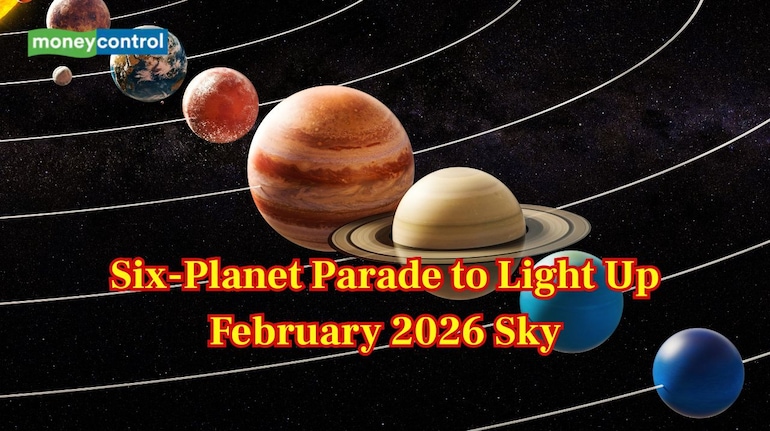

In late February, skywatchers across the Northern Hemisphere will see six planets align in a rare planetary parade, as new soundscapes released on 25 February by NASA mark the occasion using data from the Chandra X-ray Observatory.
Astronomers say the display happens periodically. Planets orbit the Sun along one plane. That shared path is called the ecliptic. Sometimes several worlds appear grouped together. This occurs when they occupy similar positions. From Earth, they seem loosely aligned. The effect creates a striking visual line. Clear and dark skies improve visibility greatly.
Chandra X-ray Observatory and Planetary Sonifications
To celebrate the alignment, scientists released sonifications. These convert astronomical measurements into audible sound. Three planets feature prominently in recordings. Jupiter, Saturn and Uranus are highlighted distinctly. Each can be heard uniquely through data. Such details remain invisible from Earth.
Although famous for black hole research, Chandra also studies nearby worlds. The Sun emits X-rays continuously outward. Those rays reflect from planets and moons. Reflected signals reveal unusual physical processes. Scientists gain insights unavailable elsewhere.
Jupiter, Saturn and Uranus in Sound
The Jupiter sonification blends multiple observations. X-ray readings combine with infrared imagery. Data from the Hubble Space Telescope enriches the composition. Woodwind tones trace auroral emissions clearly. Additional instruments suggest layered cloud bands.
Saturn’s sequence merges optical imagery and X-rays. Optical data came from Cassini mission observations. A siren sound follows sweeping rings. Synthesiser tones shift across the planet.
For Uranus, Chandra data joins ground observations. Signals from the W. M. Keck Observatory contribute detail. Sound variations reflect light intensity detected. Ring orientation influences tonal patterns.
Scientists emphasise that sonification preserves accuracy. Data arrives as binary code streams. Those numbers convert carefully into sound. The method broadens public engagement possibilities. It also aids accessibility for diverse audiences.
Management of the Chandra programme remains centralised. NASA Marshall Space Flight Center oversees overall operations. Scientific control rests with the Smithsonian Astrophysical Observatory. Flight operations run from Burlington, Massachusetts.
As planets align overhead, sound accompanies sight. Observers may both watch and listen. The parade blends astronomy with art.
Discover the latest Business News, Sensex, and Nifty updates. Obtain Personal Finance insights, tax queries, and expert opinions on Moneycontrol or download the Moneycontrol App to stay updated!
Find the best of Al News in one place, specially curated for you every weekend.
Stay on top of the latest tech trends and biggest startup news.