
The August night sky will twinkle more brightly, providing stargazers with the opportunity to view some of the most renowned star clusters. More transparent evenings and darker nights encourage viewers to stop and gaze up, as August 2025 has some special things in store for the heavens.
What are star clusters?
Star clusters are stellar groups held together by gravity, which are born together in cosmic nurseries. They are two broad categories. Open clusters, such as the Hyades and Pleiades, are youngish and look like loose groups throughout the disc of the Milky Way. Gradually, they move away from each other under the influence of neighboring stars. Globular clusters, such as the Great Hercules Cluster, are ancient, spherical swarms of hundreds of thousands of stars orbiting in the galaxy’s halo.
How to view star clusters in August 2025
Astronomers advise giving eyes around 30 minutes to fully adjust to the dark. A technique called "averted vision," looking slightly to the side of a target, helps catch faint light more clearly. With a simple pair of 10×50 binoculars, the clusters begin to reveal their details, while a telescope of six inches or larger offers sharper and richer views.
The Great Hercules Cluster
Also known as Messier 13, the Great Hercules Cluster lies 22,000 to 25,000 light-years away in the constellation Hercules. It contains hundreds of thousands of tightly packed stars, making it one of the brightest globular clusters visible in northern skies. To locate it, stargazers should find the diamond-shaped Keystone asterism in Hercules, lying between Vega and Arcturus. Sweeping binoculars between Zeta Herculis and Eta Herculis reveals the cluster, which looks like a soft glow to the eye but shows intricate detail through binoculars or a small telescope.
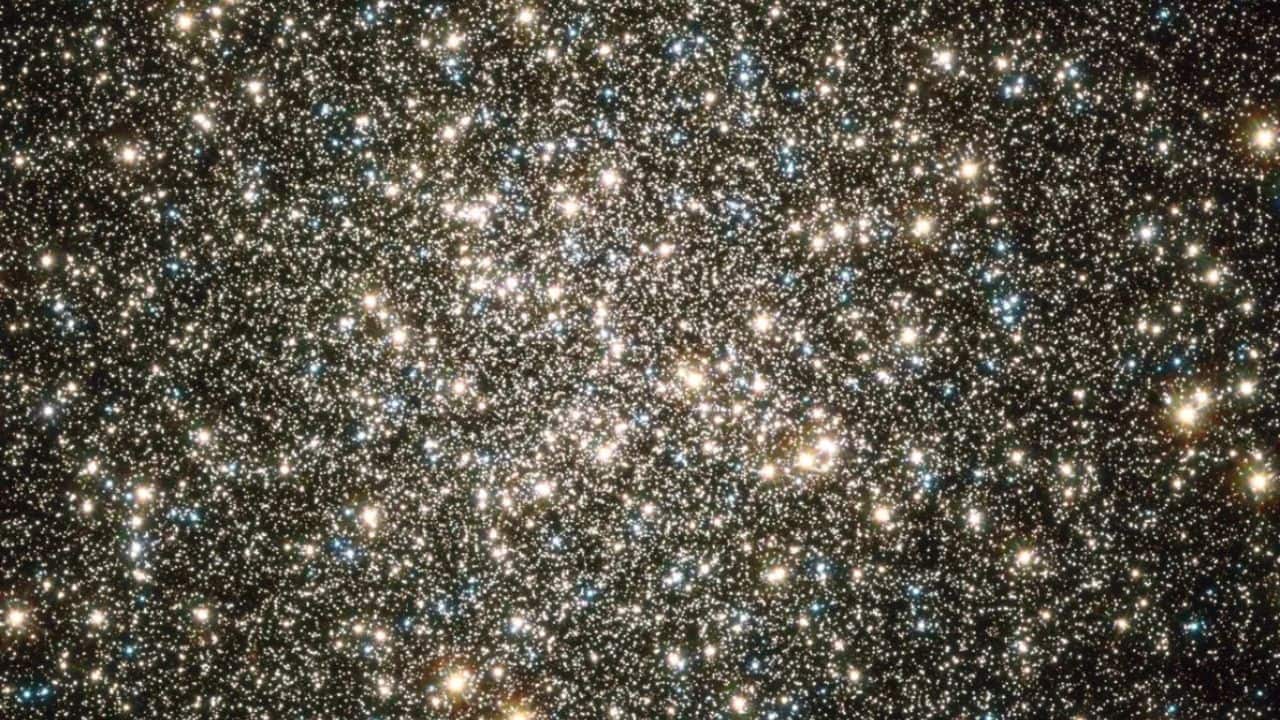 The Great Hercules Cluster (Image: NASA)
The Hyades Open Cluster
The Hyades cluster is in the constellation Taurus and is the closest open cluster to Earth at around 153 light-years away. Its stars form a sideways V-shape, outlining the bull’s face. Aldebaran, a bright red star, seems part of the group but is much closer at 65 light-years. The Hyades is about 625 million years old and is easily visible in the early morning sky because of its distinctive shape.
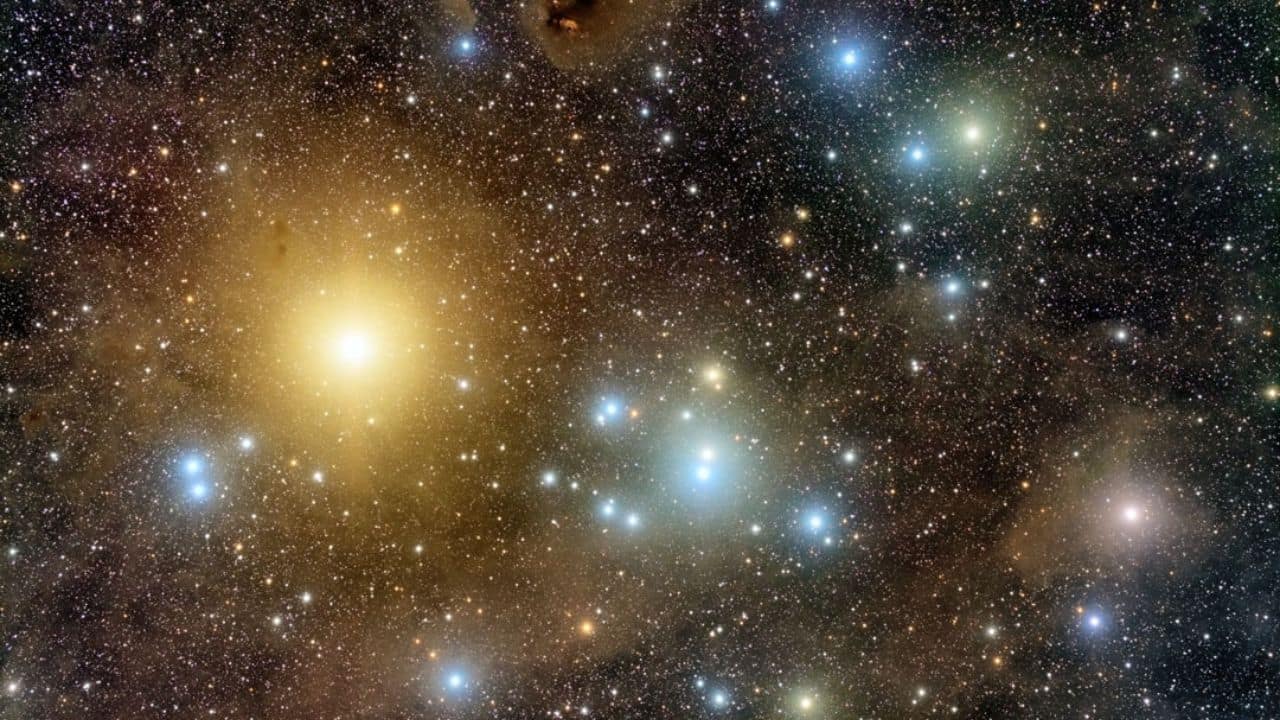 The Hyades Open Cluster (Image: NASA)
The Seven Sisters
The Seven Sisters, or Pleiades, is one of the best-known clusters, also in Taurus. Rising in the eastern sky before sunrise, it holds over a thousand young, hot stars.
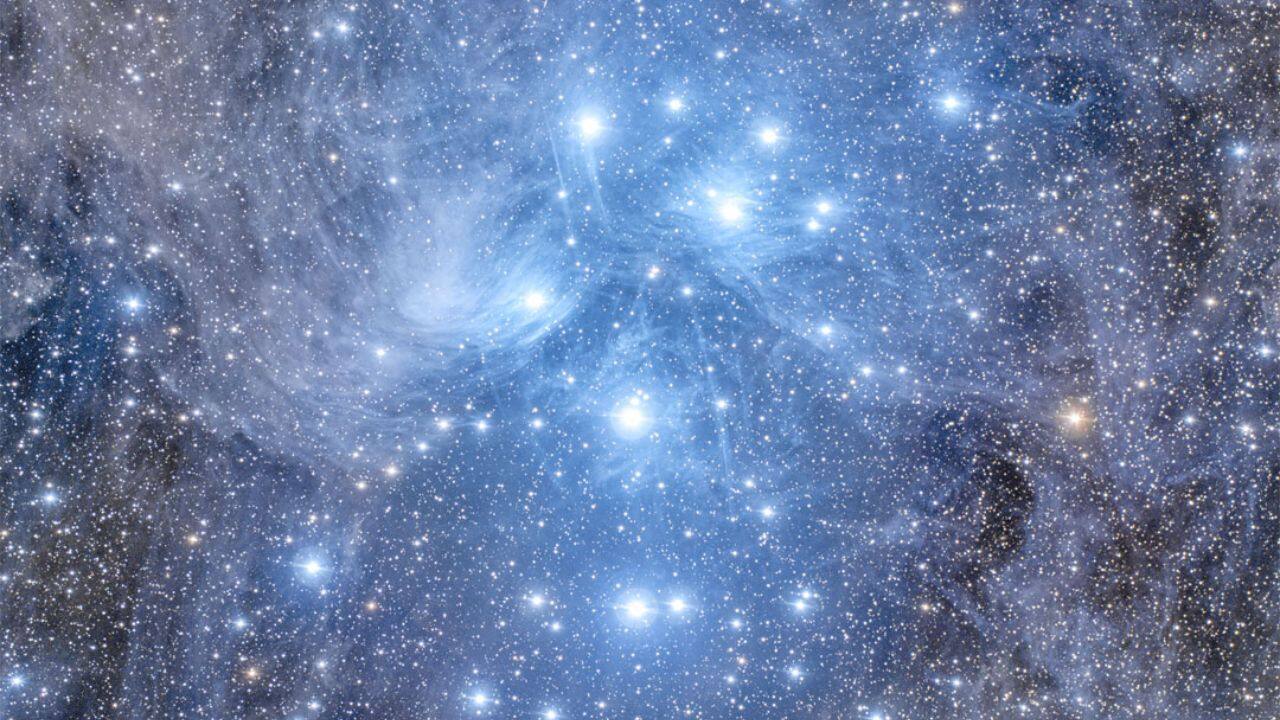 The Seven Sisters (Image: NASA)
The seven brightest stand out most, giving the cluster its name. About 444 light-years away, its blue stars remain visible even under some city lights. Around mid-August, the Pleiades sit about 10 degrees above the Hyades, making both clusters visible together for keen observers.
Discover the latest Business News, Sensex, and Nifty updates. Obtain Personal Finance insights, tax queries, and expert opinions on Moneycontrol or download the Moneycontrol App to stay updated!
Find the best of Al News in one place, specially curated for you every weekend.
Stay on top of the latest tech trends and biggest startup news.