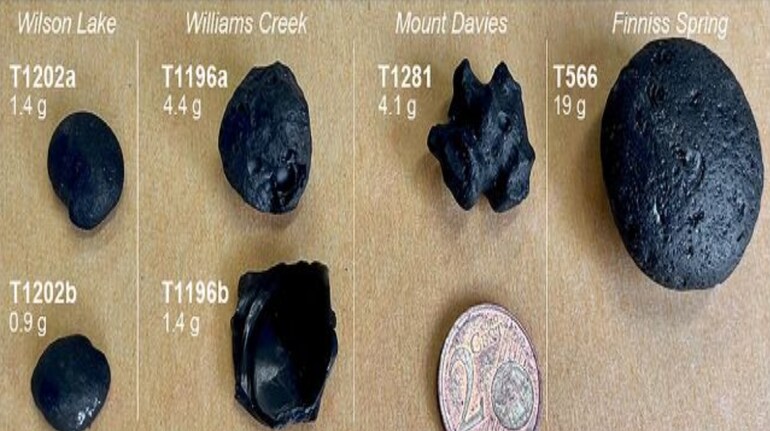
A new study has uncovered traces of a forgotten cosmic collision. Researchers in Australia found rare glassy beads called tektites in desert soils. These tiny remnants hint towards an asteroid who hit planet Earth, millions of years ago. The discovery adds a missing piece towards how to understand Earth’s history.
Ancient Clues Unearthed in Desert Sands
Scientists have uncovered mysterious glass fragments scattered across Australia’s arid landscapes. Researchers believe a massive asteroid struck Earth about 11 million years ago.
The research was carried out by a collaboration between scientists at Curtin University (Australia) and Aix‑Marseille University (France). The work was conducted analysing glassy fragments (tektites) found in southern Australia.
Why Does This Finding Matter?
These newly found tektites differ from other known Australian examples. They hold lower silica and higher iron, magnesium, and calcium. Such chemistry confirms they came from a separate asteroid event. The discovery adds a missing chapter to Earth’s impact history.It also emphasizes on the fact that there are numerous craters across the world that have not been discovered.
How Did Scientists Discover the Undercover Effect?
Complex chemical and isotopic analyses were applied in research. They made a comparative study of their density, composition and magnetic properties. The findings reflected clear signatures that are not known with the existing tektites. This method of analysis revealed the geologic time of a collision lost. The new material has been named “ananguites” after its unique traits.
Age Dating Confirms a Separate Impact
Radiometric dating revealed an age of nearly eleven million years. This timing marks a completely separate asteroid strike in Earth’s past. The event’s power was strong enough to melt surface rocks completely.
Molten droplets cooled rapidly in the air to form these tektites. The results challenge current assumptions about Australia’s impact history.
The Missing Crater Mystery
Though there are some clear evidence but no crater has yet been located. Erosion, volcanic activity or burial may have erased visible traces. Scientists suspect the crater lies somewhere near northern Australia or Indonesia.
Further surveys are planned to use magnetic and satellite imaging data. The discovery suggests many ancient impacts remain hidden beneath Earth’s surface.
Discover the latest Business News, Sensex, and Nifty updates. Obtain Personal Finance insights, tax queries, and expert opinions on Moneycontrol or download the Moneycontrol App to stay updated!
Find the best of Al News in one place, specially curated for you every weekend.
Stay on top of the latest tech trends and biggest startup news.