






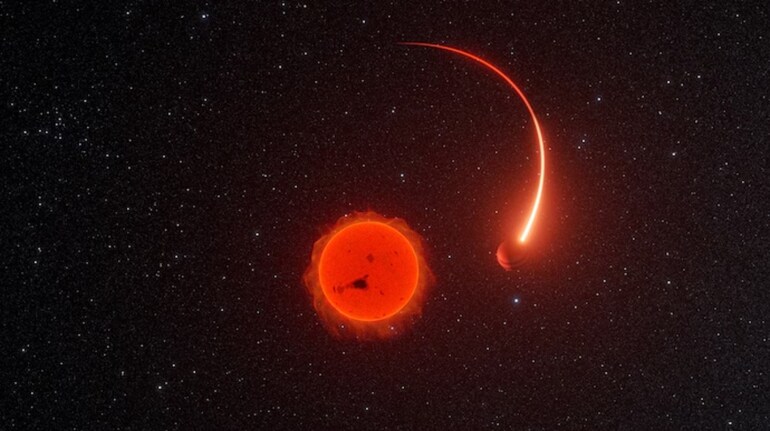
Scientists have found two unusual objects in deep space. One is so big it could fit 21 Jupiters inside but is neither a star nor a planet.
Gaia-5b is a brown dwarf, larger than a planet but too light to be a star. It orbits a low-mass star named Gaia-5, located 134 light-years away. Brown dwarfs do not sustain nuclear fusion, unlike regular stars.
Another discovery, Gaia-4b, is a massive exoplanet, twelve times bigger than Jupiter. It orbits the star Gaia-4, 244 light-years away, completing its orbit in 570 days. Scientists detected it through the gravitational wobble it creates.
Gaia telescope’s vital role
The European Space Agency’s Gaia telescope recorded tiny star movements. These wobbles indicated unseen objects influencing their stars. Gaia has been mapping the galaxy, helping scientists understand planetary formation.
These discoveries challenge existing theories. Scientists hope further observations will reveal more about these mysterious space objects.
Discover the latest Business News, Sensex, and Nifty updates. Obtain Personal Finance insights, tax queries, and expert opinions on Moneycontrol or download the Moneycontrol App to stay updated!
Find the best of Al News in one place, specially curated for you every weekend.
Stay on top of the latest tech trends and biggest startup news.








