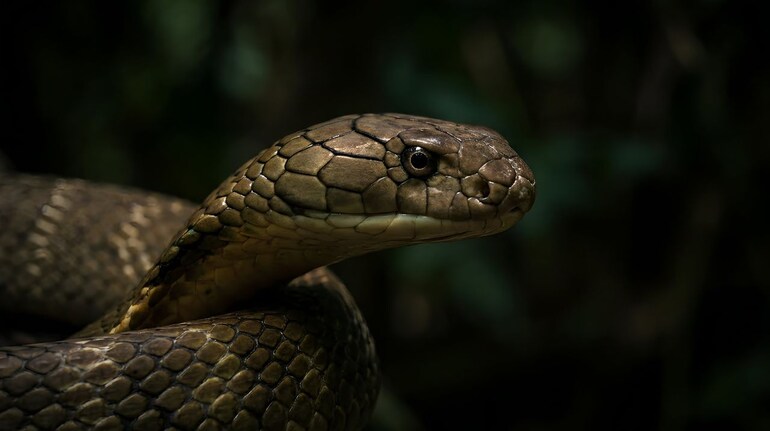

In the forests of the Western Ghats, South India, one snake quietly performs a task unmatched across its kind, building an elaborate nest that protects the next generation of king cobras and reshapes how scientists view reptile behaviour.
A rare behaviour among snakes
The female king cobra remains the only known snake species that builds a nest for her eggs. This behaviour unfolds every year during the dry month of April, shortly before monsoon rains arrive in May. She carefully selects a well drained site, usually beneath a large tree or dense bamboo clump. The location helps prevent flooding once seasonal rains begin, ensuring safer conditions for incubation. Unlike most reptiles that simply lay eggs and leave, the king cobra invests time, effort and remarkable energy.
Over several days, the female gathers dry leaves from the forest floor. She sweeps them together using her long muscular body. Leaves are often carried in tight coils, an action demanding considerable strength and endurance. Slowly, the leaf pile grows larger, becoming the foundation of a carefully planned structure.
How the king cobra nest is built
Once enough leaves are collected, the snake begins shaping the nest. She repeatedly crawls over the pile, pressing it down and compacting it. This process creates a dense, waterproof chamber capable of withstanding rain. A completed nest can stand close to one metre high, an impressive structure built without limbs or tools.
After compacting the pile, the female burrows inside. Deep within the leaves, she forms a cup shaped hollow. Inside this hidden chamber, she lays a clutch of around 15 to 50 leathery eggs. The design keeps the eggs insulated, dry and well concealed from predators.
Why nest guarding matters
Unlike most snakes, the female king cobra often remains near the nest throughout incubation. This period can last between 75 and 100 days. Her presence alone offers strong protection, discouraging predators and disturbance. Observations show that king cobra nests can reach about 55 centimetres high at the centre and roughly 140 centimetres wide at the base.
This nesting behaviour highlights an unusual level of parental investment among reptiles. It also underlines the ecological importance of undisturbed forest habitats. As forests shrink, such specialised behaviours face increasing risks. The king cobra nest stands as a reminder that even feared predators play complex, careful roles within natural ecosystems.
Discover the latest Business News, Sensex, and Nifty updates. Obtain Personal Finance insights, tax queries, and expert opinions on Moneycontrol or download the Moneycontrol App to stay updated!
Find the best of Al News in one place, specially curated for you every weekend.
Stay on top of the latest tech trends and biggest startup news.