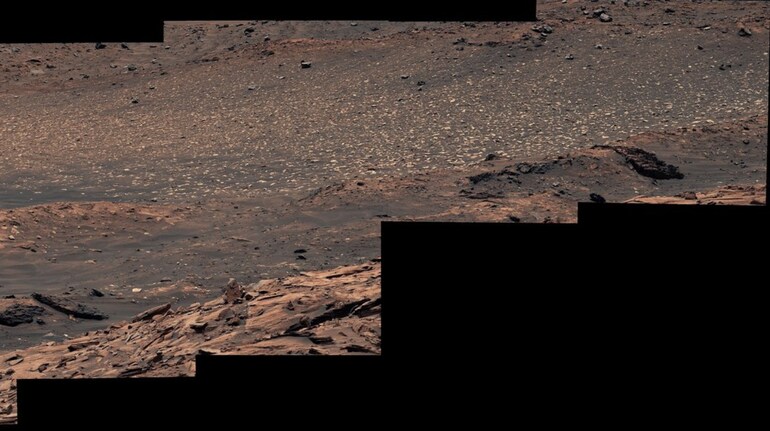
NASA’s Curiosity rover has wrapped up its study of the Gediz Vallis channel on Mars, capturing a stunning 360-degree panorama before heading toward a new target called the boxwork. This exploration on the slopes of Mount Sharp is part of an ongoing effort to understand Mars' transition from a wetter climate to the arid conditions it has today.
Rare Sulphur Discovery in Gediz Vallis
A groundbreaking find during the mission is the detection of rare sulphur stones in the Gediz Vallis region. These bright white stones, which revealed yellow crystals when crushed under the rover's wheels, had gone unnoticed in earlier imaging by the Mars Reconnaissance Orbiter.
Ashwin Vasavada, Curiosity’s project scientist at NASA’s Jet Propulsion Laboratory, described the discovery as a fascinating mystery. Unlike Earth, where sulphur is typically linked to volcanic activity or hot springs, Mount Sharp has no such features. Scientists are now analyzing the data to determine how these unique deposits formed.
Mars’ Climate History
Observations from Gediz Vallis have provided vital clues about the Red Planet’s geological past. Features such as the mound called “Pinnacle Ridge” indicate the channel was shaped by a mix of rivers, wet debris flows, and dry avalanches. These findings are helping scientists build a timeline of events that occurred as Mars transitioned from a wet to dry climate.
The Mysterious Boxwork Formation
Curiosity’s next destination, the boxwork, is a sprawling network of mineral ridges resembling a spiderweb. Researchers believe these structures formed when minerals crystallized in fractures as water evaporated. Spanning up to 20 kilometers, the area offers a rare chance to study environments that could have once supported microbial life.
Since landing on Mars in 2012, the Curiosity rover has traveled over 33 kilometers, uncovering crucial insights into the planet's habitability and geological evolution. With each new discovery, Curiosity brings humanity closer to understanding Mars’ mysterious past.
Discover the latest Business News, Sensex, and Nifty updates. Obtain Personal Finance insights, tax queries, and expert opinions on Moneycontrol or download the Moneycontrol App to stay updated!
Find the best of Al News in one place, specially curated for you every weekend.
Stay on top of the latest tech trends and biggest startup news.