NASA is set to launch its newest space telescope on Friday, February 28. The telescope, called SPHEREx, will lift off aboard a SpaceX Falcon 9 rocket. The launch will take place at Vandenberg Space Force Base in California. The two-year mission aims to map the sky and study cosmic history. Scientists hope to learn more about galaxy formation and water molecules in space.
A Colourful Map of the Universe
SPHEREx will create the most detailed cosmic map ever made. It will detect optical and infrared light from space. The human eye can see optical light but not infrared. However, infrared reveals distant galaxies and hidden structures. To study this light, scientists use specialised instruments. The James Webb Space Telescope (JWST) is one such tool. Unlike JWST, which focuses on specific regions, SPHEREx will scan the entire sky.
The telescope will capture images in 102 infrared colours. Every six months, it will update the cosmic map. Nicky Fox, from NASA’s Science Mission Directorate, described it as a historic first. "We will map the entire sky with this level of colour detail," Fox told Space.com.
Studying the Universe’s Earliest Expansion
One of SPHEREx’s main goals is to study cosmic inflation. This event occurred about 14 billion years ago. During inflation, the universe expanded faster than light for a fraction of a second. Scientists believe this explains why the universe appears flat on large scales. However, inflation remains poorly understood.
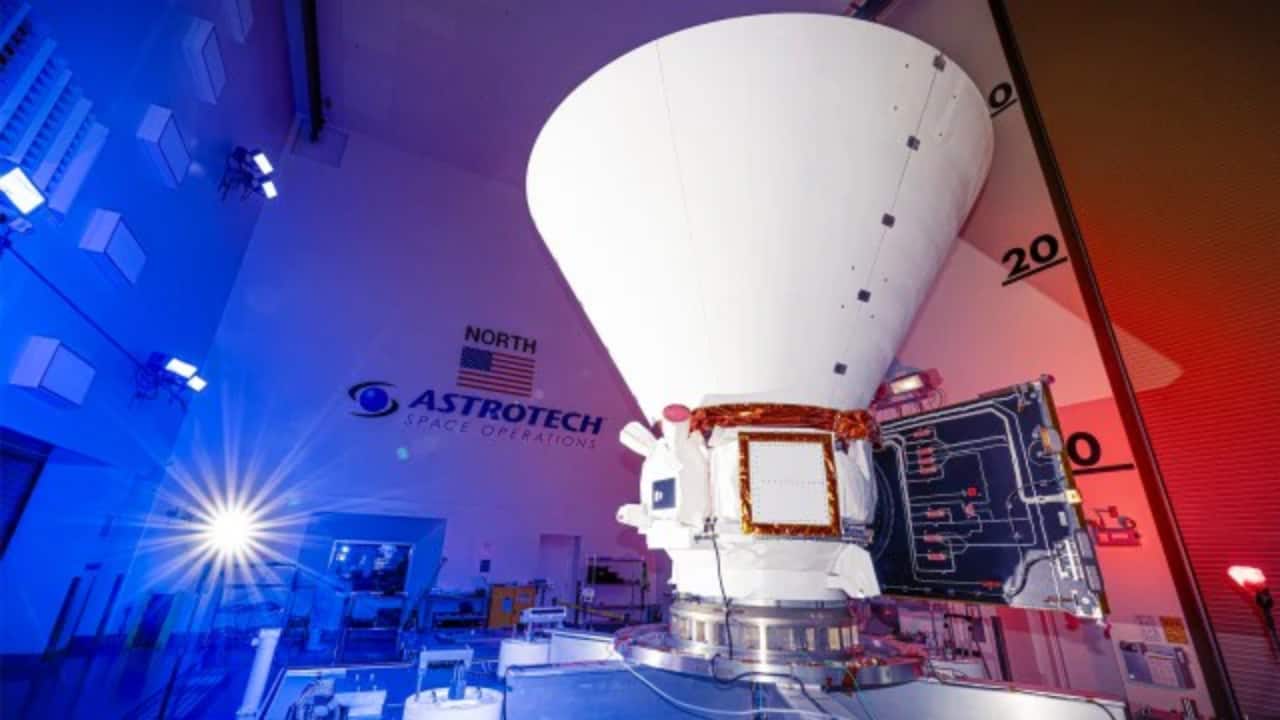 The new space telescope aims to uncover cosmic mysteries. (Image: NASA)
SPHEREx will track the 3D positions of 450 million galaxies. Astronomers will use this data to study cosmic history. By analysing these galaxies, they hope to test different inflation theories. The findings could reshape our understanding of the early universe.
Searching for Life-Forming Molecules
SPHEREx will also study biogenic molecules in the Milky Way. These molecules, like carbon, hydrogen, and oxygen, are essential for life. They exist in icy particles in cold regions of space. Scientists believe these molecules reached Earth long ago. However, they still do not know how this process occurred.
The telescope will locate these icy molecules across the galaxy. It will also search for them in nearby star systems. By mapping their locations, scientists hope to understand life’s origins. "This data will help explain a key step in how life began," a report in The Conversation stated.
NASA’s new mission promises exciting discoveries. From cosmic inflation to life-forming molecules, SPHEREx may reveal secrets of the universe.
Discover the latest Business News, Sensex, and Nifty updates. Obtain Personal Finance insights, tax queries, and expert opinions on Moneycontrol or download the Moneycontrol App to stay updated!
Find the best of Al News in one place, specially curated for you every weekend.
Stay on top of the latest tech trends and biggest startup news.