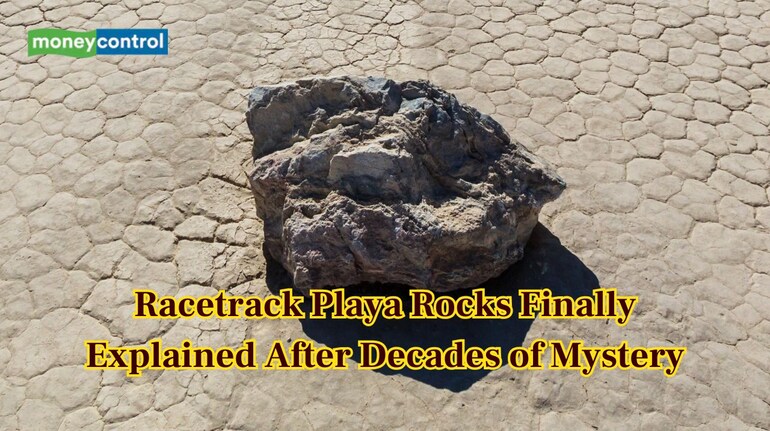

For decades, scientists and visitors were baffled by Racetrack Playa. Large rocks seemed to glide across the flat dry lakebed. They left long trails behind as if moving on their own. No one could explain how until recently. Scientists found that large rocks in Racetrack Playa move but occasionally and this is a rare phenomenon.
What Did Researchers Find?
Scientists finally observed the rocks in motion for the first time. They discovered that thin sheets of ice push the rocks slowly. When ice floats across wet mud, even light winds move stones. This combination explains why rocks slide, leaving long trails behind. It was a subtle, natural phenomenon rather than supernatural activity.
Where did this phenomenon occur?
The phenomenon occurs in Racetrack Playa, Death Valley National Park, California. This is a flat, dry lakebed in a remote desert region. The area is famous for its extremely smooth and levelled ground. It provides the perfect environment for rocks to leave trails.
A Rare Natural Phenomenon
Researchers finally witnessed the rocks sliding in real time. The movement requires a very rare combination of weather conditions. It only happens when the playa has just the right moisture. Rain or winter water accumulates to create a thin ice layer. This fragile ice is key to the stable motion of rocks.
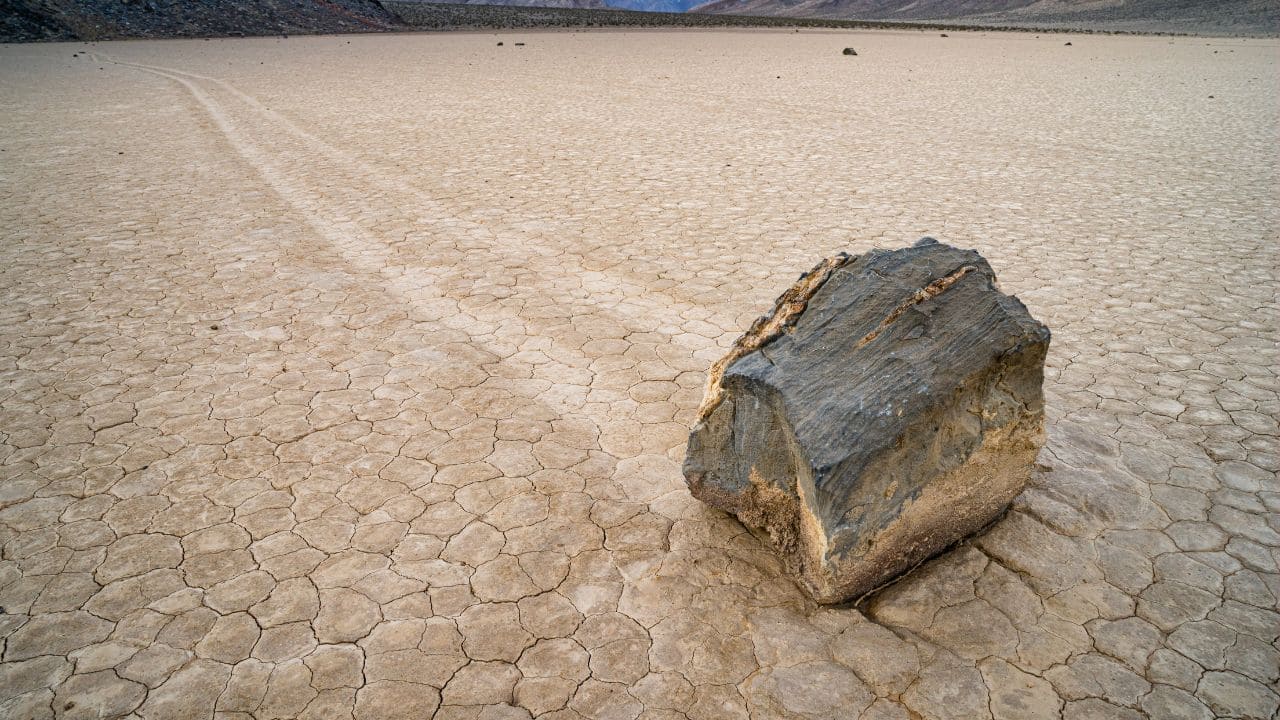 Researchers finally witnessed the rocks sliding in real time. (Image: Canva)
How Ice and Wind Work Together?
After rain or winter moisture, a thin ice layer forms overnight. The morning sun cracks ice into floating sheets, partially lifting rocks. Gentle winds then push the ice, dragging rocks along slowly. The rocks glide across wet mud, leaving perfectly straight trails. It’s a delicate dance between temperature, ice, wind and water.
Why It Took So Long to Solve?
The event is rare and unpredictable, requiring perfect conditions. Ice, wind and water must align simultaneously for movement to occur. This subtle motion is difficult to witness in real time. Previous theories, including aliens and extreme winds, lacked direct evidence. Patience and long-term observation finally revealed the simple truth of nature.
Discover the latest Business News, Sensex, and Nifty updates. Obtain Personal Finance insights, tax queries, and expert opinions on Moneycontrol or download the Moneycontrol App to stay updated!
Find the best of Al News in one place, specially curated for you every weekend.
Stay on top of the latest tech trends and biggest startup news.