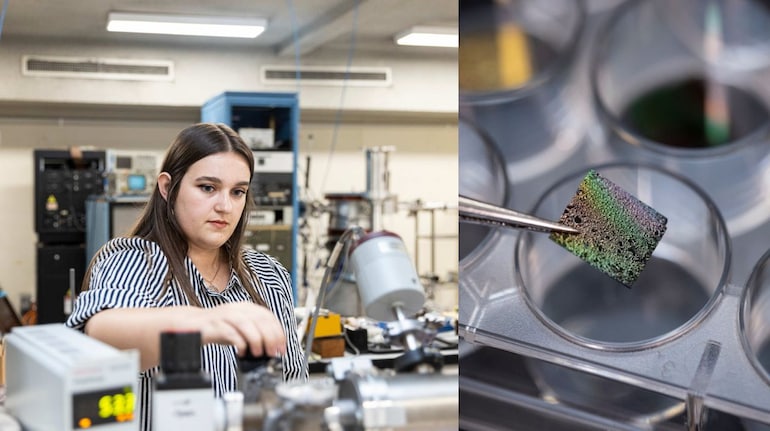

How cool it would be to catch a falling star? Have you ever wondered where they come from or where they fall off? Stars are basically cosmic dust from the sky. This PhD student in Sydney made stardust to unlock Earth’s ancient mysteries. Cosmic dust may hold the key to how life began here.
New lab experiments mimic conditions found near dying stars. These tiny grains contain the essential ingredients of life. The work bridges space chemistry and the dawn of biology.
What Is Cosmic Dust?
Cosmic dust is microscopic material drifting between the stars. It comes from dying stars, nebulae and exploded supernova remnants. Each year, thousands of tonnes enter Earth’s atmosphere. Most burn up, but some reach the surface as meteorites. This space dust carries carbon, hydrogen, oxygen and nitrogen. These four are known as CHON molecules which are building blocks of life.
What did Linda Losurdo made in her Lab?
Linda Losurdo made cosmic dust analogues. These are tiny particles like those scattered through space. These particles contain CHON molecules. These molecules are central to organic chemistry and life’s essential compounds. By recreating them, scientists can simulate processes from the early universe. The results are published in The Astrophysical Journal of the American Astronomical Society.
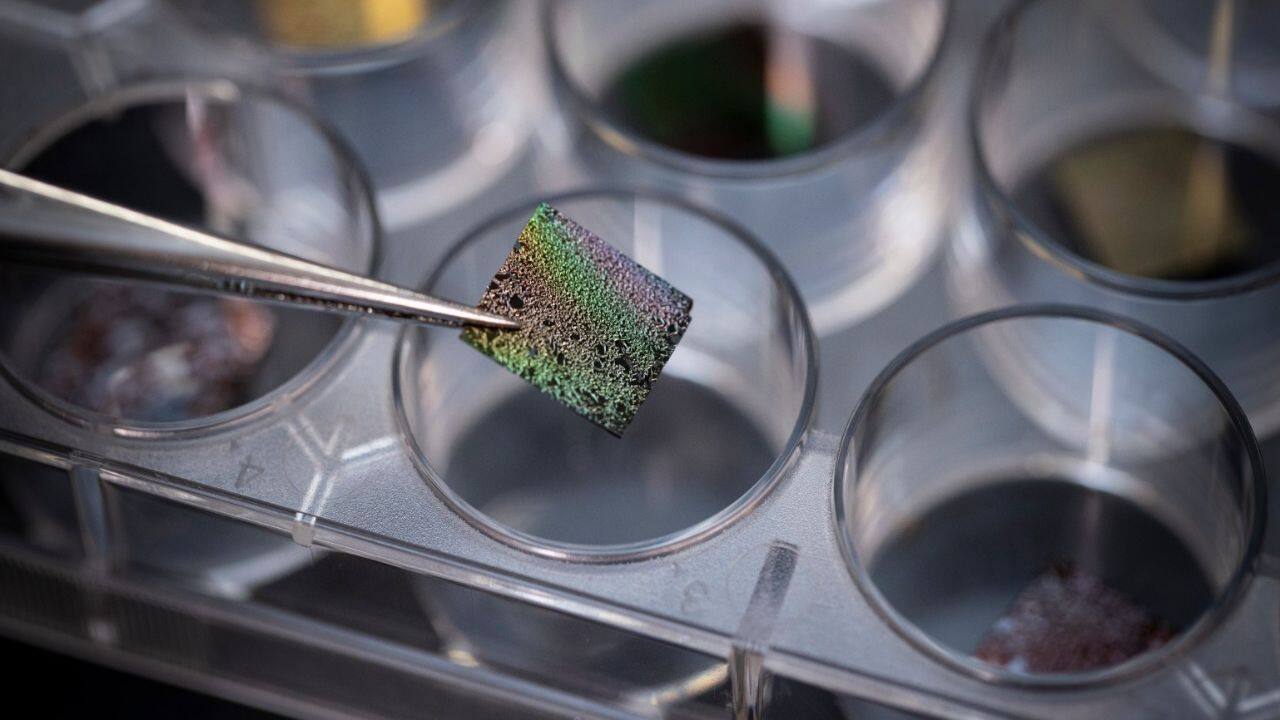 Cosmic dust analogue on a chip. (Image: Fiona Wolf)
When and Where the Research Took Place?
In February 2026, a team at the University of Sydney conducted the breakthrough. PhD student Linda Losurdo led the experiment in a physics laboratory.
“What is found around the envelopes of giant, dying stars [is] quite similar to what is found in meteorites,” Losurdo said. She recreated cosmic dust inside glass tubes in controlled conditions. The process mimicked extreme space environments with high electrical energy.
Linda was not alone in this study; Professor David McKenzie also helped her make cosmic dust. He explains this helps scientists understand space chemistry.
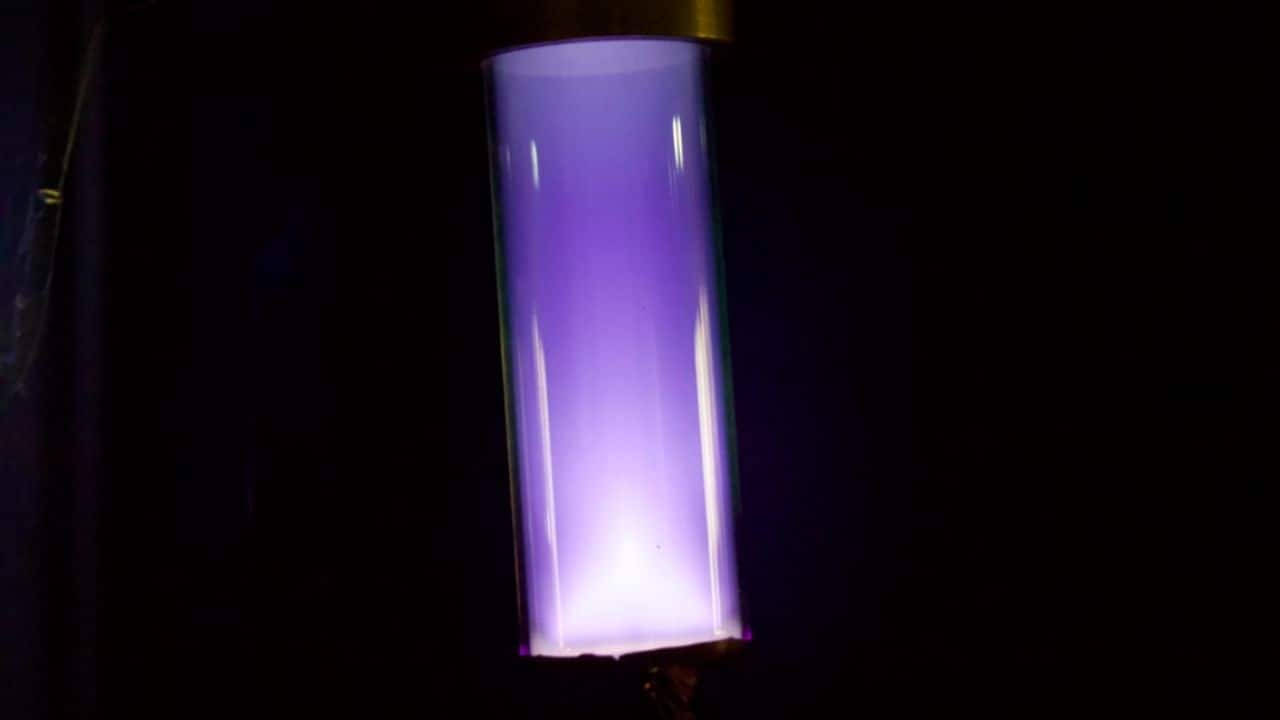 The cosmic dust inside glass tube. (Image: University of Sydney)
How did Linda Made Stardust in the Lab?
Linda Losurdo used a mix of nitrogen, carbon dioxide and acetylene gases. These gases are similar to ones found around ageing stars. A high electrical voltage of 10,000 volts energised the gas into plasma. Dust particles formed and settled on silicon chips inside tubes. This lab-made dust shares the infrared “fingerprint” of real cosmic dust.
What This Means for Astrobiology and Future Studies?
Recreating cosmic dust lets researchers probe conditions impossible to study directly in space. Scientists plan to build a library of infrared dust fingerprints for comparison with astronomical observations. This library could help identify cosmic regions rich in life-related chemistry. Lab dust may also be used in organic chemistry experiments simulating ear.
Discover the latest Business News, Sensex, and Nifty updates. Obtain Personal Finance insights, tax queries, and expert opinions on Moneycontrol or download the Moneycontrol App to stay updated!
Find the best of Al News in one place, specially curated for you every weekend.
Stay on top of the latest tech trends and biggest startup news.