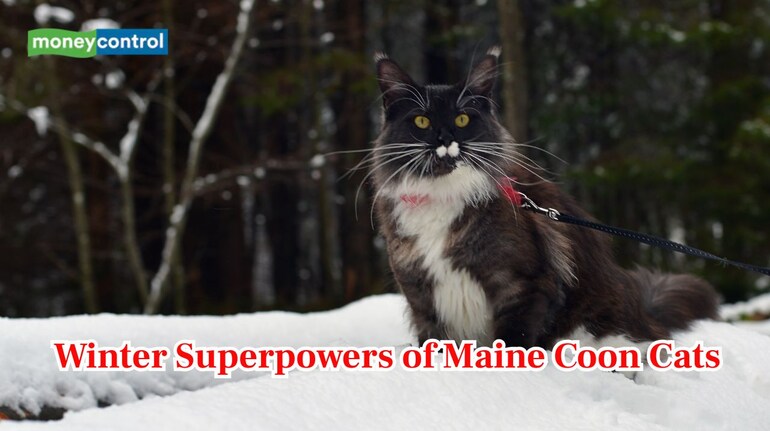
Maine Coon cats are perfectly adapted to cold winter climates. Their physical traits allow them to survive snow, ice, and frost. The breed’s evolution reflects natural selection in harsh New England. Scientists call their features “winter superpowers” for domestic felines today.
Maine Coon cats: Fur Built for Cold
Maine Coons have layered coats for insulation and flexibility. Shorter fur covers shoulders and back, longer fur on belly. The fur protects vital areas while allowing mobility across terrain. Their coat also repels water, keeping cats dry in snow.
Paws Made for Snow
Wide, large paws act like natural snowshoes for balance. Tufts of fur between toes insulate against ice and cold. This adaptation prevents sinking into snow and preserves body warmth. Paw structure enhances hunting efficiency in winter conditions naturally.
Tail as a Thermal Blanket
A bushy tail wraps around the body for extra warmth. It acts as a shield against cold surfaces and wind. Cats instinctively curl tails when resting or sleeping outdoors. This behaviour helps maintain core temperature in subzero conditions.
Ears, Senses and Muscles
Fur tufts cover ears to prevent heat loss in cold. Maine Coons retain excellent hearing and vision during winter darkness. Their large, muscular body preserves heat and supports snow movement. Strong build aids hunting and survival in demanding climates naturally.
Discover the latest Business News, Sensex, and Nifty updates. Obtain Personal Finance insights, tax queries, and expert opinions on Moneycontrol or download the Moneycontrol App to stay updated!





Find the best of Al News in one place, specially curated for you every weekend.
Stay on top of the latest tech trends and biggest startup news.