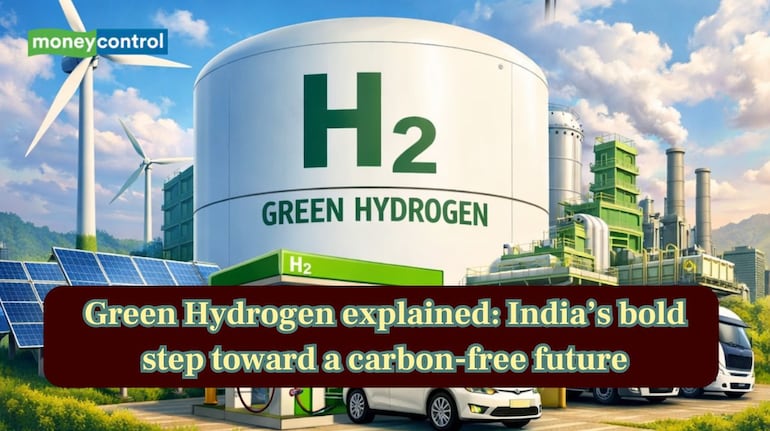

India is racing to become a global green hydrogen hub fast. The National Green Hydrogen Mission targets 5 million tonnes by 2030. Renewable-powered hydrogen could replace fossil fuels in steel, fertilisers and refining. But high costs, infrastructure gaps and adoption hurdles still remain. Scaling green hydrogen will reshape India’s energy and industrial landscape. The world is watching how India tackles this clean-energy challenge.
What Is Green Hydrogen?
Green hydrogen is produced by splitting water using renewable electricity. Unlike grey hydrogen, it emits almost no carbon or pollution. It can replace fossil fuels in steel, fertilisers and refining. Hydrogen is lightweight, energy-dense and usable across multiple industries. It is considered a key tool for India’s climate goals.
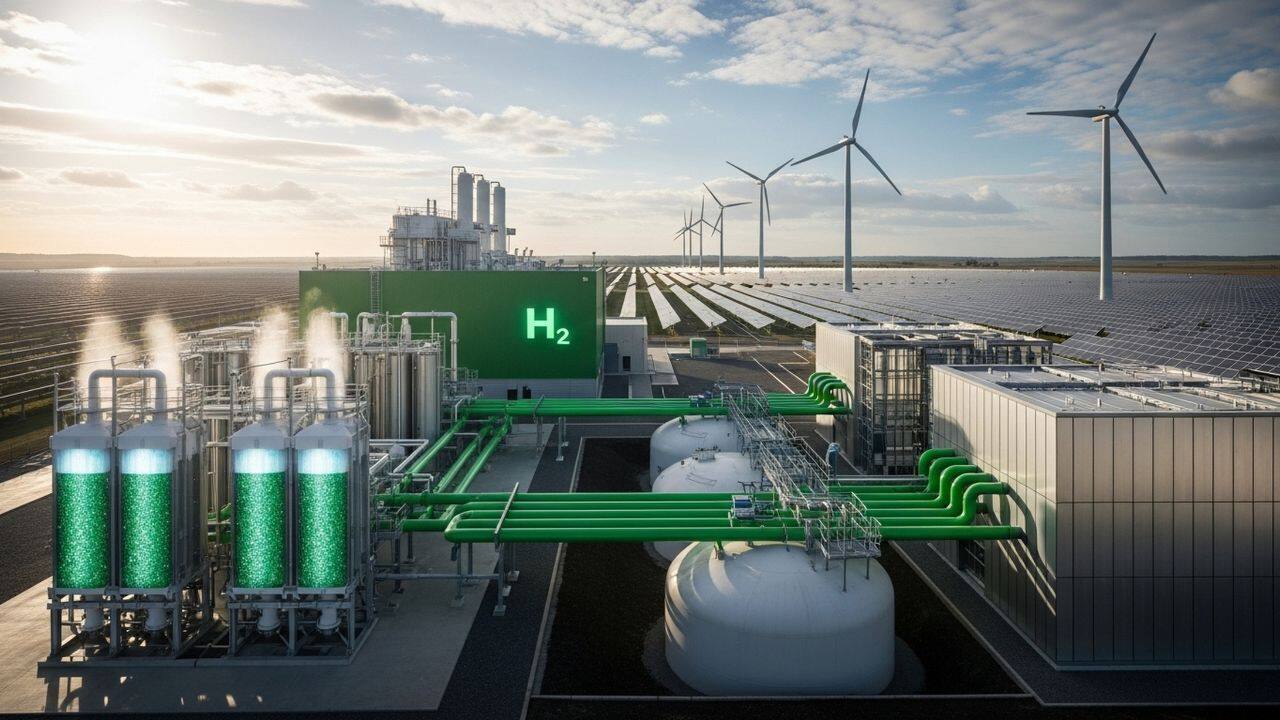 Green hydrogen is produced by splitting water using renewable electricity. (Image: Canva)
Who Is Driving India’s Green Hydrogen Mission?
Indian Government launched National Green Hydrogen Mission with ₹19,744 crore funding. Major companies like NTPC, Adani and Bharat Petroleum lead projects. Startups and research institutions innovate in electrolysis and fuel-cell technologies. Public-private partnerships aim to scale pilot plants into large production. India hopes to become a global green hydrogen production hub.
What Will Green Hydrogen Do?
It will decarbonise hard-to-electrify industries like steel and fertilisers. Hydrogen can power transport, mobility and energy-intensive manufacturing. It reduces reliance on imported fossil fuels and cuts emissions. It encourages domestic technology development and industrial innovation simultaneously. Exports could turn India into a global clean-energy supplier and leader.
How is Green Hydrogen being made?
Green hydrogen is being made by process of Electrolysis. This electrolysis uses solar or wind electricity to split water molecules. Electrolysers are the core technology converting electricity into hydrogen fuel.
Pilot plants are operational in Gujarat, refineries and power plants. Domestic manufacturing of electrolysers is scaling, but imports still exist. Efficiency, storage, and transport are key to reducing production costs.
By 2030, the National Green Hydrogen Mission is gearing up to define the rules of the clean energy game. With 5 MMT of Green Hydrogen production to ₹8 lakh+ crore in investments, 6 lakh new jobs, and a 50 MMT annual CO₂ reduction—this is clean energy at scale.Not just a… pic.twitter.com/JlqM2UZsbh — Ministry of New and Renewable Energy (MNRE) (@mnreindia) January 7, 2026
Is this a big Breakthrough in Science?
Green hydrogen represents a major leap in clean energy technology. It could transform industrial processes previously reliant on fossil fuels. Producing hydrogen with renewables reduces carbon emissions almost to zero. If scaled successfully, it positions India as a global energy innovator. Scientists and industry alike see this as a landmark energy breakthrough.
Road Ahead: India’s 2026 Outlook
Budget 2026 may provide subsidies and incentives for scaling projects. Pilot plants are expected to expand to industrial-level deployment soon. Policies on long-term offtake and infrastructure will accelerate adoption. India’s green hydrogen vision could reshape its energy and industrial future.
Discover the latest Business News, Sensex, and Nifty updates. Obtain Personal Finance insights, tax queries, and expert opinions on Moneycontrol or download the Moneycontrol App to stay updated!
Find the best of Al News in one place, specially curated for you every weekend.
Stay on top of the latest tech trends and biggest startup news.