If your nose is itching this spring, you're in good company. When pollen waltzes through the air, many sneeze. But there's more to these grains than meets the eye. They softly hold a record of the distant history of Earth.
Pollen grains are more than mere floating irritants. They are nature's clocks, storing moments from a million years back. With their armoured casing, pollen grains outlive the parent plant. When they land in lakebeds, riverbeds or oceans, they fossilise. These ancient imprints assist scientists in reconstructing past climates and environments.
They all say something different. The quantities and varieties indicate types of forests, rising oceans and even the collapse of societies. Through asteroid impacts to global warming, Pollen has recorded it all without a sound.
Missouri: A story of impact and recovery
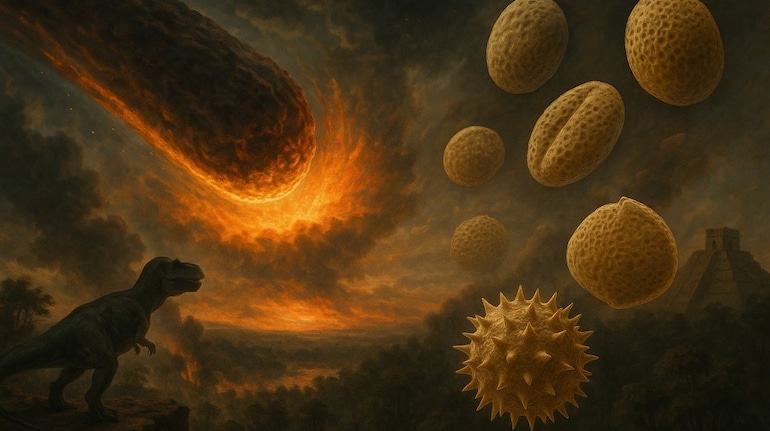
It was approximately 66 million years ago that an asteroid hit Earth. The asteroid landed close to the present-day Yucatán Peninsula and forever altered life. The explosion created massive waves that travelled to Missouri. Among the rubble, scientists discovered fossilised pollen.
The grains were from ferns, palms and pines. Some disappeared shortly after the impact, demonstrating how forests fell. A little later, the same types of pollen reappeared, demonstrating gradual recovery. This quiet record demonstrates how ecosystems recovered over time.
US Gulf Coast: Ancient floods and changing shores
Fossil pollen also records slower changes, including seas rising. Ocean levels rose between 33.9 and 28 million years ago. Lowland forests in Mississippi and Alabama were submerged. Coasts were once covered by Sequoia-type trees.
Their pollen became scarcer as the marined fossils increased. This change allowed scientists to monitor how far the seas moved inland. Grains served as biological indicators of past coastlines.
Western Australia: From forest to salt lake
Western Australia's sediment cores have a different tale. In the Eocene, between 55.8 and 33.9 million years ago, Western Australia was verdant. Swamp forests ringed freshwater lakes. Tropical tree and fern pollen were plentiful.
But in the Australian plate's northward drift, the climate changed. The vegetation did, too. Recent layers of pollen indicate salt- and drought-resistant plants. Tough species displaced the water-loving trees.
Algae Dunaliella also occurred in the cores. It occurs exclusively in salty water, confirming a dramatic shift. Forested lakes had turned salty and arid.
Guatemala: Decline of the Maya and reforestation
Later changes are observed in Guatemala's Lake Izabal. The last 1,300 years are preserved in its sediments. About 1,200 years ago, maize and weed vegetation rose. Meanwhile, tree pollen declined drastically.
This is indicative of large-scale agriculture and forest clearance. The chronology corresponds to the decline of Maya political centres. Tree pollen recurred after humans left, even during the Little Ice Age. It was a time of reduced rainfall, from the 14th to the 19th century. And yet, forests came back, showing nature's strength.
Modern pollen and tomorrow's history
To unlock these tales, researchers analyse shapes and textures of pollen. Hundreds or thousands are counted in each sample. From this, they reconstruct ancient forests, climate patterns, and human footprints.
Even now, grains of pollen keep accumulating in our history. As temperatures warm, pollen seasons become longer and more intense. Pollution and warming today influence when plants emit pollen.
They will become sediments throughout the world. Someday fossil pollen will be explaining us to future scientists. So the next time you sneeze, recall: you're breathing history.
Discover the latest Business News, Sensex, and Nifty updates. Obtain Personal Finance insights, tax queries, and expert opinions on Moneycontrol or download the Moneycontrol App to stay updated!
Find the best of Al News in one place, specially curated for you every weekend.
Stay on top of the latest tech trends and biggest startup news.