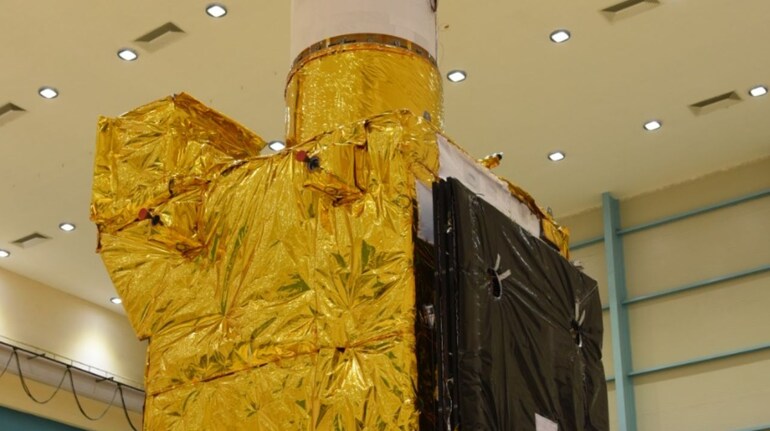

India’s space agency is readying a new Earth-imaging satellite launch. The mission aims to restore rapid monitoring of our changing planet. It comes after previous attempts were derailed by technical failures. Scientists and engineers are optimistic as final launch preparations conclude. GISAT-1A could soon be orbiting high above Earth’s surface.
What Is GISAT-1A?
GISAT-1A is a geo-imaging satellite built by ISRO. It will capture frequent, near real-time images of Earth. Such imagery is vital for weather, environment and disaster monitoring. It can support agriculture, forestry, oceanography and resource planning. The satellite will help both civilian and strategic applications.
Who Is Behind the Mission?
The Indian Space Research Organisation (ISRO) leads the project. Engineers at the UR Rao Satellite Centre in Bengaluru developed the satellite. ISRO has been advancing its Earth observation capabilities for years. The GISAT series represents a key part of that effort. Satellite data supports government agencies and scientific research.
V Narayanan, chairman, ISRO said, “We are reviewing the satellite”, and did not elaborate on details. The satellite will move to the spaceport once the final authorisation is given after the chairman’s review.
#space#updateFour-and-a-half years after an anomaly in the cryogenic upper stage (CUS) of #GSLVF10 cost India #Gisat1 (EOS-03), @isro is geared up to launch #Gisat1A (EOS-05), as its replacement. 1/n File pic of Gisat-1 | credit: Isro pic.twitter.com/PnCyuVM6io — Chethan Kumar (@Chethan_Dash) February 6, 2026
Setbacks and Delays: Past Challenges Faced
The original GISAT-1 experienced a launch failure in August 2021. A malfunction in the cryogenic upper stage stopped it reaching orbit. Multiple launches were postponed before that mishap occurred. The failure was a significant blow to India’s rapid imaging goals. Since then, teams have re-evaluated and redesigned aspects of the mission.
When and Where the Launch Will Happen?
GISAT-1A is currently undergoing final checks in Bengaluru. Once cleared, it will move to Satish Dhawan Space Centre, Sriharikota. A Notice to Airmen (NOTAM) has been issued for the launch zone. The launch window is tentatively set between 20 February and 5 March 2026. The satellite will ride aboard a GSLV-F17 rocket into space.
Role of the New Satellite in Earth Observation
From geostationary orbit, GISAT-1A will watch large regions continuously. It can help detect wildfires, floods and cyclones in near real time. Agricultural planners can monitor crop health over vast areas. Scientists will observe snow, glaciers and coastal ecosystems. The satellite’s data will strengthen environmental resilience across India.
Discover the latest Business News, Sensex, and Nifty updates. Obtain Personal Finance insights, tax queries, and expert opinions on Moneycontrol or download the Moneycontrol App to stay updated!





Find the best of Al News in one place, specially curated for you every weekend.
Stay on top of the latest tech trends and biggest startup news.