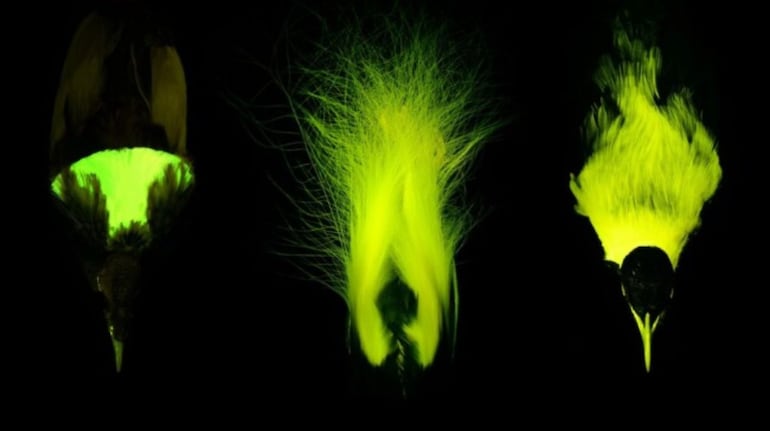

Birds-of-paradise, already famous for dramatic colours, may hide another secret. New research reveals many species glow under ultraviolet light, adding an unseen layer to their famous courtship displays and social behaviour.
Scientists examining museum specimens found widespread biofluorescence across birds-of-paradise feathers. The finding suggests these tropical birds may communicate using visual signals invisible to humans.
What scientists discovered about glowing feathers
Researchers found 37 of 45 birds-of-paradise species showed biofluorescence. Their feathers absorb ultraviolet light and emit yellow green glows. The glow appeared on crowns, plumes, breasts, shoulders, and facial regions. Some species displayed multiple glowing patches across different body areas.
The discovery came unexpectedly during fish biofluorescence research. Ichthyologists working at the American Museum of Natural History examined other animals. Under ultraviolet light, birds-of-paradise specimens lit up dramatically.
Lead author Rene Martin from the University of Nebraska Lincoln suggested glow enhances displays. He told Live Science the trait may amplify already complex visual signals. The glow could help males stand out during competitive courtship performances.
What biofluorescence may mean for bird behaviour
Scientists noticed behavioural differences linked to glowing intensity. Species forming long-term monogamous pairs showed weaker fluorescence. Birds mating with different partners yearly glowed more brightly. This pattern suggests fluorescence may influence mate choice.
Unexpectedly, researchers also detected glowing tissue inside birds’ mouths. This feature could intensify display movements during courtship dances. Scientists believe such traits evolved through sexual selection pressures.
Bird vision plays a critical role here. Birds possess more photoreceptors than humans. According to Emily Carr of the American Museum of Natural History, birds see colours humans cannot. She told Audubon that oil droplets in bird eyes filter light. This filtering may strengthen perception of biofluorescent signals.
What this means for future bird research
The findings raise questions about visual communication evolution. Edwin Scholes of Cornell’s Birds-of-Paradise Project called the pattern remarkable. He told Audubon fluorescence appears across bodies, not specific feathers.
Scientists believe glowing feathers may signal dominance, health, or readiness. Further research may reveal how light environments affect bird interactions. The study highlights how much remains hidden in familiar wildlife.
For birds-of-paradise, beauty may shine brighter than previously imagined.
Discover the latest Business News, Sensex, and Nifty updates. Obtain Personal Finance insights, tax queries, and expert opinions on Moneycontrol or download the Moneycontrol App to stay updated!
Find the best of Al News in one place, specially curated for you every weekend.
Stay on top of the latest tech trends and biggest startup news.