
Tucked away in the rustic landscapes of Morena, Madhya Pradesh, lies a remarkable monument that has quietly stood the test of time—the Chausath Yogini Temple of Mitaoli. This ancient temple, dedicated to the 64 Yoginis, has long been admired for its unique circular architecture, but in recent years, it has sparked interest for another reason: some believe it may have inspired the design of India’s iconic Parliament House. To understand the connection between these two architectural marvels, we must first explore the history, architecture, and spiritual significance of the Chausath Yogini Temple.
About Chausath Yogini Temple
Constructed in the 9th century during the reign of the Kachchhapaghata dynasty, the Chausath Yogini Temple is one of the few surviving shrines dedicated to the 64 Yoginis. Yoginis are mystical female deities in Tantric traditions, symbolizing various cosmic energies and aspects of Shakti, the divine feminine power.
The temple’s name, "Chausath," refers to the 64 Yoginis believed to reside in the niches carved around its circular periphery. Though many of the original statues have been lost to time and theft, the temple still stands as a testament to the spiritual practices and artistic mastery of the era. The temple was not just a place of worship, but also likely a site for deep spiritual contemplation and mystic rituals.
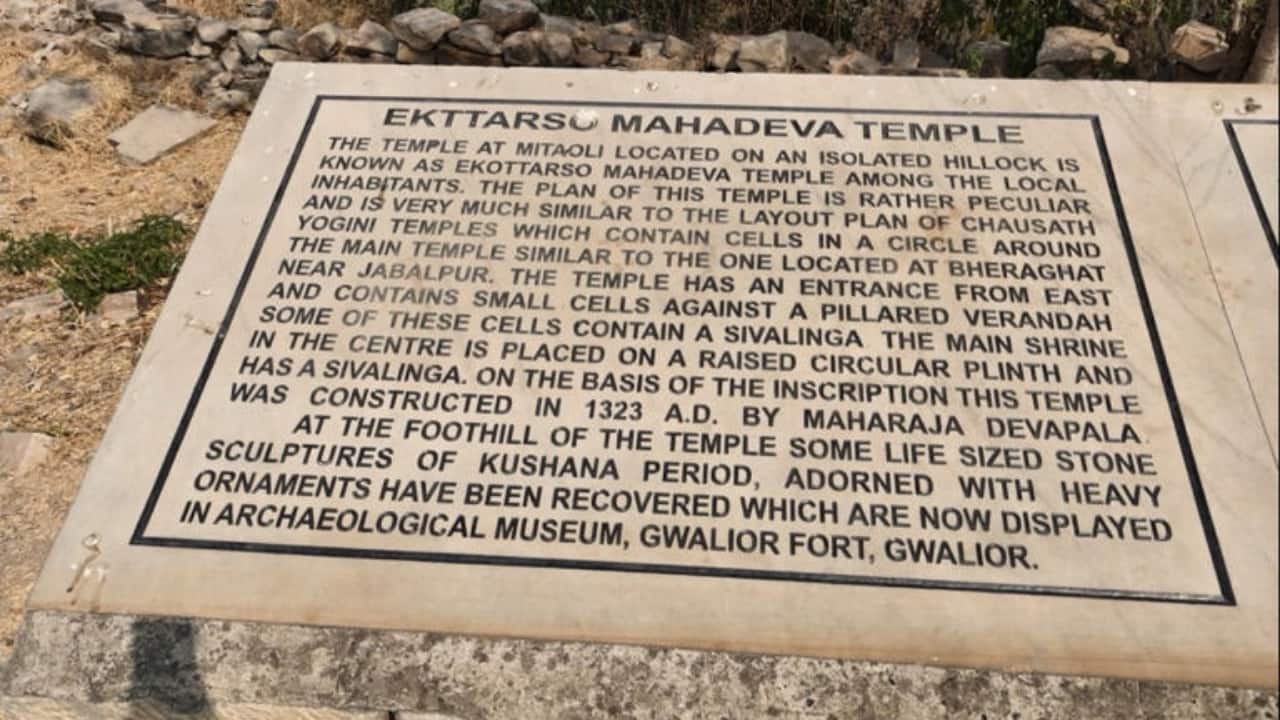 Chausath Yogini Temple, Mitaoli
Chausath Yogini Temple: The Circular Architecture
The most striking feature of the Chausath Yogini Temple is its circular design, which is uncommon in traditional Indian temple architecture. Built atop a hill, the temple can be reached by climbing around 100 stone steps. Once at the top, visitors are rewarded with a panoramic view of the surrounding landscape.
The temple is arranged in a perfect circle, with 64 chambers along the circumference—each originally intended to house an idol of a Yogini. At the center stands a larger shrine dedicated to Lord Shiva, symbolizing the unity of divine masculine and feminine forces. The temple is constructed entirely from sandstone, its minimalist design emphasizing the precision of its architects and the spiritual harmony it embodies.
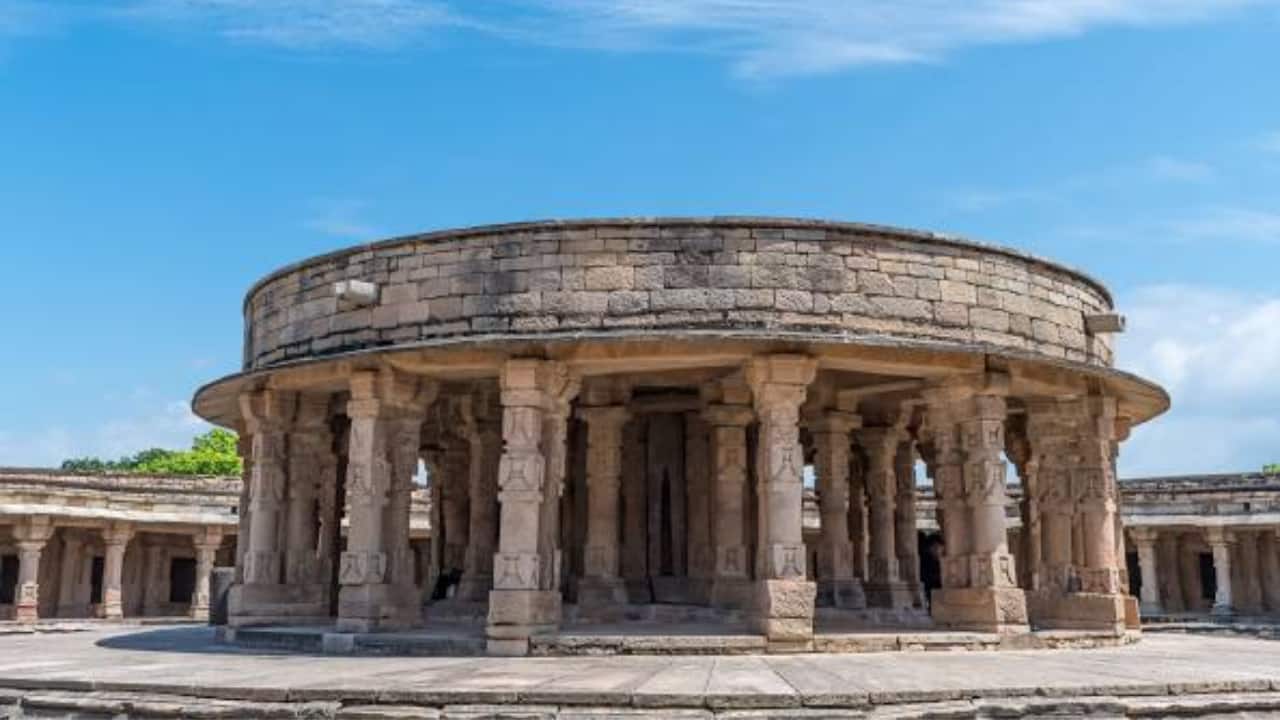 Chausath Yogini Temple, Mitaoli
Link Between the Temples and the Parliament
Now, let’s turn to the intriguing claim that the Chausath Yogini Temple may have inspired the design of India’s Parliament House. The Indian Parliament, designed by British architects Edwin Lutyens and Herbert Baker, was completed between 1921 and 1927. The building’s circular shape, its colonnades, and its central dome bear remarkable resemblance to the Chausath Yogini Temple.
Though no direct evidence or official documentation exists linking the two, the architectural parallels are striking. Both the temple and the Parliament House share several key features:
Architectural historians speculate that Lutyens, known for blending Western and Indian architectural elements, may have drawn inspiration from ancient Indian designs during his travels. The Chausath Yogini Temple, with its stunning circular layout, could have sparked Lutyens’ vision for the Parliament’s design. On the other hand, some argue that the circular design was a practical choice influenced by Western classical architecture, such as the Roman Colosseum or Pantheon, both of which also feature circular forms.
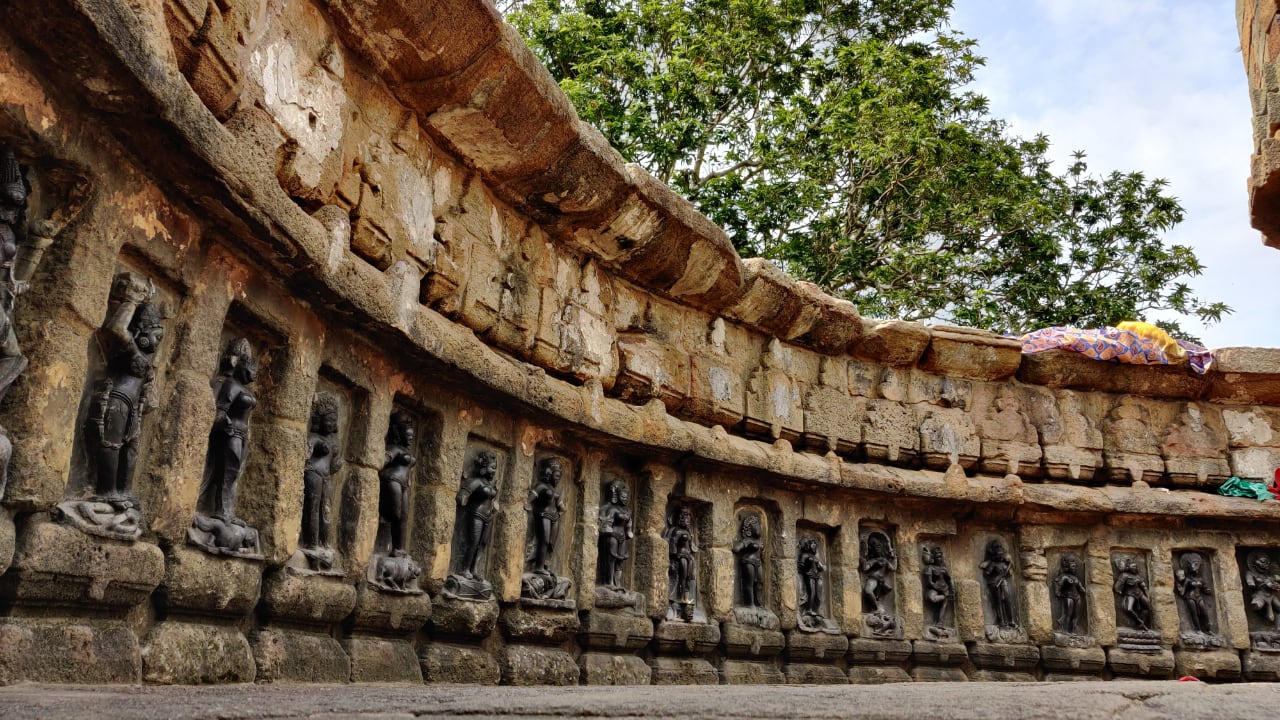 Chausath Yogini Temple, Mitaoli
Chausath Yogini Temple: Spiritual Significance
The Chausath Yogini Temple is more than just an architectural wonder; it holds deep spiritual meaning. Temples dedicated to the Yoginis are rare, and they are associated with Tantric rituals and the worship of divine feminine energy. The circular design itself represents the cosmic energy that flows through the universe, with each Yogini embodying different aspects of Shakti.
For centuries, the temple served as a center for esoteric worship, where devotees sought divine blessings for power, protection, and wisdom. Today, although the rituals have faded, the temple continues to be a revered site for pilgrims, historians, and curious visitors alike.
Weaving the Past into the Future
Whether or not the Chausath Yogini Temple directly influenced the design of India’s Parliament House, its significance as an architectural and spiritual masterpiece remains unquestioned. The temple stands as a testament to the ingenuity and artistry of ancient India, where spirituality, science, and art were intricately woven together.
The parallels between the two structures—a 1,000-year-old temple and a symbol of modern democracy—remind us of the enduring influence of India’s ancient wisdom on contemporary identity. Standing atop the hill at Mitaoli, looking at the circular structure, it is not hard to imagine how such timeless beauty might have inspired the design of India’s Parliament.
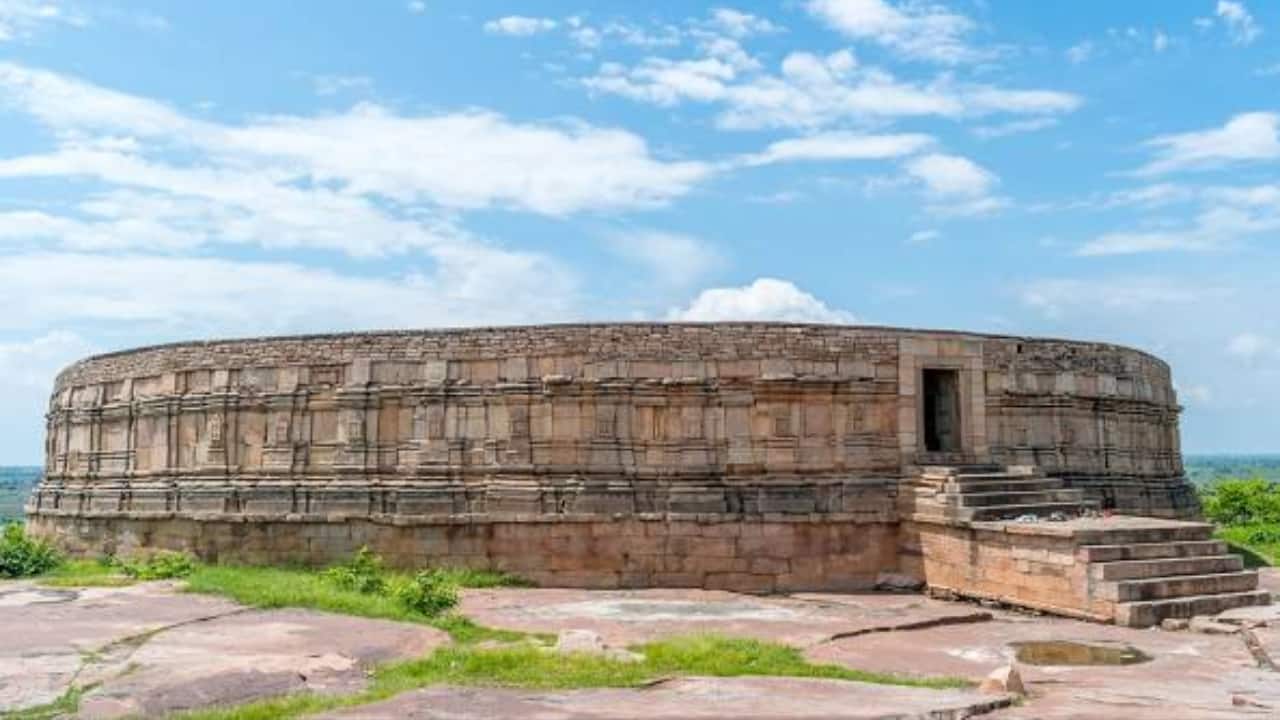 Chausath Yogini Temple, Mitaoli
In the quiet corners of this ancient temple, where the winds carry whispers of centuries past, lies a fascinating story—one that connects the sacred to the secular, the ancient to the modern, and the spiritual to the political. Thanks to efforts by Madhya Pradesh Tourism, the Chausath Yogini Temple continues to shine as a timeless wonder, ready to be explored by the curious and the inspired.
Discover the latest Business News, Sensex, and Nifty updates. Obtain Personal Finance insights, tax queries, and expert opinions on Moneycontrol or download the Moneycontrol App to stay updated!
Find the best of Al News in one place, specially curated for you every weekend.
Stay on top of the latest tech trends and biggest startup news.