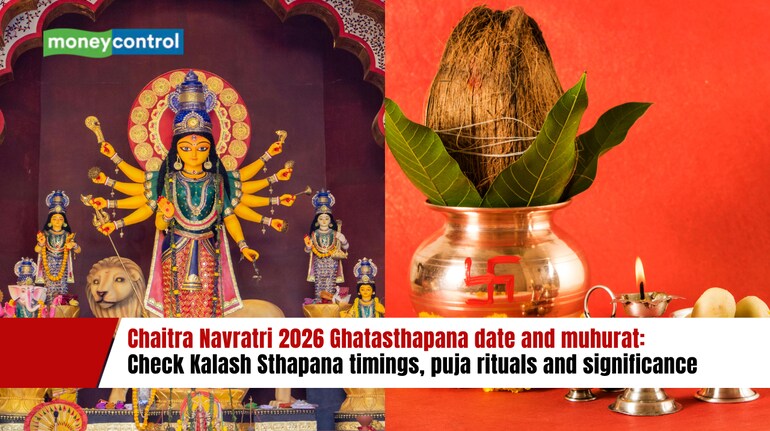

Chaitra Navratri 2026: Ghatasthapana will be observed on Thursday, March 19, 2026; it marks the sacred beginning of the nine-day Navratri festival dedicated to Goddess Durga and the nine forms of Shakti. Ghatasthapana, also known as Kalash Sthapana, is one of the most important rituals of Chaitra Navratri, symbolising the invocation of divine energy and the start of the Navratri fasting and worship period.
According to the Hindu Panchang, devotees perform Ghatasthapana during a highly auspicious Navratri Ghatasthapana Muhurat, as performing the ritual at the correct time is considered essential for receiving the blessings of Goddess Durga.
Chaitra Navratri 2026 Ghatasthapana date and muhurat
In 2026, Ghatasthapana will be performed on March 19 during the following auspicious time period.
| Festival | Date and Time |
| Chaitra Ghatasthapana | Thursday, March 19, 2026 |
| Ghatasthapana Muhurat | 06:52 AM to 07:43 AM |
| Ghatasthapana Abhijit Muhurat | 12:05 PM to 12:53 PM |
| Ghatasthapana Muhurta | During Dvi-Svabhava Meena Lagna |
| Pratipada Tithi Begins | 06:52 AM on Mar 19, 2026 |
| Pratipada Tithi Ends | 04:52 AM on Mar 20, 2026 |
| Meena Lagna Begins | 06:26 AM on Mar 19, 2026 |
| Meena Lagna Ends | 07:43 AM on Mar 19, 2026 |
According to Panchang calculations, this year the Ghatasthapana Muhurat falls during Dvi-Svabhava Meena Lagna, which is regarded as favourable for starting sacred rituals.
This year, the Ghatasthapana Muhurat falls on Amavasya due to the skipping of the Pratipada sunrise, which is a rare Panchang condition but still considered valid when the ritual is performed within the recommended muhurat.
What is Ghatasthapana in Navratri?
Ghatasthapana, also called Kalash Sthapana, is a sacred ritual performed at the start of Navratri celebrations. During this ceremony, devotees install a Kalash (sacred pot) filled with holy water, mango leaves, and a coconut. The Kalash symbolises Goddess Durga and divine cosmic energy.
This ritual formally invites Goddess Shakti into the home or temple for the entire nine days of Navratri, during which devotees observe fasting, perform daily puja, and worship the Navdurga forms of the Goddess.
Rules and Guidelines for Ghatasthapana
According to traditional scriptures, there are specific guidelines for performing Ghatasthapana during Navratri.
Following the correct muhurat is considered important because Ghatasthapana symbolises the invocation of Goddess Shakti, and performing it at the right time ensures the ritual is spiritually effective.
Significance of Ghatasthapana
Ghatasthapana marks the official beginning of Chaitra Navratri, one of the most important Hindu festivals. These nine days are devoted to worshipping the nine forms of Goddess Durga, known collectively as Navdurga. The ritual represents creation, prosperity, and the divine feminine energy. Devotees pray for happiness, protection, and success in life while observing fasting and daily prayers throughout Navratri.
The customs and rituals followed during Chaitra Navratri are very similar to those observed during Shardiya Navratri, which is celebrated in the month of September or October. Both festivals emphasise devotion to Goddess Durga and spiritual discipline.
As the first day of Navratri begins with Ghatasthapana, devotees across India prepare their homes and temples with devotion to welcome the blessings of Goddess Durga and divine Shakti for the nine sacred days ahead.

Discover the latest Business News, Sensex, and Nifty updates. Obtain Personal Finance insights, tax queries, and expert opinions on Moneycontrol or download the Moneycontrol App to stay updated!
Find the best of Al News in one place, specially curated for you every weekend.
Stay on top of the latest tech trends and biggest startup news.