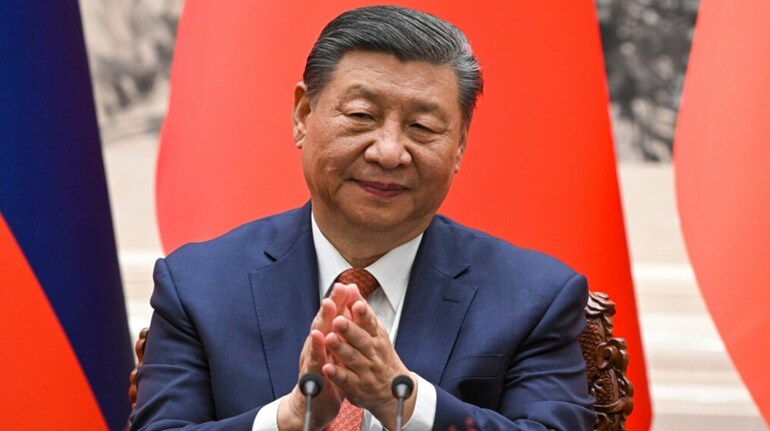
As Xi Jinping enters the midpoint of his third term as China’s most powerful leader since Mao Zedong, the question of who will succeed him is becoming increasingly urgent. Unlike in democratic nations like the United States, where leadership transitions are routine, China’s leadership change remains a tightly controlled and opaque process, as reported by the Financial Times.
Xi’s consolidation of power and the lack of a successor
Xi has centralized power over more than a decade, sidelining rivals, eliminating opposition, and conducting extensive political purges under the anti-corruption campaign. His authority remains unchallenged, and he has given no indication of a succession plan, signalling his intent to rule indefinitely.
Political analysts suggest Xi’s control is both his greatest strength and a significant weakness. While he has successfully removed opposition, the lack of a clear line of succession creates uncertainty. If something were to happen to him suddenly, China could face political chaos.
Kremlinology and succession speculations
Due to Xi’s secrecy, analysts and diplomats rely on Soviet-era Kremlinology tactics to predict China’s future leadership. They study:
· The Politburo Standing Committee (China’s top leadership body).
· Xi’s promotions and close allies.
· Official rhetoric and state media reports.
Despite efforts to forecast a successor, no strong contender has emerged.
Potential successors and power struggles
Several figures in China’s political and military elite could play a role in determining the next leader:
1. Cai Qi – Director of the General Office of the Communist Party and one of Xi’s closest allies, often seen as his chief of staff.
2. Zhang Youxia – Xi’s long-time ally in the People’s Liberation Army (PLA), crucial in case of a power struggle.
3. Chen Wenqing & Yin Li – Top party leaders in legal and administrative roles, with ties to Xi’s long-term political goals.
Many of these figures are Xi loyalists, meaning any transition would likely favour continuity over reform.
Lessons from history: Xi’s fear of weakness
Xi has eliminated the traditional two-line leadership structure, where past leaders ruled alongside a strong premier (e.g., Jiang Zemin & Zhu Rongji). By not appointing a clear second-in-command, he follows a strategy similar to Vladimir Putin, ensuring no one consolidates enough power to challenge him, according to the Financial Times.
However, history shows that sudden leadership changes can lead to internal power struggles. Some analysts compare the uncertain succession process to past Soviet Union leadership crises, warning that a sudden leadership vacuum could lead to instability.
Xi’s dilemma: Balancing control and stability
Despite the stability of Xi’s rule, experts argue that this system is unsustainable. If no successor is prepared, China may experience one of its periodic political crises when Xi eventually leaves power. His refusal to step down has also fuelled concerns that China may enter a prolonged period of autocratic rule.
Ultimately, Xi faces a dilemma: announcing a successor too early would weaken his control, while failing to prepare one could destabilize the party.
China’s future hinges on Xi’s decisions
As China prepares for a future where Xi remains indefinitely in power, its leadership transition remains one of the biggest uncertainties in global politics. Whether he selects a successor or clings to power, the decisions Xi makes in the coming years will shape China’s political landscape for decades.
Discover the latest Business News, Sensex, and Nifty updates. Obtain Personal Finance insights, tax queries, and expert opinions on Moneycontrol or download the Moneycontrol App to stay updated!
Find the best of Al News in one place, specially curated for you every weekend.
Stay on top of the latest tech trends and biggest startup news.