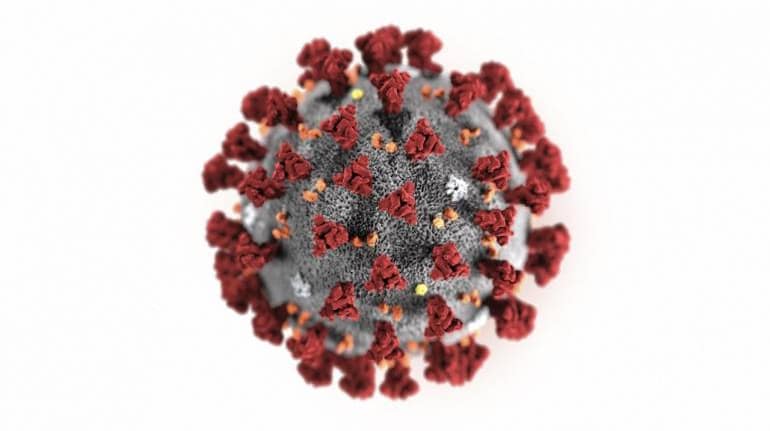
Scientists have identified nearly 200 genetic mutations in the SARS-CoV-2 that causes COVID-19 by analysing virus genes from over 7,500 people infected with the disease globally, an advance that offers clues to direct drugs and vaccine targets.
The study, published in the Infection, Genetics and Evolution journal, characterised patterns of diversity of the genome of the virus, highlighting how it may be adapting and evolving to its human hosts.
The researchers from University College London (UCL) in the UK found that a large proportion of the global genetic diversity of SARS-CoV-2 is found in all hardest-hit countries, suggesting extensive global transmission from early on in the epidemic and the absence of single 'Patient Zeroes' in most countries.
The findings further establish that the virus only emerged recently in late 2019, before quickly spreading across the globe.
The scientists identified 198 mutations that appear to have independently occurred more than once, which may hold clues to how the virus is adapting.
"All viruses naturally mutate. Mutations in themselves are not a bad thing and there is nothing to suggest SARS-CoV-2 is mutating faster or slower than expected," Professor Francois Balloux from UCL said.
"So far we cannot say whether SARS-CoV-2 is becoming more or less lethal and contagious," Balloux said.
The small genetic changes, or mutations, identified were not evenly distributed across the virus genome, the researchers said.
As some parts of the genome had very few mutations, those invariant parts of the virus could be better targets for drug and vaccine development, they said.
"A major challenge to defeating viruses is that a vaccine or drug might no longer be effective if the virus has mutated. If we focus our efforts on parts of the virus that are less likely to mutate, we have a better chance of developing drugs that will be effective in the long run," Balloux explained.
"We need to develop drugs and vaccines that cannot be easily evaded by the virus," he said.
"There are still very few genetic differences or mutations between viruses," co-lead author Lucy van Dorp from UCL added.
"We found that some of these differences have occurred multiple times, independently of one another during the course of the pandemic -- we need to continue to monitor these as more genomes become available and conduct research to understand exactly what they do," said Dorp.
The results add to a growing body of evidence that SARS-CoV-2 viruses share a common ancestor from late 2019, suggesting that this was when the virus jumped from a previous animal host, into people.
This means it is most unlikely the virus causing COVID-19 was in human circulation for long before it was first detected, the researchers said.
Follow our full coverage of the coronavirus pandemic here.
Discover the latest Business News, Sensex, and Nifty updates. Obtain Personal Finance insights, tax queries, and expert opinions on Moneycontrol or download the Moneycontrol App to stay updated!

Find the best of Al News in one place, specially curated for you every weekend.
Stay on top of the latest tech trends and biggest startup news.