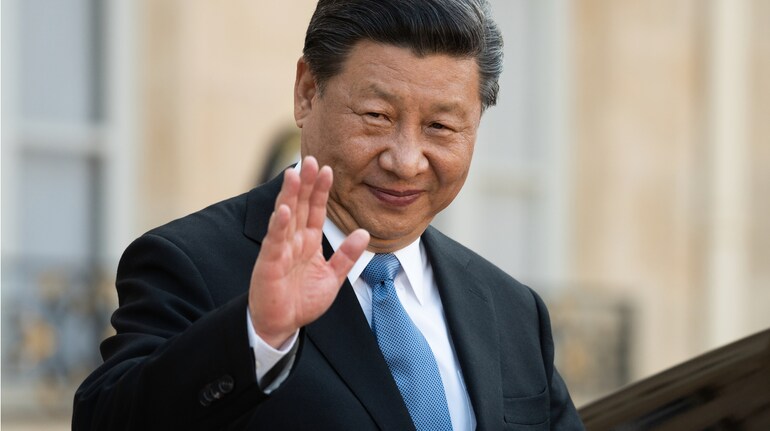
China, under President Xi Jinping, is accelerating efforts to reduce its reliance on foreign technology and strengthen self-sufficiency in key industries, a move driven by escalating tensions with the United States.
According to The Wall Street Journal, the Chinese government is investing hundreds of billions of dollars in advanced manufacturing, electric vehicles (EVs), semiconductors, and artificial intelligence to counter Western trade restrictions and safeguard its economic future.
China’s push for industrial independence
One of China’s biggest successes has been in the electric vehicle sector, where local automakers BYD and Geely have rapidly gained market share. In 2024, 48% of all passenger cars sold in China were electric or plug-in hybrids, amounting to nearly 11 million units, with most coming from domestic manufacturers, The Wall Street Journal reports.
China has also overtaken global leaders in shipbuilding, now producing more than half of the world’s merchant ships—a sharp increase from just 5% in 1999. Additionally, the country has transitioned from being a net importer to a net exporter of chemicals, recording a $34 billion export surplus in 2024, compared to a $40 billion trade deficit in 2020.
Challenges in key sectors
Despite its progress, China still faces hurdles in the semiconductor industry, a sector where it remains heavily reliant on foreign technology. According to The Wall Street Journal, domestic semiconductor production met only 30% of China’s chip demand by the end of 2025—far below its original target of 70%.
Efforts to close this gap have been complicated by US, Japanese, and Dutch restrictions on exporting advanced chip-making technology to China, limiting the country’s ability to develop cutting-edge semiconductors independently.
China’s aerospace industry also illustrates its ongoing dependency on foreign suppliers. The C919 jetliner, which entered commercial service in 2023, was hailed as China’s answer to Boeing and Airbus. However, The Wall Street Journal notes that the jet still relies on Western components, including engines and landing gear sourced from international suppliers.
Rising trade tensions and global implications
China’s aggressive expansion in industrial capacity has led to a surplus of goods flooding global markets, prompting Western nations to push back with trade restrictions. The United States and the European Union have blocked Chinese companies from acquiring advanced chip technology and have imposed tariffs on various Chinese exports.
Domestically, China’s strategy has required significant government spending, with estimates suggesting that its industrial policies cost around $250 billion annually as of 2019. Critics argue that focusing solely on manufacturing might not be the best long-term strategy, as it diverts resources away from consumer spending and social welfare programs that could help stabilize China’s economy.
China’s long-term vision for self-reliance
Despite these challenges, the Chinese government remains committed to prioritizing self-reliance in critical industries. State media, as cited by The Wall Street Journal, emphasize that "self-reliance in science and technology is the basis of our national strength and prosperity, and necessary for our security."
As the US-China trade rivalry intensifies, China’s efforts to build an economic fortress will shape global trade dynamics for years to come. Whether the country can achieve full independence in key industries—or will remain dependent on Western technology—remains an open question.
Discover the latest Business News, Sensex, and Nifty updates. Obtain Personal Finance insights, tax queries, and expert opinions on Moneycontrol or download the Moneycontrol App to stay updated!
Find the best of Al News in one place, specially curated for you every weekend.
Stay on top of the latest tech trends and biggest startup news.