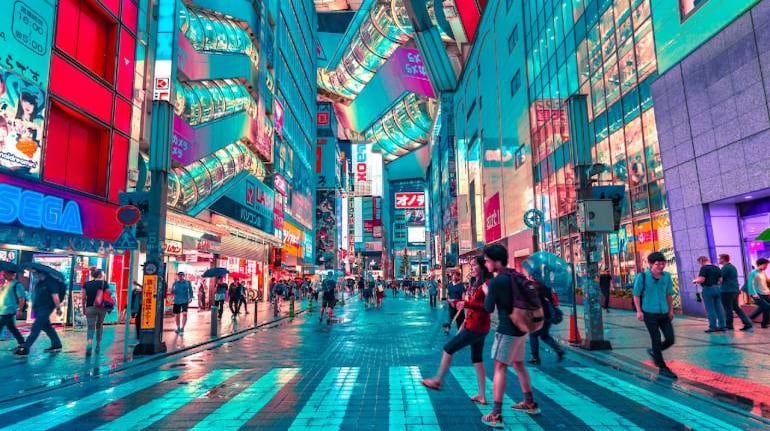
It is difficult to talk about Tokyo without at least dipping a toe in the waters of the “land of contradictions” cliché where, “tradition and innovation” rub shoulders and so on. For to arrive in this thrumming city of 30 million people is a sensorially confounding experience. There is the shock and awe of the Shibuya and Shinjuku buildingscapes. Here, frighteningly haute-sized skyscrapers, draped in hyper-realistic digital screens that shine like constellations of capitalism come down to earth, cut the beholder down to bite-sized gawpers. But there is also a hush, so strong it’s loud, at the heart of the city’s great shrines and temples: Sensoji in Asakusa, Meiji-Jingu in Harajuku, or Yasukuni – a stone’s throw away from the Indian embassy, in Kudanshita. In these spiritual abodes, the swirls of incense are balletic in their dreamlike spiralling, and the wind susurrates through the cypress and gingko trees.
However much one might be sceptical of cliches, Tokyo’s duality is inescapable. The city belongs to both the robots – the Softbank humanoid, Pepper, is a standard presence in commercial spaces – and the Gods; to the otakus (nerds) as much as to the salarymen; and to the cicadas as much as the shinkansen (network of high-speed passenger trains).
How you choose to navigate the city, therefore, depends on your relative position among these binaries. If you reached tech puberty in the 1980s – think Walkman, Sony, Nintendo, neon –then your first stop should be Akihabara. Were Mughal emperor Jehangir a modern-day otaku, it is of this warren of electronics shops, rather than the valleys of Kashmir that he would have said, “Gar Firdaus bar-rue zamin ast, hami asto, hamin asto, hamin asto,” (If there be heaven on earth, it is here, it is here, it is here). Ranging from one-man stalls to enormous malls jam-packed with a gamut of gizmos, gadgets, parts, and junk, this is your one-stop shop for fulfilling all electric dreams.
If, on the other hand, blue wigs and video games are not your schtick and what you crave is the understated Japanese aesthetic of the ink-splash painting, the elegance of kimonos and the minimalistic convolutions of the tea ceremony, then off with you to Ginza. Here amongst the grand matriarchs of Japanese department stores, Matsuya and Mitsukoshi, a host of other venerable establishments, offer elegance in every form.
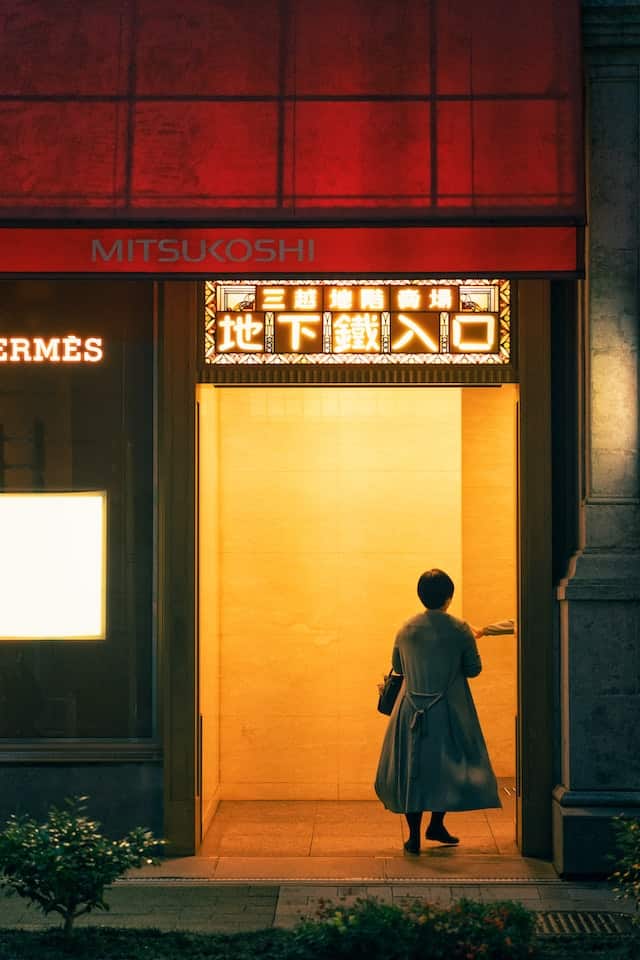 Mitsukoshi in Ginza (Photo by Ayumi Kubo Tau via Unsplash)
Amongst my favorites are two stationery shops, where paper envelopes and bookmarks are elevated to objet d’art. Itoya is an eight-floor temple to the god of papyrus, a trip to which will have you promising yourself to eschew email forever. Not only can you buy the most refined cards and letter paper here, but you can even write your epistles at a designated space and send them off using an in-store postal service. The second, Kyukyodo, has a lineage dating to the 1660s and was the stationery-supplier of choice to the Imperial Palace during the Edo period. I once bought a paper fan there that was shaded so delicately in an assortment of blues that it made me weepy with aesthetic euphoria.
Ginza is also home to the country’s flagship Uniqlo store that is the retail version of the Lord of Rings’ One Ring – think: “One store to rule them all, One store to find them, One store to bring them all and in the darkness bind them, in the Land of Ginza where the heattech lies.”
The thing is, once you’re done shopping, you’re usually peckish and that’s when it really becomes evident that you are in the right city. Food in Tokyo is craft honed over a lifetime. It belongs to the realm of the shokunin.
Shokunin is one of those buzzy Japanese words like ikigai and kaizen beloved of global corporate gurus. But when eating out in Japan, its meaning is embodied in the food. A shokunin is a master craftsman who devotes himself (it’s a male-dominated space) to the relentless pursuit of perfection through the honing of a single skill: like the sushi chef apprentice who trains for 10 years before being allowed to cut the fish or the sake brewer who only dreams of yeast.
That so many eateries in Japan are steeped in the shokunin ethos helps to explain why there are more Michelin starred restaurants in Tokyo than any other city in the world, including Paris. In 2019 Tokyo boasted 230 restaurants with star ratings compared to 118 for the French capital.
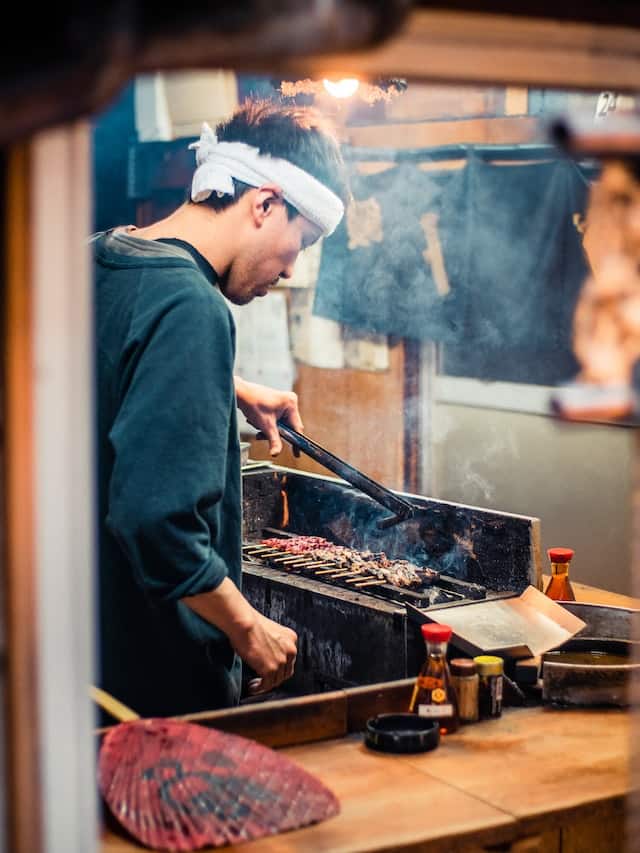 In Shinjuku Market, Tokyo (Photo by Gabriel Forsberg/Unsplash)
The world’s best foods - French stews, Chinese dumplings, Spanish paella – abound in Tokyo, but my personal favourite is pizza. At the risk of being ridiculed by Italian readers I will make the bold claim that it is to Tokyo that one must head to savour the best pizza the world has to offer.
Pizza Strada in Azabu Juban is a family favourite. Get counter seats so you can watch the pizzaiolo pinch the perimeter of the dough to create irregular air bubbles that expand into lightly charred pockets within seconds of being placed into an open-view, fiery oven. The result is a crust that has just the right amount of body, crunch and salt.
Also recommended: Savoy, located in Azabu Juban as well, and Seirenkan in Nakameguro.
But for Japanese food, throw away the guidebooks and find the closest dive in your neighbourhood. Nestled between a Family Mart convenience store and a pachinko parlour, there will be a local ramen and gyoza (Japanese potstickers) eatery, where you place your order on a machine with photos of the offerings, buttons aligned next to them. This is where the construction workers, with their wide trousers and towel-wrapped heads eat. As a principle, choose non-descript places with little fanfare around them, for the best food.
Here’s what to try – other than ramen and pizza (!) on any visit to Tokyo:
Okonomiyaki: Somewhere between a pizza and an omelet, okonomiyaki has a flour and egg base over which a variety of toppings nestle. These usually include spring onions, minced meat, cheese, as well as sea food like prawns or octopus. It’s usually possible to customize the final outcome and there is a DIY element of adding ingredients at the table, which kids tend to love.
Miso gindara: Cod, marinated in miso, equals umami heaven.
Soba: The austere version of ramen, soba uses buckwheat instead of wheat, and subtle flavours like lightly salted broth, instead of the flavour-pyrotechnics of its cousins in noodledom.
Sushi: Visitors are usually determined to eat at Jiro’s – where former US President Barack Obama famously ate and that was made popular by the Netflix documentary: Jiro Dreams of Sushi. But, in fact, in Tokyo you can pick a random sushi restaurant and usually end up a happy customer. Even supermarket sushi in Tokyo is better than the nigiri and maki rolls you likely get at fancy restaurants back home.
It's often like that in Tokyo, where the humble can be as impressive as the haute. Among my favourite things about the city are its manhole covers. In Japan, these covers are an art form, displaying intricate, occasionally painted, designs that reveal something of the unique history or cultural traditions of the cities whose sewers they adorn. According to the Japan Society of Manhole Covers, which maintains an online directory of designs, there are almost 6,000 artistic manhole covers across the archipelago with trees, landscapes, flowers and birds accounting for the majority.
Go to Tokyo for the cherry blossoms in Spring, the cicada-abuzz auralscape in summer, the painterly palette of autumnal trees and the pleasure of visiting onsen (natural hot water springs) in the snowy winter. The season is optional, but a visit shouldn’t be.

Discover the latest Business News, Sensex, and Nifty updates. Obtain Personal Finance insights, tax queries, and expert opinions on Moneycontrol or download the Moneycontrol App to stay updated!
Find the best of Al News in one place, specially curated for you every weekend.
Stay on top of the latest tech trends and biggest startup news.