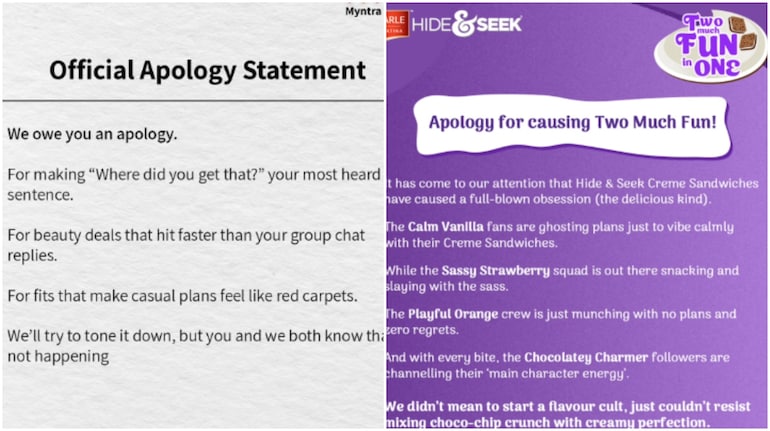
Several major Indian companies, including Skoda, Volkswagen, T-Series, and Adani Ambuja Cement, took part in a new social media trend where they appeared to issue formal apologies — not for any misstep, but for being “too liked” by customers.
In recent days, brand pages across Instagram, LinkedIn, and X (formerly Twitter) have been filled with mock “official apology statements”. These posts used the visual style of corporate press notes — complete with letterheads, bulleted paragraphs, and an official tone — but their content replaced remorse with humour.
The approach was part of a larger online movement often referred to as the “We’re Sorry” trend, which first surfaced in the Philippines in 2024 and has since gained traction worldwide. It involves companies playfully acknowledging that their products are so well-received that they “owe” customers an apology for it.
Automaker Volkswagen India joined in by joking that its vehicles were “too hard to part with.” Beverage brand Keventers expressed “regret” that its milkshakes “kept people coming back for more.”
Adani Ambuja Cement used a formal announcement format but inserted a light-hearted complaint that its customers were now “unable to drill holes or put nails in their walls.”
Celebrity chef Ranveer Brar also participated, sharing: “We regret to inform you that hamaari recipes kuch logo ko itni achchi lagi that they have caused unintended disruptions. Saari share ki gayi recipes have proven to be swadisht, resulting in a surge of spontaneous cooking activities.”
The campaign rapidly expanded across industries. Besides automotive and electronics brands, food chains, cinema operators, and grooming product labels joined the format. Participants also included Haldiram’s, Keventers, Banana Leaf, PVR-Inox, Cashify, and Garnier, among others.
Screenshots and reposts of these humorous letters circulated widely, drawing attention for their unified tone and presentation. Many posts were captioned with hashtags such as #ApologyPost or #WeAreSorry, which quickly trended across platforms.
One LinkedIn commentator observed: “It’s rarer than a sincere corporate mea culpa, yet infinitely more effective.”
While the majority of users found the approach creative and light-hearted, some industry observers expressed concern that such trends might undermine the seriousness of genuine corporate apologies.
One marketing professional on LinkedIn wrote: “Apologies should mean something. They’re for when a brand messes up and owns it. They’re for accountability, not attention.”
Others echoed similar reservations, arguing that using apology language for entertainment could blur lines between humour and responsibility in brand communication.
Discover the latest Business News, Sensex, and Nifty updates. Obtain Personal Finance insights, tax queries, and expert opinions on Moneycontrol or download the Moneycontrol App to stay updated!
Find the best of Al News in one place, specially curated for you every weekend.
Stay on top of the latest tech trends and biggest startup news.