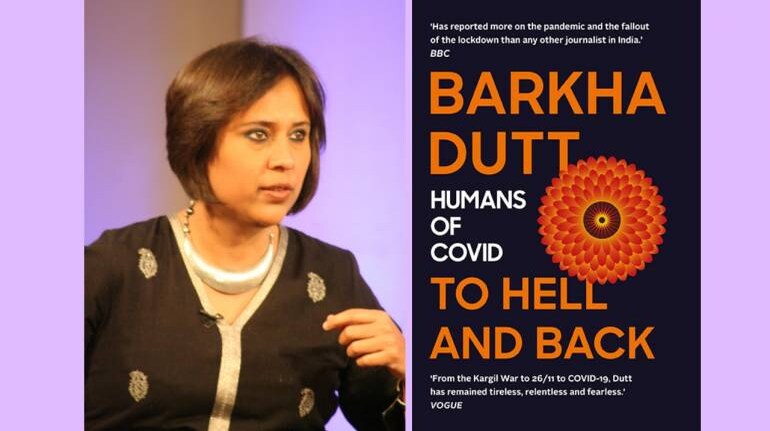
Journalist Barkha Dutt has been journeying across the length and breadth of India with a small team of three since the start of the COVID-19 pandemic. Her new book To Hell and Back: Humans of COVID (Juggernaut, 2022) is filled with stories of hardship and resilience, loss and hope. It attempts to humanize this massive tragedy by going beyond statistics and zeroing in on people’s lives and emotions.
We bring you a selection of five stories from this book, emphasizing the impact of the pandemic on the women of India.
1. Mann KumariAmong the numerous migrant workers who walked home was a brick-kiln worker named Sanjay, who was on the road with his wife Mann Kumari and their three children. She was pregnant with their fourth child. They were on their way from Haryana to Madhya Pradesh when her water broke. By then, they had managed to walk approximately 150 kilometres.
Dutt writes, “They were on the highway, near Aligarh in Uttar Pradesh, with no hospital, doctor or shelter in sight. She had no choice but to deliver right there on the side of the tarred rood with the help of a few other women who were walking in the same cluster as she was.”
2. LeelawatiDutt ran into 70-year-old Leelawati at Bandra railway station in Mumbai. She learnt that Leelawati had come to Mumbai to take care of her son who had suddenly taken ill. After she nursed him back to health, he hit her multiple times and threw her out of the house. He said, “Just get out, I don’t care, beg if you have to.” Leelawati had no money. She was able to satiate her hunger at the railway station, thanks to volunteers who were distributing food.
None of the five children that she had raised was willing to look after her. These children tried to insinuate that Leelawati had gone mad. She felt that they were able to do this because she was a widow. This was humiliating for her. Leelawati said that she would prefer to beg rather than get beaten by her own son. She told Dutt, “Nahin roungee.” (I will not cry) and “Himmat rakhoongi.” (I won’t give up.)
3. ManjuDutt met Manju in Kundli, a village in the Sonipat district of Haryana. Manju had queued up at the main water line with other women to fill buckets and bottles with water. Dutt writes, “But the water that trickled out of the tap was urine-yellow in colour.” Manju had rashes along her arm and on her back. “This is what happens to us from bathing with this water,” she said. The water looked like cheap cooking oil. It was contaminated by industrial waste.
Dutt was baffled when Manju added, “We usually have to spend Rs 10 to buy a jug of filtered water.” Other women in Manju’s village had scabs, rashes, wounds and allergies from this toxic water. Dutt notes, “It is estimated that women across India spend 150 million work days every year fetching and carrying water.”
Also read: Women's Day 2022: Women, work and water
4. PreetiWhen Dutt went to Siddharthnagar, at the north-eastern edge of Uttar Pradesh, she met a teacher named Preeti who had lost her parents Lallan Ram and Meena Kumari – both teachers – to the virus. They were posted on election duty in Gorakhpur in the middle of the pandemic. Dutt writes, “…no mercy was granted to families who sought exemption from election duty.”
Preeti's brother Aniket begged a bureaucrat to help his father get admitted to a hospital when the latter contracted Covid. The delay in accessing medical care, however, was fatal. After Lallan Ram was cremated, Aniket found out that Meena too had contracted the infection. Preeti regrets becoming a teacher, and believes that her parents might have been alive today if they had not been teachers.
5. JyotiOver eight days, 15-year-old school girl Jyoti made her father Mohan “sit on the back of a bicycle, strung a basket of essentials to the front, and rode 1,200 kilometres from Delhi to her village in Darbhanga in Bihar.” Mohan was a rickshaw driver recovering from a recent knee surgery. Jyoti told Dutt that her feet and hands ached badly but she did not have any other option. The father-daughter duo slept at petrol pumps, and relied on the kindness of strangers.
Jyoti said, “I am a girl. Anyone could have done anything to me along the way, anything they wanted…even my father was really scared.” She put herself in harm’s way for her father’s well-being. Dutt writes, “The global media attention her ordeal fetched meant that offers of help poured in, along with more bicycles than she would ever need or have space to keep.”
Jyoti’s story has moved many people, and it is being turned into a Bollywood biopic.
Discover the latest Business News, Sensex, and Nifty updates. Obtain Personal Finance insights, tax queries, and expert opinions on Moneycontrol or download the Moneycontrol App to stay updated!
Find the best of Al News in one place, specially curated for you every weekend.
Stay on top of the latest tech trends and biggest startup news.