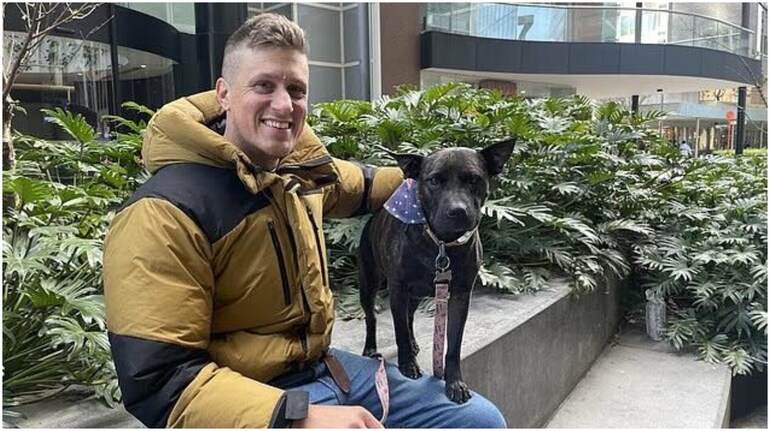
A technology entrepreneur in Australia has drawn attention in both the scientific and technology communities after working with researchers to develop a personalised cancer vaccine for his dog using artificial intelligence tools.
Paul Conyngham, a technology founder based in Sydney, began exploring unconventional options after his dog Rosie was diagnosed with cancer in 2024.
Despite undergoing chemotherapy and surgery, the dog’s tumours continued to grow and her condition deteriorated. Conyngham then began investigating whether artificial intelligence could help identify alternative treatments.
According to a report by The Australian, Conyngham used the chatbot ChatGPTto help outline a potential treatment strategy, which led him to consider an immunotherapy-based approach.
The AI system also directed him towards researchers at the University of New South Wales, specifically the Ramaciotti Centre for Genomics.
Conyngham does not have formal training in medicine. He is an electrical and computing engineer by profession and co-founded the technology company Core Intelligence Technologies. He has also previously served as a director of the Data Science and AI Association of Australia.
After contacting researchers at the university, Conyngham arranged for Rosie’s tumour DNA to be sequenced, paying the institution to carry out the genomic analysis.
With the sequencing data available, he began analysing the information himself in order to identify potential treatment pathways.
“I went to ChatGPT and came up with a plan on how to do this,” Conyngham told The Australian.
To further examine the data, he also used AlphaFold, a tool designed to predict protein structures. The analysis helped identify mutated proteins that could serve as potential therapeutic targets.
Although Conyngham eventually identified an immunotherapy treatment that appeared promising, the pharmaceutical company responsible for the drug declined to provide access to it.
The project then gained momentum after the involvement of Pall Thordarson, a scientist known for his work in nanomedicine.
Using the genomic data gathered by Conyngham, Thordarson and colleagues developed a tailored messenger RNA (mRNA) vaccine designed specifically for Rosie’s cancer. The vaccine was created in less than two months.
“This is the first time a personalised cancer vaccine has been designed for a dog,” Thordarson told The Australian.
He explained that the research represents an early stage in a rapidly developing field of cancer treatment.
“This is still at the frontier of where cancer immunotherapeutics are—and ultimately, we’re going to use this for helping humans. What Rosie is teaching us is that personalised medicine can be very effective, and done in a time-sensitive manner, with mRNA technology.”
Rosie received the first injection of the experimental vaccine in December. A booster dose was administered in February.
Since beginning the treatment, most of her tumours have significantly reduced in size. While they have not disappeared completely, her overall condition has improved.
Thordarson later discussed the case on social media platform X, where he said the experience illustrated how modern technology could broaden access to complex medical design processes.
He wrote that the case shows how technology may help “democratize” the development of cancer vaccines.
However, he also cautioned that the treatment should not yet be viewed as a cure, noting that some tumours have not responded to the vaccine. Even so, the improvement has been meaningful for Rosie’s owner.
“In December she had low energy because the tumours were creating a huge burden for her,” Conyngham told The Australian. “Six weeks post-treatment, I was at the dog park when she spotted a rabbit and jumped the fence to chase it.”
He added that he does not believe the treatment has cured the disease.
“I’m under no illusion that this is a cure, but I do believe this treatment has bought Rosie significantly more time and quality of life.”
The story has generated discussion within the technology sector about the potential role artificial intelligence could play in accelerating medical innovation.
Matt Shumer, co-founder of OthersideAI, highlighted the story in a post on X over the weekend. “This is what I mean when I say the world is going to get very weird, very soon,” he wrote.
“Expect more stories like this, each sounding increasingly more insane.”
Discover the latest Business News, Sensex, and Nifty updates. Obtain Personal Finance insights, tax queries, and expert opinions on Moneycontrol or download the Moneycontrol App to stay updated!
Find the best of Al News in one place, specially curated for you every weekend.
Stay on top of the latest tech trends and biggest startup news.