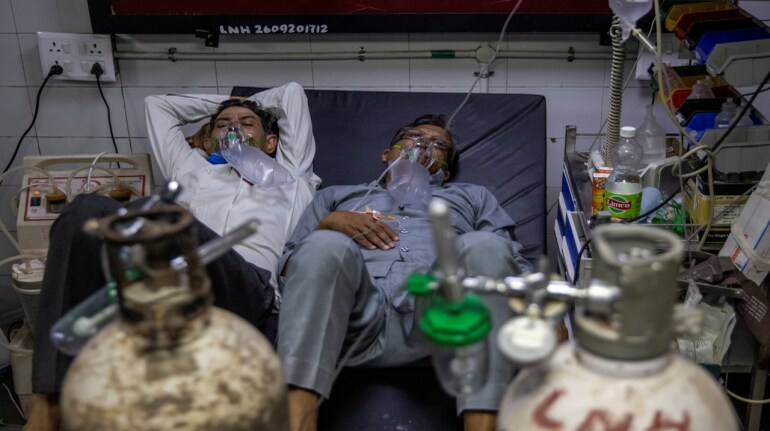
On September 22, Rajasthan became the first state to move a Right to Health Bill, promising health for all its residents, in the state assembly. The Bill was later sent to a select committee, which has been asked to submit its report in a week before it is tabled in the assembly again.
The Bill, if passed and implemented in its true spirit as hoped, has the potential to ensure universal healthcare and may pave the way forward for other states to bring about similar laws.
At least three states — Madhya Pradesh, Tamil Nadu and Assam — have prepared similar Bills but none has reached the respective assemblies yet.
The Rajasthan Bill aims to provide free and accessible healthcare to residents with a progressive reduction in out-of-pocket expenditure on healthcare.
Yet, most attached with health administration and movements feel that in its current form, the Bill may be quite weak, as a lot has been left for rules to be framed later.
“It doesn't exhibit much commitment on the part of the government, the clauses seem vague and lack specificity in terms of deliverables and timelines making the entire Bill quite ambiguous for interpretation,” the Rajasthan chapter of the Jan Swasthya Abhiyan (JSA) said in a statement last week.
Also, the financial memorandum only mentions the current health budget and refrains from committing any subsequent increase in the budget to meet the obligations outlined in the Bill, the JSA said. It has demanded that the Bill be put up for further discussion by a standing committee.
On its part, the state government maintains that the Bill is a result of a wider consultation with multiple stakeholders including administrators, doctors’ bodies and members of the civil society.
Meanwhile, some doctors' bodies in parts of the state also came out in protest of the Bill, which may make offering emergency care mandatory to all patients, even in private hospitals, irrespective of their capacity to pay.
Critical gaps
Chhaya Pachauli, state co-ordinator for JSA, said the Bill doesn't exhibit much commitment on the part of the government.
“The clauses seem vague and lack specificity in terms of deliverables and timelines which makes it quite ambiguous for interpretation,” she said.
Also read I NMC proposes relaxing norm for universities to start medical colleges
JSA, in its statement, pointed out that while the previous draft of the Bill put on the public domain for suggestions in March 2022 used the term "guarantee of health care services" in one of the clauses, this version omits the term completely, thus exhibiting a reluctance on the part of the government in guaranteeing health services as a matter of people’s right.
The Bill is also extremely focused on hospital care and completely ignores outreach services which constitute a major part of primary health care delivery, including services like immunisation and ANCs at the community level and people’s engagement in planning and monitoring of health services.
While the previous draft had stipulated timelines for meeting specific obligations by the government, this version conveniently does away with all the timeframes including even that for the drafting of the rules, it added.
Amulya Nidhi, an expert in public health who is also associated with JSA said the Bill is not holistic and does not address the concerns of socio-economic, environmental and social justice determinants of health but focuses too much on health care.
“But even there, it fails to clarify whether people have right to healthcare only in public health facilities or the private ones too,” said Nidhi, adding that it does not also specify the services guaranteed at primary, secondary and tertiary level hospitals.
Then, the composition of the state and block authorities outlined in the Bill is highly contentious with no representation of civil society members, health workers or paramedics but makes bodies extremely bureaucratic and non-inclusive in nature.
Importantly, while the Bill intends to create a legal right to health, a proposed clause prevents any aggrieved from going to a civil Court for a matter that the state or district Health authority is empowered to "determine".
To deny an aggrieved the right to seek a legal course of action if not satisfied with the departmental inquiry and decision goes against the principle of natural justice and curtails constitutional rights, according to JSA.
Paper tiger?
Public health researcher Oommen John pointed out that when a state legislates the right to health, every citizen of the state will be eligible for essential health services based on predefined criteria.
"This would translate as citizens being able to seek health services from any health care establishment without waiting for pre-authorisation to avail the state-sponsored health insurance coverage,” he said.
“However, a right to health Bill could remain a paper tiger unless there are efforts to empower citizens through targeted interventions aimed at removing barriers to access and overcoming information asymmetries,” John said.
Former Union health secretary Preeti Sudan said that while the introduction of the Bill is a good move, it may not achieve much without extensive groundwork and standards in place at every layer of healthcare delivery.
“With various initiatives during the last several years, such as the National Health Mission, Ayushman Bharat, Lakshya (rating of government hospitals on maternal care), our healthcare indicators have improved remarkably,” she said.
Also read I First time in India: Stem cell therapy to treat knee osteoarthritis
Sudan, however, added that much more groundwork, which includes standardisation of services in hospitals, may still be needed before a government can “guarantee” quality healthcare to the citizens. “What is first needed is consolidating the gains that India has made in delivering healthcare and improving health systems over the past few years.”

Discover the latest Business News, Sensex, and Nifty updates. Obtain Personal Finance insights, tax queries, and expert opinions on Moneycontrol or download the Moneycontrol App to stay updated!

Find the best of Al News in one place, specially curated for you every weekend.
Stay on top of the latest tech trends and biggest startup news.