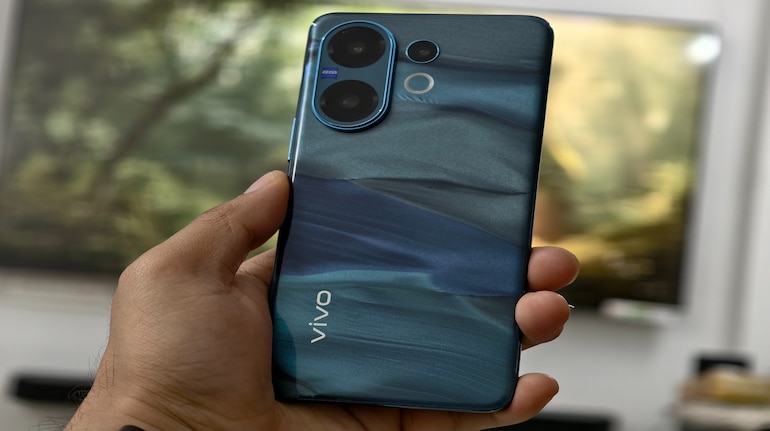
A renewed spike in RAM and ROM component costs is no longer hitting just smartphones — the price hikes have now extended to tablets as well. China’s Xiaomi has raised the price of its Redmi Pad 2 tablet by Rs 1,000 while other Chinese brands Vivo and Realme have increased prices of several popular smartphone models by up to Rs 2,000, while
A major shock is building around memory components, especially LPDDR4, which is central to low and mid-tier Android devices. With global production shifting toward LPDDR5, analysts expect a supply crunch that will further inflate costs.
Effective December 1, market leader Vivo has revised prices across its T4 Lite, T4x, T4R and T4 series, with hikes of Rs 1,500, Rs 1,000, Rs 1,500 and Rs 2,000 respectively.
This follows an earlier increase for the T4 Lite and T4x. The new MOPs now place the T4 Lite at Rs 11,999–Rs 14,999, the T4x at Rs 15,499–Rs 18,499, the T4R at Rs 20,999–Rs 24,999, and the T4 at Rs 22,999–Rs 26,999 across variants.
Xiaomi has also increased prices of its Redmi Pad 2 tablet, citing the same component cost pressures. All variants are now Rs 1,000 higher, effective December 1. The Redmi Pad 2 (4GB + 128GB) is now priced at Rs 14,999, the Wi-Fi + Cellular (6GB + 128GB) model at Rs 16,999, and the Wi-Fi + Cellular (8GB + 256GB) configuration at Rs 18,999.
“We request all partners to take note of the revised pricing and align their billing, display, and communication accordingly,” Xiaomi told retailers.
Realme, which implemented its revisions earlier on November 14, has raised prices across the C-series and 15-series by Rs 500 to Rs 1,500.
The Realme C71 (4+64) now costs Rs 7,699, while the C73 is priced at Rs 10,999 for the 4+64 variant and Rs 11,999 for 4+128. The 15X series now starts at Rs 17,999 for 6+128, rising to Rs 19,499 for 8+128 and Rs 20,999 for 8+256. The premium 15T lineup has seen some of the biggest jumps, with prices now at Rs 21,999 for 8+128, Rs 23,999 for 8+256, and Rs 25,999 for 12+256.
Queries sent to Vivo, Realme and Xiaomi didn’t elicit any response.
Rupee depreciation is amplifying a structural cost problem driven by memory inflation, Moneycontrol reported on December 1.
Memory, which already accounts for 30–31 percent of the bill of materials in $100–200 devices, is expected to rise to 45–48 percent by Q1 next year, as a weak rupee drives costs higher.
Market trackers also warned that a short-term bottleneck are likely to emerge in system-on-chips (SoCs) from Q1 2026, adding pressure to an already strained supply chain.
With 4GB LPDDR4 prices rising from $9.9 in Q3 2025 (up 29 percent vs Q1) and projected to reach around $22 by early 2026, brands can no longer absorb entry-level cost pressure—now worsened by currency weakness,” Sanyam Chaurasia, principal analyst at Omdia, told Moneycontrol.
This is already restricting the availability of sub-Rs 10,000 smartphones and pushing up retail prices.

Discover the latest Business News, Sensex, and Nifty updates. Obtain Personal Finance insights, tax queries, and expert opinions on Moneycontrol or download the Moneycontrol App to stay updated!
Find the best of Al News in one place, specially curated for you every weekend.
Stay on top of the latest tech trends and biggest startup news.