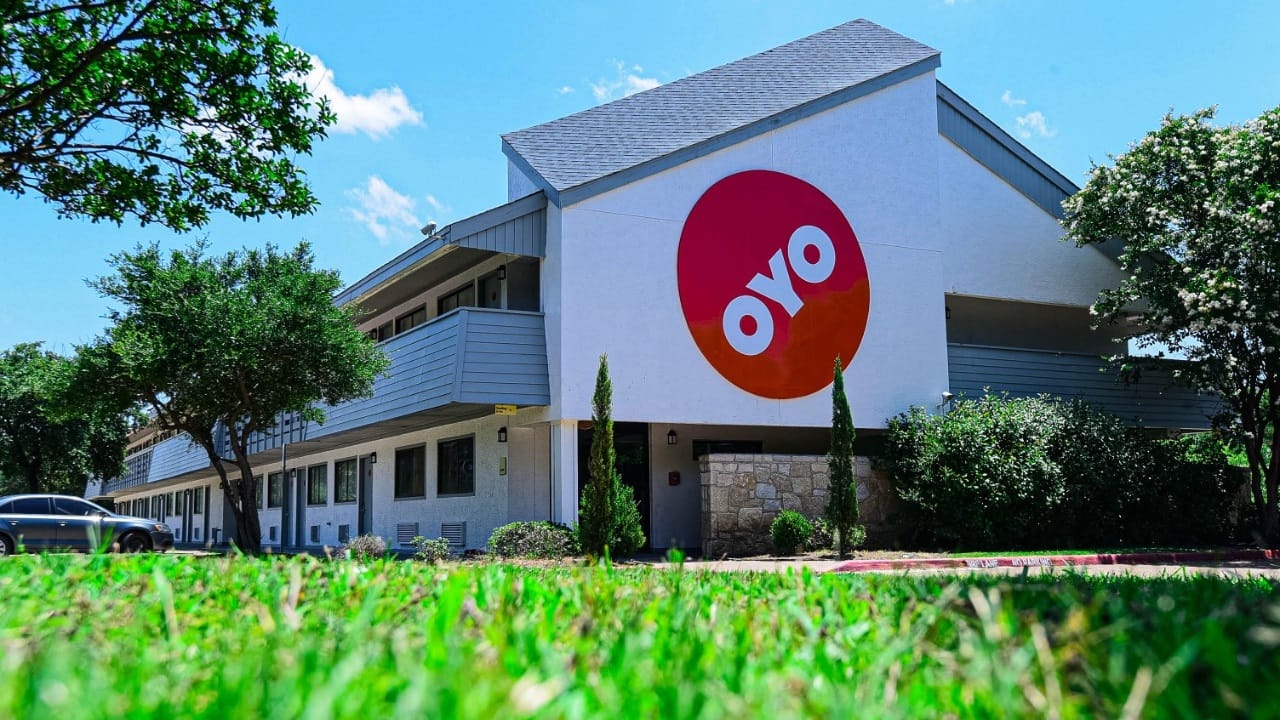
One important thing: Oyo’s largest investor SoftBank has cut the company’s valuation to $2.7 billion even as the hospitality firm gears up for an IPO, according to Bloomberg.
In today's newsletter:
- Unacademy’s Relevel fails to level up
- WhatsApp Pay India head quits
- PhonePe CEO's renewed pitch for UPI charges
 Top 3 stories
Relevel fails to level up

SoftBank-backed Unacademy's Relevel may have enticed hundreds of thousands of job seekers to take its free tests.
However, the job guarantee portal, which guarantees successful candidates a job within 15 days, is having difficulty getting them placed.
What happened?
Relevel, an initiative by Unacademy about which its CEO Gaurav Munjal has been fervently optimistic since its launch in January of last year, has come under fire.
- More than 300 candidates who took Relevel's tests and courses accuse the company of mis-selling and overstating.
Modus operandi
While these tests are free, they are difficult to clear, due to which very few people pass them.
Relevel then pitches courses that can cost up to Rs 90,000 (for a three-month course) to unsuccessful candidates, assuring them these will help them pass the test.
- However, very few candidates have passed the test despite taking them, and those who have are still unemployed.
Allegations by candidates
- Candidates were told that the course's batch size would be 100; however, Relevel upped that number to 300. They also allegedly sold courses to those beyond the eligibility age.
- Although the brochure said that the average package was Rs 6 lakh per year, trainers told applicants that it was actually only Rs 2.5 lakh.
- While applicants were told they did not need to have 10th/12th passing certificates, employers only showed interest in those who did.
Go deeper…
The big picture
The timing of the development is critical for Unacademy in particular, as the company's core test preparation business is under pressure with the demand for online coaching dwindling as the pandemic-led restrictions start easing up.
Unacademy has implemented a number of cost-cutting initiatives, including thousands of job cuts, and is also looking to raise funds. Relevel has been central to Munjal's pitch to investors, and with the initiative showing signs of strain, it may be difficult for Munjal to raise funds.
Also read: Layoffs, restructuring, slowdown: India’s edtech firms are struggling post-pandemic
WhatsApp Pay India head quits

It wouldn't be incorrect to argue that WhatsApp dominates India, but up until now, payments have been the app's biggest weakness. Today, the Meta-owned messaging platform also lost its payments head, compounding its problems.
Driving the news
Failed to take off
With more than 500 million users, India is WhatsApp's largest market. The company's payment service was supposed to upend the country's payments industry, but it hasn't quite taken off yet.
This is in part because of the limitations NPCI imposed out of concern that they could overrun the system. In April, WhatsApp received approval to increase its user cap from 40 million to 100 million.
- In contrast to rivals PhonePe (47.8% market share) and Google Pay (33.6% share), it still makes up a pitiful 0.1% of the entire UPI market.
What have they done so far?
It's not like WhatsApp has not tried promoting its payment service. Over the past year, it has introduced new features and marketing initiatives to drive awareness and discoverability. It has also tried the time-tested trick of offering cashback to users. But none of them have moved the needle yet.
"Payments on WhatsApp is a priority for Meta and we will continue to innovate and drive momentum as part of our broader efforts to bring the 'next 500 million Indians' onto the digital payments' ecosystem," the company said in a statement.
PhonePe CEO's renewed pitch for UPI charges

In the last two years, the Unified Payments Interface (UPI) has emerged as the fastest-growing and most widely used method of payment.
However, companies that offer these services don’t make money from the payment mode, since the government mandated in 2020 that it has to be offered free of charge in a bid to drive adoption.
The government and startups leading the UPI narrative have long been at odds over whether to keep UPI free or not.
‘No path to profitability’
In a renewed pitch, PhonePe CEO Sameer Nigam reiterated that the fast-growing Indian payments ecosystem led by UPI has no path for recovery of investments or profitability.
“We are getting a lot of global capital into digital payments. But the path to recovery and profit is not there,” said Nigam at the Global Fintech Fest in Mumbai.
Nigam pointed out that when payment modes are made free of cost there is an underlying assumption that companies involved in these businesses will have alternate sources of revenue. While that may be possible for banks, but not startups, he said.
"I don't think we can go below cost recovery (on charges). But that's where we are right now, which is my concern," he said.
The argument
Given that UPI today accounts for over 60% of all digital transactions and records transactions over Rs 10.7 lakh crore each month, the industry has claimed that zero fees are a loss to the ecosystem and will deter further investments in the area with no returns.
Recently, Vishwas Patel, the executive director of omnichannel payments provider Infibeam Avenues and the chairman of the Payments Council of India (PCI), took to Twitter to express his displeasure, alleging that banks had taken all of the financial assistance that the government had provided to offset the zero fees imposed on UPI transactions.
No change in govt’s stance
The Finance Ministry clarified in August that the government is not considering levying any charges on UPI transactions.
The government's clarification came after the Reserve Bank of India (RBI) proposed a discussion on charges for Indian payment systems, arguing for reasonable and competitively determined fees for payment methods.
MC Explainer - India’s draft telecommunication bill
The much-awaited draft of the Indian Telecommunications Bill 2022, which would supersede India’s current regulatory framework based on a more than 100-year-old law, is finally here.
As previously stated by Union Minister for Communications Ashwini Vaishnaw, the draft proposes a spectrum allocation regime, among other important provisions.
However, contrary to Vaishnaw’s claims that it would have sections that would prioritise consumer protection, there are provisions, which will have wider ramifications on the industry and end users – and not for the good.
Read our explainer





 PREVIOUS
 Tweet of the day
 QUICK HITS
 DEALS OF THE DAY
 GLOBAL PICKS