Top 3 stories
Swiggy's losses mount 96% to Rs 1,197 crore
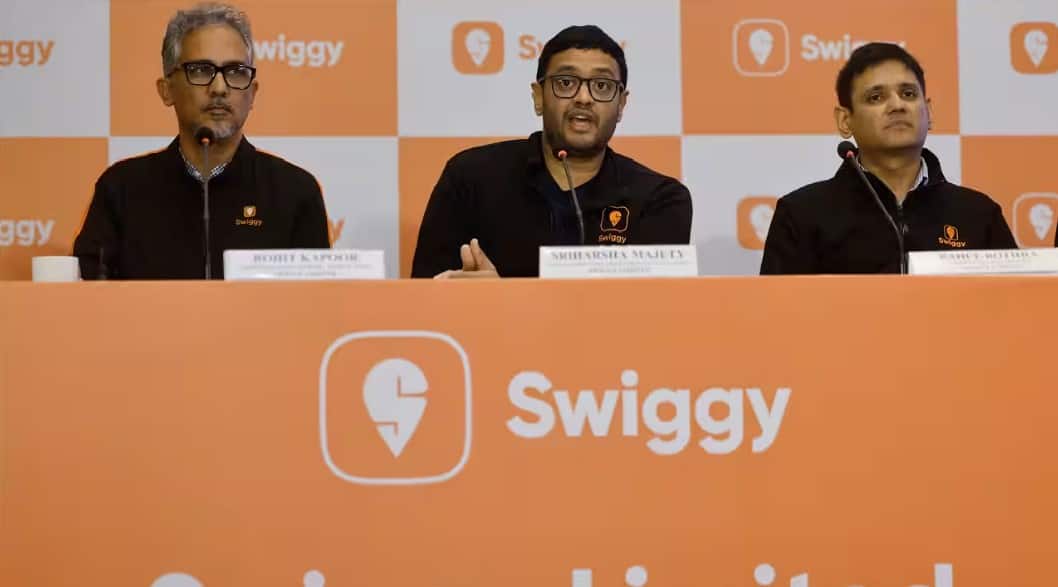
The kitchen’s hot, the bills are hotter – and Swiggy’s still adding ingredients to a recipe that’s yet to turn profitable.
Loss in the sauce
Revenue may be rising, but Swiggy’s bottom line is getting deep-fried.
- Net loss nearly doubled YoY to Rs 1,197 crore, as Instamart’s expansion continues to eat into margins
- Revenue from operations rose 54% to Rs 4,961 crore – but so did the bill: expenses jumped 60% to Rs 6,244 crore
Meanwhile, Zomato plated Rs 7,167 crore in revenue and even squeezed out a Rs 25 crore profit – however slim.
Rapido ruffles feathers
One-time ally, potential arch-rival – Rapido may now ride into Swiggy’s own turf.
- Rapido, in which Swiggy owns a 12% stake, is entering food delivery – threatening to unsettle the cosy duopoly
“As a shareholder, we are extremely happy with their success… but do acknowledge a potential conflict of interest,” Swiggy said in a letter to shareholders.
The company is “actively re-evaluating” its investment, as Rapido’s ambitions begin to collide with its own.
Too many cooks
New players enter the pantry, old strategies under the knife.
- Swiggy flagged “heightened intensity in the market,” noting that while some entrants are “taking baby steps,” competition remains elevated.
“We are baking that into our plans,” said Instamart CEO Amitesh Jha, indirectly referencing Amazon’s slow but steady entry.
- Like rival Blinkit, Instamart may also eventually shift to an inventory-led model, but only “at an appropriate time… depending on our ability to take any action on this,” as per CFO Rahul Bothra.
Dig deeper
Infosys looks to hire big as TCS cuts deep
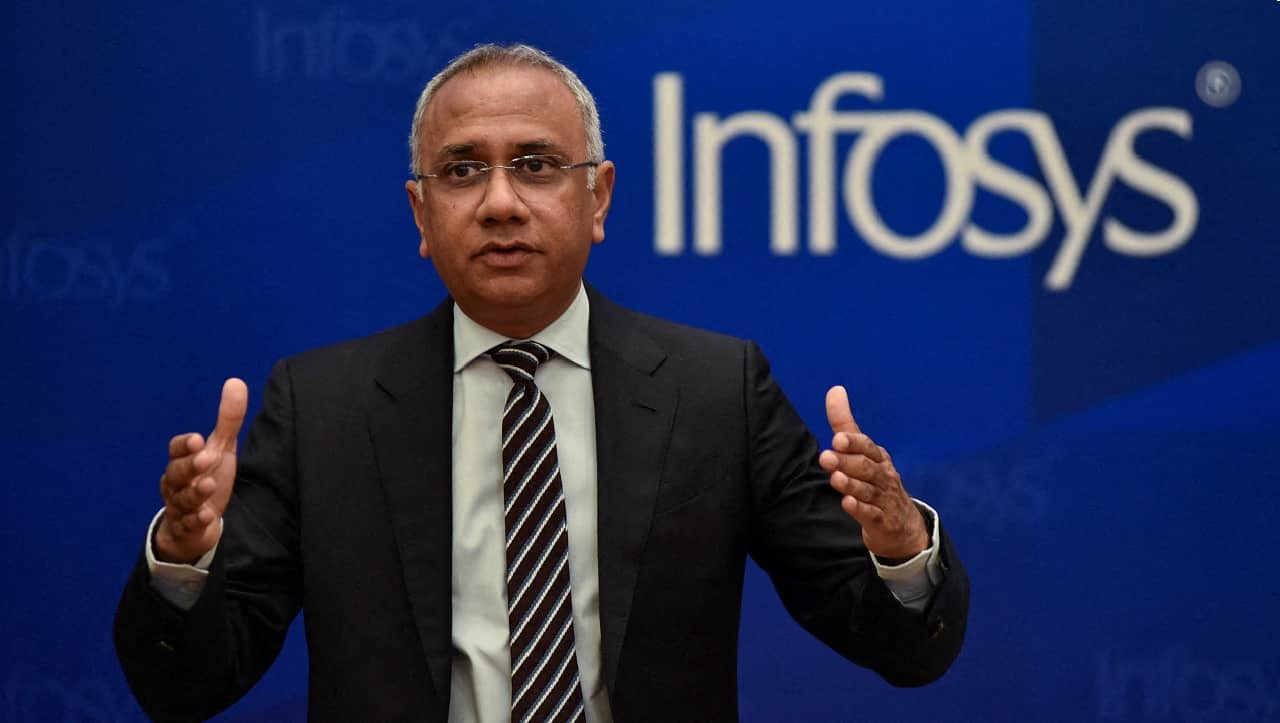
Infosys has set its mind to do it differently this time.
Wage hikes? Check.
Hiring plans? Check.
This comes less than a week after larger rival Tata Consultancy Services (TCS) announced that it will let go of about 2% of its global workforce in FY26.
Tell me more
In an exclusive interview, Infosys CEO Salil Parekh said the IT services giant is bullish on its hiring plans, driven by strategic investments in AI.
- As of Q1, Infosys has added around 17,000 employees across levels and plans to onboard 20,000 freshers in FY26
During its recent earnings announcement, the company bucked the trend by rolling out wage hikes, as its peers continue to evaluate their plans.
What’s driving this?
On July 27, we first reported that TCS will be cutting over 12,000 jobs globally, mainly impacting mid and senior level roles.
Despite the industry churn, Parekh said it’s business as usual at Infosys. The company remains focused on growth, strong utilisation, and integrating freshers through training and deployment.
Go deeper
Banks squeeze fintechs with UPI fees

Nobody wants to pay for using the popular UPI payment system, yet everyone wants to make money from it.
- This week, ICICI Bank, the second-largest private sector lender, imposed a small transaction handling fee on payment aggregators (PAs), which facilitate transactions for merchants
Driving the news
Most banks charge PAs a fee for UPI merchant transactions, while PAs, in turn, impose a small fee on merchants.
- These charges go by various names: maintenance fees, onboarding fees, platform fees, or even reconciliation fees
Similarly, PA firms label their charges as a convenience fee or a technology platform fee.
Interestingly, as per a 2019 government notification, payment companies, including banks, are not allowed to impose any charges on UPI transactions, either directly or indirectly.
Beyond the news
The RBI has been ambiguous about the convenience fee. Technically, it is not illegal as long as the fee is ‘payment mode agnostic.’
Banks often use these charges to pressure PAs into maintaining accounts with them.
“PAs are charging merchants a fee for using the technology, but using our technology for free,” said a senior bank executive with one of the banks that charges PAs.
To be sure, banks themselves pay NPCI switching fees for UPI.
“Everyone should be able to make money,” says the banker. In the melee, it is the midmarket and the small merchants that end up bearing the brunt of these charges.
Dig deeper





 PREVIOUS
 QUICK HITS
 GLOBAL PICKS