One quick thing: Zepto completes reverse flip from Singapore to India
In today’s newsletter:
- Is India ready to claim its DeepSeek moment?
- Capillary Technologies picks IPO bankers
- Will Budget 2025 back India’s chip ambitions?
Was this newsletter forwarded to you? You can sign up for Tech3 here
 Top 3 Stories
Is India ready to claim its DeepSeek moment?
When China’s DeepSeek R1 shattered benchmarks and surpassed global AI leaders like ChatGPT, it sent shockwaves through the global tech industry. For India, this is more than a headline—it’s a wake-up call!
What’s happening?
The debate between building foundational AI models versus leveraging existing ones, or between building large language models (LLMs) vs becoming the use-case capital of the world, has never been more heated.
While IT services giants like Infosys and Wipro advocate for optimising pre-built models, citing efficiency and a focus on real-world solutions, some technocrats argue that India risks becoming a 'technology colony' if it fails to invest in foundational AI infrastructure
“China has proved with DeepSeek R1 and Kimi k1.5 that a whole-of-nation approach can have big payoffs. In India, this approach has worked for cryogenic engines, 4G/5G telecom equipment and India Stack. When we set our mind to it, we can do remarkable things,” iSPIRT founder Sharad Sharma told us.
Read: India will be at a disadvantage if it doesn’t join the LLM race, says General Catalyst’s Hemant Taneja
India’s LLM efforts
India's journey toward building foundational LLMs has gained momentum in the last two years, with startups like Sarvam AI and Ola’s Krutrim leading the charge.
While these startups have garnered a lot of attention from both customers and investors, experts argue that India needs to significantly scale up its ambitions.
"Sarvam is a strong start, but India needs at least 10 more like it. With 1.4 billion people, relying on a single player isn’t enough. Just as we don’t depend on one company for roads, AI and LLMs demand broad innovation and competition—it’s fundamental for India’s future," said AI Foundry co-founder Umakant Soni.
Bottomline
Every nation is striving for AI supremacy, and India is no exception. As experts tell us, a key element in achieving this is developing tailored, nuanced LLMs that preserve the country’s diverse tapestry, ensuring its unique data sets are reflected in the AI models.
Go deeper
Also read from our comprehensive DeepSeek coverage
Capillary Technologies picks IPO bankers

A plan that Capillary Technologies set in motion more than four years ago is now coming closer to fruition
Driving the news
IPO deets
This new attempt has nearly doubled the IPO size compared to 2021
- Raising Rs 1,500 crore through a mix of primary capital and secondary share shares
- Around Rs 200-300 crore will be through a fresh issue of shares and the remaining Rs 1,200-1,300 crore will come through the sale of existing shares, we were told.
Also Read: Startup IPO party to continue in 2025: 25 firms expected to list on bourses
Revenue track record
The SaaS company, which primarily manages loyalty programmes for clients such as Indigo and Tata Group among others, has been on a strong growth trajectory.
- Revenues were up 80% YoY in FY24 while losses were down 33% YoY
The renewed plans come at a time when public market investors have rewarded the likes of Swiggy and Zomato and encouraged others such as Groww and Lenskart to tap the public market investors.
Go deeper
Will Budget 2025 back India’s chip ambitions?
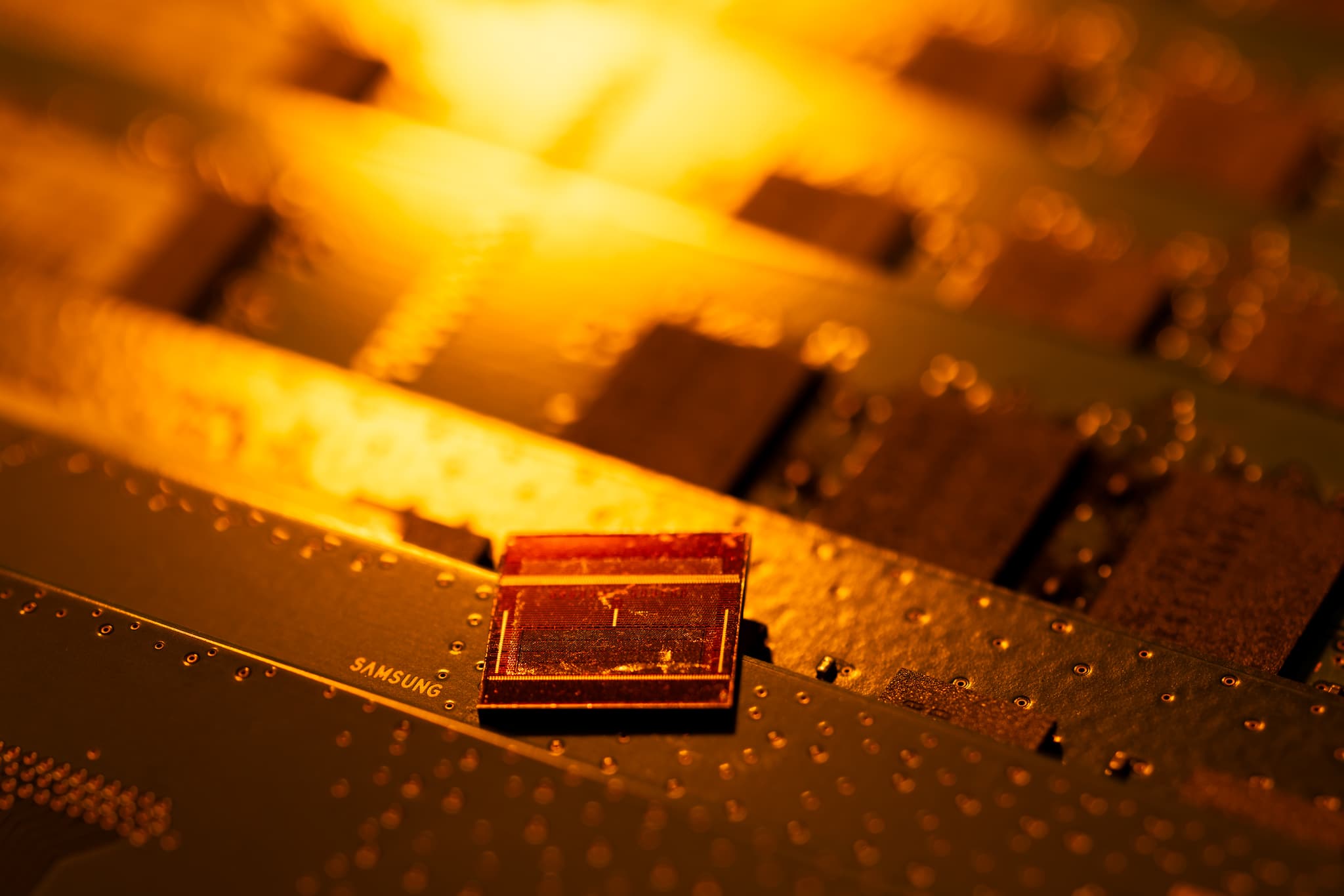
India's tech dreams are getting bigger, but the semiconductor industry is asking—will the forthcoming Union Budget put its money where its mouth is?
Driving the news
With Budget 2025 around the corner, industry leaders are rallying for increased support for the Indian electronics and semiconductor ecosystem.
- HCL co-founder Ajai Chowdhry proposed an allocation of Rs 44,000 crore for the "Product Nation" initiative, with focus on semiconductor development.
The India Electronics and Semiconductor Association (IESA) has called for a $20 billion boost to the production-linked incentive (PLI) scheme over five years.
What else?
Additionally, IESA has requested Rs 10,000 crore for targeted R&D to drive industry-academia collaboration.
- Vivek Tyagi, MD of Analog Devices India, emphasised the need to shift from foundational PLI schemes to design-led manufacturing
The current gap
Current financial allocations are yet to support approval for silicon fabs, as noted by Ramendra Verma of Grant Thornton Bharat.
Verma proposed enhanced financial incentives, expanded PLI schemes, dedicated funds for R&D, and investments in infrastructure like:
- Fabrication plants (fabs).
- Assembly, testing, marking, and packaging (ATMP) units.
- Outsourced semiconductor assembly and test (OSAT) facilities.
What are other sectors asking for?
- Consumer internet startups expect the Union Budget 2025 to introduce policies that simplify taxation and regulations, ease compliance burdens, and strengthen the digital infrastructure.
- Insurtech startups and industry leaders are voicing their expectations for reforms that could enhance insurance accessibility, affordability, and innovation



 PREVIOUS
 QUICK HITS
 GLOBAL PICKS