One quick thing: Rural credit startup Sarvagram in talks to raise over $50 million in funding
In today’s newsletter:
- Inside I4C: The crack team fighting fintech frauds in India
- Kris Gopalakrishnan sees AI driving IT sector
- Major NVIDIA upgrade for India’s Siddhi supercomputer
Was this newsletter forwarded to you? You can sign up for Tech3 here
 Top 3 stories
Inside I4C: The crack team fighting fintech frauds in India

For every Rs 100 lost to fraud, the Indian Cybercrime Coordination Centre (I4C) saves Rs 12.50—a small yet vital win in the relentless battle against cybercrime.
Tell me more
In the high-stakes world of fintech, I4C is the unsung hero safeguarding citizens' hard-earned money from a rising wave of fraud.
- Led by CEO Rajesh Kumar, this digital defence force is tackling cybercriminals, one mule account at a time
Its Citizen Financial Cyber Fraud Reporting and Management System (CFC RMS) serves as a unified platform, connecting banks, the Reserve Bank of India (RBI), fintechs, the National Payments Corporation of India (NPCI), and law enforcement agencies for near real-time responses to complaints.
- With a network of 311 partners, including banks, wallets, and even a courier company, CFC RMS is building a formidable defence against cyber fraud
- Efforts are underway to fully automate the system, which has already prevented Rs 2,750 crore from falling into the hands of fraudsters
Leveraging AI
To stay ahead of the ever-evolving tactics of cybercriminals, I4C is now adding an AI layer to its arsenal.
A team of 120 data analysts and cyber sleuths is working tirelessly to map out cybercrime trends and anticipate fraudsters’ next moves.
“We are like a startup in government space and the impact of our work is immense,” Kumar said.
The uphill battle
Despite I4C's efforts, the threat of cybercrime continues to evolve. Unauthorised fintech apps and mule accounts continue to spread like wildfire.
Over 1,100 complaints were lodged against illegal loan apps in the past year, with losses surpassing Rs 200 crore.
"These companies operate without the necessary licences, making it difficult to hold them accountable," warns Kumar.
Find out more
Picture credit: Microsoft Copilot
Kris Gopalakrishnan sees AI driving IT sector

Senapathy 'Kris' Gopalakrishnan, a tech visionary and Infosys co-founder, sees artificial intelligence (AI) as a game-changer for India's tech industry.
Tell me more
In an interview with us, Gopalakrishnan, who has been instrumental in shaping India's $250 billion IT services industry, said that AI offers immense opportunities for growth and productivity.
- Contrary to recent concerns raised by AWS CEO Matt Garman about AI's potential impact on jobs, Gopalakrishnan maintains that AI will improve efficiency and productivity, rather than leading to significant job losses in the IT sector
He sees AI as a horizontal technology that will revolutionise every industry, opening up new avenues for growth and innovation.
GCCs vs. IT firms
Gopalakrishnan remains optimistic about the growing demand for global capability centres (GCCs) in India.
- He sees GCCs as a part of the Indian tech sector and not a threat to IT firms, even if there’s an ongoing talent war between the two
Growth of the GCCs means that India has become the default location for R&D and software development, he said.
Read the full interview
Major NVIDIA upgrade for India’s Siddhi supercomputer
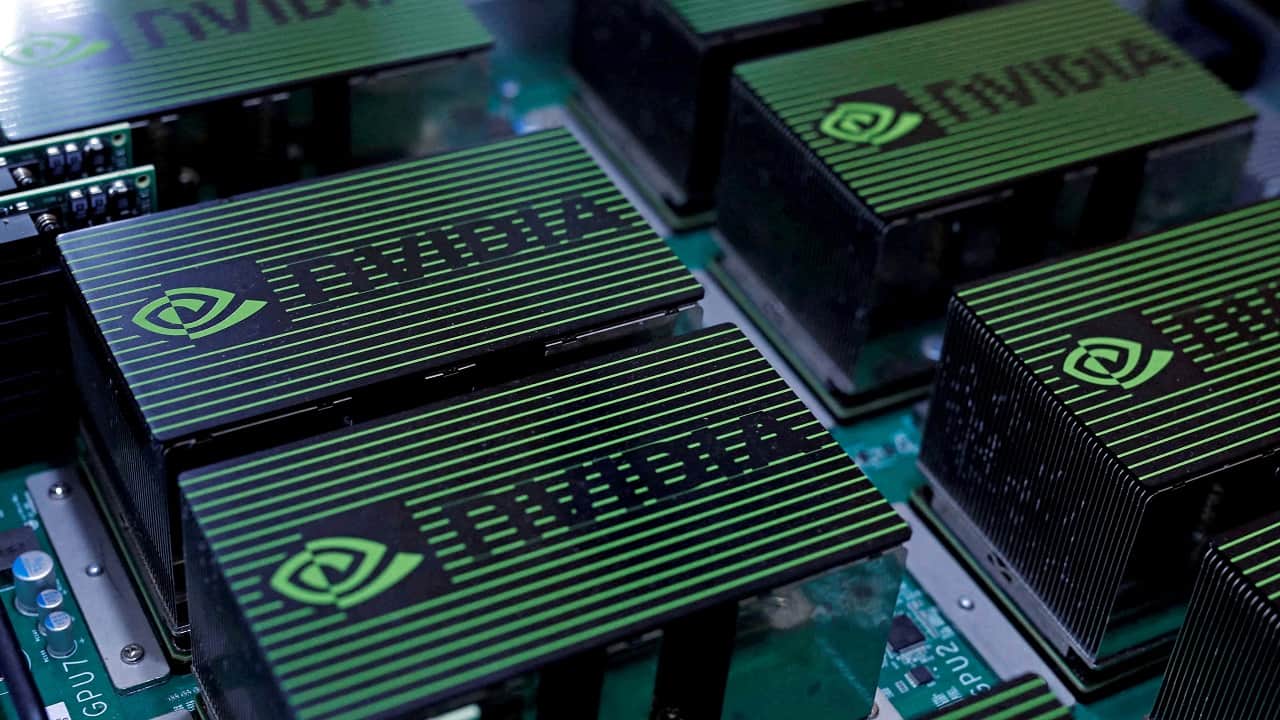
When it comes to supercomputing, it’s not just about speed—it’s about who’s got the best graphics processing units (GPUs). And India’s Param Siddhi is getting a serious upgrade.
Driving the news
The government will upgrade the Param Siddhi supercomputer with cutting-edge 8 Nvidia H100 GPU units.
- A tender from Centre for Development of Advanced Computing (C-DAC) indicates that apart from Nvidia GPUs, the government will also be increasing the nodes of the supercomputer
Upgrade specs
Param Siddhi currently runs on Nvidia A100 GPUs.
The new H100 GPUs, based on Nvidia’s Hopper architecture, offer significant boosts in AI and high-performance computing (HPC) tasks.
- The upgrade could increase Siddhi’s AI computational power by an estimated 126 AI PFLOPS
- 1 AI PFLOP means it can solve 1 quadrillion AI related calculations in a second
The enhanced system will be capable of handling larger AI models, simulations, and deep learning tasks.
Supercomputing in India
Param Siddhi, along with Airawat AI, both located at C-DAC Pune, forms part of India’s National Supercomputing Mission.
- Airawat, like Siddhi, is another supercomputer with computational power of 200 AI PFLOPs
- The current combined computational power for both supercomputers stands at 410 AI PFLOPs, and after the upgrade it is estimated that it will increase to 536 AI PFLOPs.
Find out more



 PREVIOUS
 QUICK HITS
 GLOBAL PICKS