One quick thing: PayU plans to raise $300 million ahead of IPO
In today’s newsletter:
- Ashwini Vaishnaw charts India’s chip revolution
- Quick commerce set for billion-order boom this Diwali
- Supreme Court to hear challenges to Online Gaming Act
P.S.: Tune into Tech3 Podcast, your daily dose of tech and startup insights. Monday to Friday! Check it out on Spotify or Apple Podcasts
Was this newsletter forwarded to you? You can sign up for Tech3 here
 Top 3 stories
Ashwini Vaishnaw charts India’s chip revolution
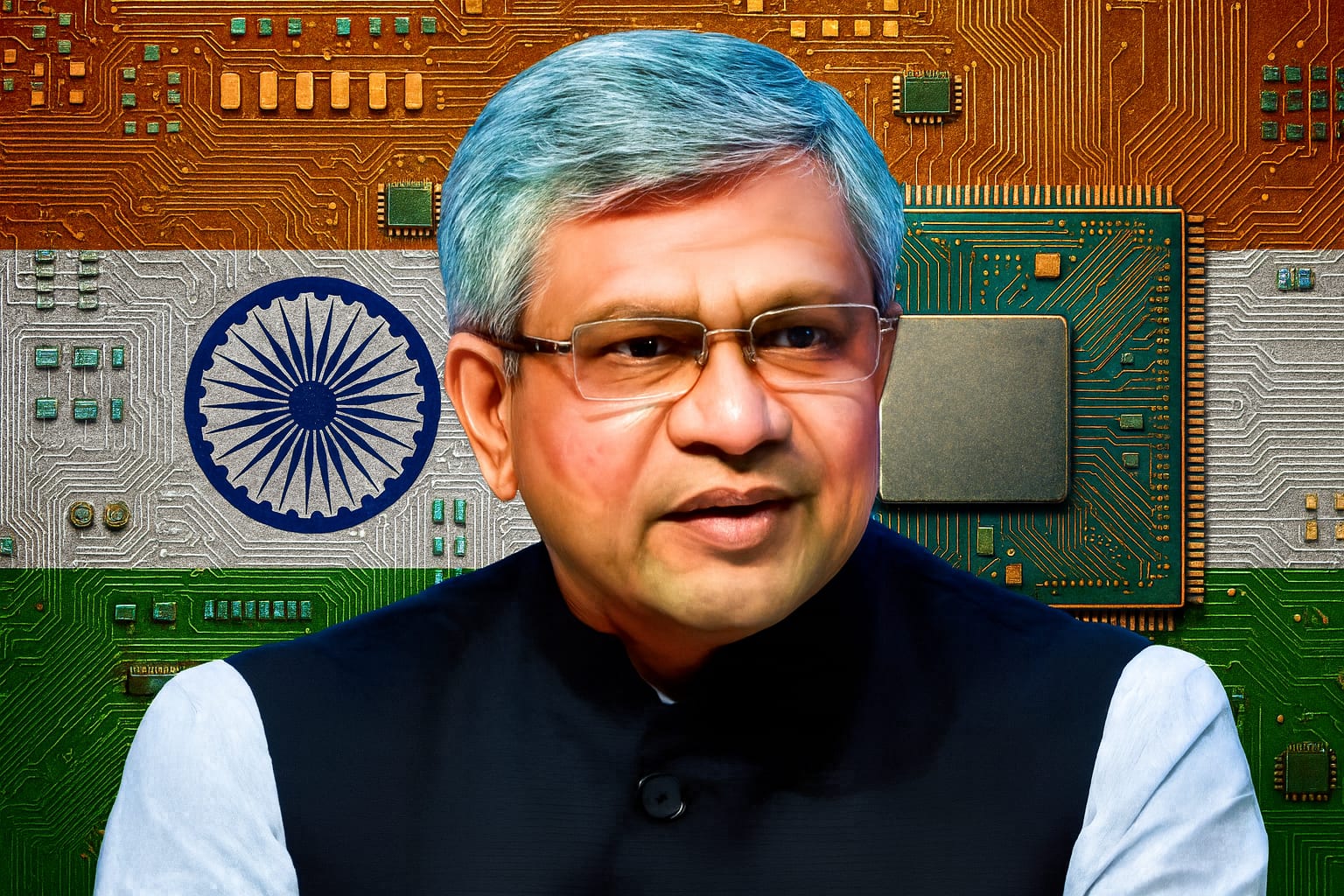
Union Minister Ashwini Vaishnaw believes semiconductors will do for India in the 21st century what steel did in the 20th...trigger an industrial revolution.
The big picture
India isn't just chasing the semiconductor wave, but it is positioning itself to ride it.
With 10 projects worth $18 billion underway and construction ongoing at 5 facilities, Vaishnaw sees chips as the foundation for everything from automobiles to consumer electronics.
"...if you have a steel industry, you can have automobiles, you can have truck manufacturing. Similarly, semiconductors are a foundational industry," Vaishnaw told us in an exclusive interview.
With India Semiconductor Mission 2.0 focusing on building out the ecosystem, from equipment makers to indigenous chipsets, Vaishnaw is betting semiconductors will be India’s “digital diamonds” and its next job creation engine.
Navigating the Trump tariff storm
As protectionist winds blow from Washington, Vaishnaw outlined why India remains an attractive destination despite geopolitical headwinds.
Despite US tariff noise, companies continue to expand in India, drawn by design talent, policy stability, and trust built over the past decade, he said.
“This trust is why company after company wants to set up a base here,” Vaishnaw said, citing Apple’s investments as proof.
IT matters
On anti-outsourcing rhetoric and IT job concerns, Vaishnaw reassured:
“We are continuously engaged with governments in the US, Europe, Japan and Southeast Asia. This vibrant industry, which is growing at a rapid pace and providing good, high-quality employment, will remain intact and grow.”
Meanwhile, India’s electronics exports have grown eightfold in 11 years, with smartphone global market share crossing 20%.
AI mission update
The minister outlined the progress made under India’s AI mission:
- 34,000 GPUs already empanelled, against an initial 10,000 target
- A techno-legal approach to AI safety, anchored by a virtual AI Safety Institute
Tell me more
Quick commerce set for billion-order boom this Diwali

India’s festive script is flipping — quick commerce is hurtling toward a billion orders, as direct-to-consumer (D2C) brands let AI do the heavy lifting.
Billion-order buffet
Quick commerce is piling on the plates this Diwali, and the servings keep getting bigger.
- The top five platforms are set to hit 1 billion orders by October, industry stakeholders tell us, with new entrants like Amazon Now and FirstClub only swelling the tally
Blinkit, Instamart and Zepto already deliver over 4.5 million orders daily, with BigBasket and Flipkart Minutes adding to the spread.
- Non-grocery is the surprise dessert — Instamart’s share has jumped from 7% of gross order value last year to 18.5% now
Fast, but under fire
The billion-order binge has, however, drawn the regulator’s eye, and the Competition Commission of India (CCI) isn’t sold on the discounts.
- The watchdog is probing pricing strategies, foreign direct investment (FDI) compliance and whether some sellers get VIP treatment
From zero orders in 2020 to a $7.5 billion market in 2025, quick commerce’s rise is hard to miss.
- But analysts warn the sugar rush won’t last: growth outside the top 10 metros is proving harder to chew
Bots on the block
With festive sales peaking, D2C brands are outsourcing delivery headaches to algorithms.
- Logistics platforms like Velocity’s AI cut fake return-to-origin rates (RTOs) by up to 7 points, while ClickPost’s models flag address errors and courier delays before they blow up.
- Another logistics platform, Prozo’s orchestration trims stockouts by 20%, while gifting platform FNP is automating “30-minute gifting” with personalised nudges
With festive e-commerce sales projected at Rs 1.2 lakh crore, AI is shaping up as the invisible worker who never calls in sick.
Dig deeper
Supreme Court to hear challenges to Online Gaming Act

The Supreme Court will decide if India's new online gaming law, which bans real-money games, holds up under the Constitution.
Driving the news
The top court today transferred all 3 petitions challenging the constitutional validity of the Promotion and Regulation of Online Gaming Act, 2025, from multiple high courts to itself.
Who is challenging the law?
The petitioners include Head Digital Works, which operates the online rummy platform A23 Rummy, online carrom platform Bagheera Carrom and Clubboom11 Sports & Entertainment, which operates the online fantasy sports platform Boom11.
- These companies had filed petitions before the High Courts of Karnataka, Delhi, and Madhya Pradesh.
- Any fresh challenge to the legislation would also be transferred to the apex court, it stated.
Catch up quick
The law prohibits online money games, where a user makes a deposit, directly or indirectly, with the expectation of earning winnings on that deposit.
- This resulted in several real-money gaming companies suspending contests and games involving money on their platforms, though they continue to offer free-to-play options
It has also led to companies such as MPL, Pokerbaazi's parent firm and Games24x7 significantly reducing their workforce in recent weeks.
The GST battle
In July, the Supreme Court had reserved its judgment in a clutch of cases dealing with both GST levied on gaming companies as well as state-level legislation which sought to ban some real-money online games.
The apex court has to adjudicate the validity of GST notices worth Rs 2.5 lakh crore issued to online RMG firms and casino companies, as well as challenges to laws introduced by Tamil Nadu and Karnataka that banned online games played for stakes.
- The GST Council recently hiked the tax rate for online money games from 28% to 40%, effective from September 22
Also read: Centre likely to lose Rs 10,000-12,000 crore revenue annually due to ban on real money gaming



 PREVIOUS
 QUICK HITS
 GLOBAL PICKS