Moneycontrol PRO
Loans
Loans
HomeNewsTechnology startupAI edge newsletterWhy quantum and ai together are a cybersecurity nightmare
The Ai edge
October 25, 2025

The Lede

Why Quantum and AI together are a cybersecurity nightmare

Why Quantum and AI together are a cybersecurity nightmare

Remember when we thought AI-powered cyber threat detection was the endgame? Turns out, we were bringing a neural network to a quantum fight. 

While enterprises are busy deploying AI to catch hackers faster, a much scarier arms race is brewing in the background, one where quantum computing could crack every encryption standard we rely on and AI might be the accelerant that makes it all happen sooner than we think.

The exponential collision no one is ready for: “Think of it as two exponential technologies colliding,” Saugat Sindhu, Global Head of Advisory Services in Cybersecurity & Risk Services at Wipro, told us. “The intersection of Generative AI (Gen AI) and quantum computing will be tenfold more dangerous because of the processing power quantum brings.”

  • Translation: AI makes attacks smarter. Quantum makes them unstoppable. Together? They're rewriting the entire playbook

The first thing to break? Encryption, the mathematical lock protecting your bank account, your government's secrets, and basically everything that happens online.

The wake-up call: Wipro's latest cybersecurity report doesn't mince words: 75% of enterprises lack the expertise to defend against AI-led attacks, while 86% of recent breaches involved nation-state actors. Sindhu says the fix requires a two-front war. 

"It's a two-pronged model involving infrastructure hardening around post-quantum encryption and AI model hardening against adversarial attacks like evasion and data poisoning," he explained. 

In other words, you need to quantum-proof your systems and teach your AI not to get fooled.

VCs smell opportunity: Where there's existential risk, there's venture capital. Accel's Prayank Swaroop sees this as a greenfield moment for founders. 

"If quantum becomes real, existing cybersecurity solutions will fail…That again gives a large surface area for Indian founders to go after. Some founders should start investing time and energy toward it," Swaroop told us.

The message is clear: if you're building in security, now's the time to get quantum-serious.

Enter Agentic AI: Coforge's Chief Technology Officer Vic Gupta is betting on "opinionated intelligence" as the next line of defence. 

"Agentic AI will be central to cyber defence in the coming years," he said. "Our goal is to ensure AI can autonomously detect, respond, and remediate without losing control of its boundaries."

But here's the catch: autonomy cuts both ways. Global tech research firm Forrester predicts at least one major public breach caused by Agentic AI within two years, as autonomous systems begin making real-time decisions in production. Security teams, it warns, must secure AI intent and track data origin to avoid cascading failures.

Quantum rewrites the rules: Forrester expects quantum-safe spending to exceed 5% of global IT security budgets by 2026. 

  • Governments are moving fast, the US and EU are funding quantum migration programmes, while India is studying its impact on data sovereignty and defence systems

The clock is ticking. Even if large-scale quantum computers are years away, the data being stolen today could be decrypted tomorrow once quantum arrives. It's called "harvest now, decrypt later," and it's already happening.

The automation paradox: Gartner's Cybersecurity and Risk Outlook 2026 highlights the irony: AI will make systems smarter and faster, but overreliance on automation without human oversight could create new systemic risks.

As Sindhu put it: “Threat modelling must now extend beyond networks and data to AI systems themselves.”


The bottom line: The future of cybersecurity will not be code versus code. It will be compute versus compute. Quantum may break encryption, but AI will decide who holds the master key.

Dig deeper

Was this newsletter forwarded to you? You can sign up for the AI Edge here

From the Newsroom

Tool of the Week

ChatGPT Atlas

OpenAI has officially entered the browser wars with ChatGPT Atlas, its first AI-powered web browser. Atlas integrates ChatGPT directly into browsing, helping you understand content, complete tasks without leaving the page, and carry context across sites. It’s designed to act like a co-pilot while you surf. Subscribers on Plus, Pro, and business plans also unlock Agent Mode, where the browser takes over complex, multi-step tasks. Currently available only on macOS.

Term of the Week

Test data

A separate and unseen set of data used to assess the final performance of the model. Test data is used to test a model’s overall capabilities once training is complete.

What We Are Reading

  • facebook
  • Twitter
  • linkedin
  • whatsapp
  • youtube
  • instagram
  • App Store
  • Google play
Previous

Powering India’s AI Mission: The energy question

18/10/2025
next

AI in India’s fintech: Hype vs reality

01/11/2025

Recent Newsletters

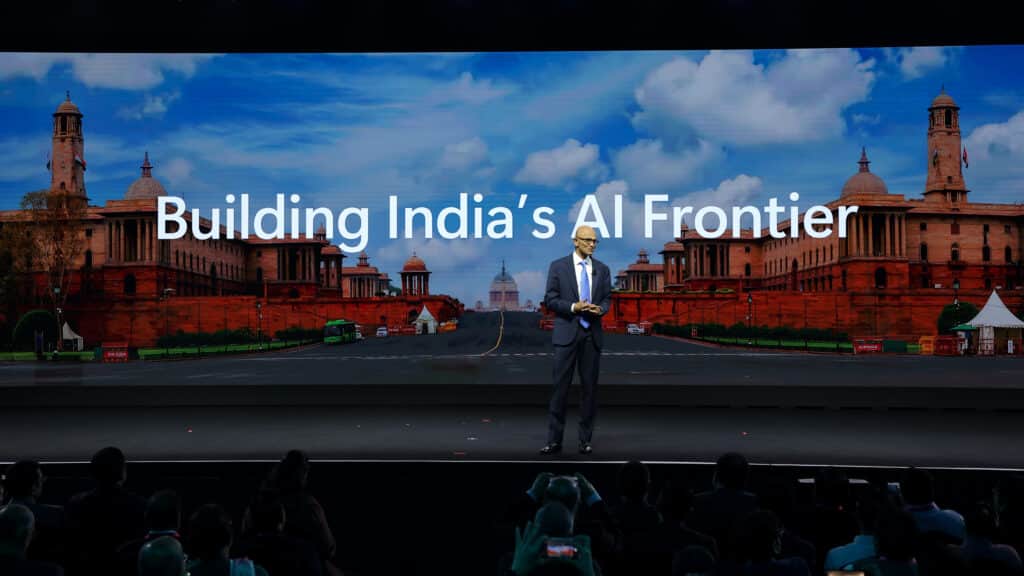
Satya Nadella’s 3-city India tour shows how AI is becoming a national project

Satya Nadella’s 3-city India tour shows how AI is becoming a national project

Here is the thing about Microsoft CEO Satya Nadella’s India visit. It was not a corporate roadshow but was a coordinated pitch across governance, engineering and enterprise, crafted to tap into India’s AI ambitions at a moment when the country is emerging as a strategic counterweight in global tech. Three cities, three narratives, and one message: India can move faster than any other market if it chooses to. A tour designed around India’s AI map: Delhi was the language of sovereignty and national capacity. Bengaluru was about software architecture and developer ecosystems. Mumbai was the hard business pitch, where Nadella called data the most strategic asset and showcased real deployments like MahaCrimeOS, now running in 23 police stations and scaling to 1,100. Each stop reinforced the same thesis that India is not just a market but a full-stack AI economy in the making The geopolitical backdrop is impossible to ignore: Google’s $15 billion pledge and Amazon’s $35 billion commitment have turned India into a high-velocity AI battleground. Nadella’s hype about India winning the AI race positions the country as a credible alternative to China A McKinsey report estimates that AI could lift India’s GDP by 15 to 20% and generate millions of jobs. And for everyday users, this means cheaper AI tools in education, healthcare, and skilling: that is the layer Microsoft wants to power. In the national capital…: Nadella unveiled a stack built on sovereign cloud options, in-country data processing and contextual AI. The framing was deliberate: Not Microsoft’s Copilot but India’s Copilot On cyber, his message was blunt. “When it comes to cybersecurity, it is an intelligence game.” India needs digital sovereignty, but cannot fight threats without global intelligence. Microsoft is already rolling out in-country processing for Microsoft 365 Copilot in India, Japan, Australia and the UK, with a 15-country expansion planned for 2026. In India’s tech capital…: Nadella shifted to developers. The pitch was an AI-driven software development lifecycle where engineering begins with evaluation and orchestration, not line-by-line coding Its Foundry hosts more than 11,000 models, GitHub is becoming an agent workspace, and Copilot Studio is the design layer for building agents with prompts rather than code. The message, again, was clear: This is the new production layer of software And in the financial capital…: In the final leg, Nadella told India’s largest conglomerates that their most valuable asset is the data already inside their walls. The knowledge of people, relationships, documents, conversations, and workflows is what will determine the quality of future AI. “Models are becoming a commodity,” he said, adding that performance will be a direct function of data maturity. Skills and scale: Microsoft will train 20 million Indians in AI by 2030. More than 5.6 million have already been trained since January 2025. This is not just skilling but economic mobility embedded into public platforms like e-Shram and the National Career Service, which serve over 31 crore informal workers. That means multilingual AI interfaces will now handle job matching, resumes, and upskilling Agentic future: Across all three cities, Nadella showcased Microsoft’s agentic AI stack. At Apollo Hospitals, clinicians use agents for diagnostics. At ONGC, agents analyse upstream oil data. The shift is industry-wide. IT major Cognizant already generates 30% of its internal code with AI. Now, four IT giants, Cognizant, Infosys, TCS and Wipro, will deploy over 200,000 Copilot licenses after Nadella’s $17.5 billion investment announcement. This is how agentic AI becomes the default operating layer across Indian enterprise. The tensions behind the optimism:India’s ambitions are large, but constraints remain. Model builders, AI safety experts and domain-AI hybrids are still in short supply. Cyber vulnerabilities are rising and skilling at a national scale will need constant reinforcement. Yet Nadella’s tour made one thing clear: AI is no longer a tech upgrade in India but is becoming a structural pillar of governance, industry, and labour The bottom line: Nadella did not arrive to sell Microsoft’s roadmap but to anchor India’s. The three-city tour showed a country where AI is shifting from promise to production and where the battle for sovereignty and scale will decide the next decade of global tech leadership. Dig deeper Was this newsletter forwarded to you? You can sign up for the AI Edge here

BPM’s second act: AI boom puts EXL (and its peers) back at the center

BPM’s second act: AI boom puts EXL (and its peers) back at the center

Here is the thing about the BPM industry. For years, it sat at the periphery, dismissed as labour-heavy execution while IT services occupied the top of the value chain.  Then AI entered the workflow and flipped the script The firms closest to processes, data and domain knowledge are suddenly at the centre of enterprise transformation. A middling sector is now in the middle of a renaissance.  NASDAQ-listed EXL, founded in 1999, has posted double-digit growth for the last two years and has raised its 2025 revenue guidance twice. More than half of its revenue now comes from managing and analysing client data, applying analytics and embedding data into workflows. The AI boon: Rohit Kapoor, the co-founder, Chairman, and CEO of EXL, who has run this treadmill for over 26 years, describes AI as a "tailwind" that has supercharged the company's business.  "It is a second leg up for the BPM industry. The business opportunity for us has exploded by more than three times," Kapoor told us in an interview from the United States last week.  For the first time, a major technology shift is rewarding the people who understand how workflow actually gets done - be it in functions like underwriting insurance policies or processing claims.  AI does not live only in models or platforms. It lives inside decisions, exceptions and workflows. That is the layer BPM firms have spent decades mastering. With AI amplifying that expertise, operations knowledge has become a strategic weapon. The numbers tell the story: EXL’s data and AI business has crossed 56% of revenue and is growing 17% year-on-year. It will likely hit a billion dollars this financial year. The company now expects its revenue for the year to be between $2.07 billion and $2.08 billion, implying a 13% year-over-year growth. Nearly 6,000 employees, around 10% of its workforce, are trained in AI technologies, and the company is hiring aggressively for data and engineering roles Revenue per employee is rising, as EXL is delivering double-digit growth while adding fewer people Investors have taken note. EXL’s P/E multiple is near 27, higher than Accenture and Cognizant, signalling a market premium for BPM firms that lead in data and AI. Why BPM is winning this phase of AI adoption: Kapoor describes a three-part advantage: domain knowledge from running operations, mastery of data from years of analytics work, and the ability to apply AI directly to workflows. Apart from EXL, its rivals Genpact and Firstsource invested early in analytics and now find themselves ahead as AI moves from pilots to full-scale enterprise adoption. Moreover, AI has expanded EXL’s total addressable market by more than three times as clients prioritise outcomes and business transformation over traditional IT build work. BPM firms are moving deeper into the tech stack: Kapoor said clients are now asking EXL to choose the cloud, select the algorithms, modernise the customer journey, and run the full stack with a human in the loop.  That model places BPM firms squarely in territory once dominated by IT services. In Kapoor's words, "there is an overlap and we will be going into those areas." The company is also accelerating IP creation with patents focused on applied AI A fragmented market, but consolidation is coming: Capgemini’s acquisition of WNS signalled the start of a consolidation cycle. Kapoor expects more deals as AI becomes the engine for transforming legacy services firms.  New players, including Thrive Holdings, are entering with an AI-first services thesis, creating a broader competitive field The bottom line: AI has shifted the centre of gravity from coding to context. BPM firms that mastered data and operations are now shaping end-to-end transformation and taking on bigger slices of the tech stack.  For EXL and peers, this is not just growth. It is a second act.  Read the full interview here. Was this newsletter forwarded to you? You can sign up for the AI Edge here

How Google reclaimed the AI crown

How Google reclaimed the AI crown

Remember when everyone thought Google had lost the AI race? Fast forward a few years, the 'code red' is over and the sleeping giant has not only woken up, but it is sprinting.  As Captain Marvel once put it: "I’ve been fighting with one arm tied behind my back, but what happens when I’m finally set free?" We are witnessing the answer right now. Google has mounted a strong comeback on the back of powerful frontier models topping major AI benchmarks, products like NotebookLM and Flow, and features like Nano Banana image generation that have become the talk of the town. "Sundar Pichai's game is not about winning the first innings, it's about winning the series," said Rajan Anandan, managing director at venture capital firm Peak XV Partners. "This is a world championship team." Anandan, who led Google's business teams in India and Southeast Asia for nearly eight and half years until 2019, said large companies take time because at “Google's scale, models that hallucinate can become problematic." Gemini 3 shines big: Gemini 3, the company's newest AI model, is earning praise from rivals and tech leaders, including Elon Musk, Sam Altman, Aaron Levie, and Matt Mullenweg.  Salesforce CEO Marc Benioff even said he is switching to Gemini 3 after using ChatGPT daily for three years, calling the leap “insane” and adding, “It feels like the world just changed, again." Last month, OpenAI CEO Sam Altman told employees that Google's recent progress could “create temporary economic headwinds” for the company. “I expect the vibes out there to be rough for a bit,” he said. Neil Shah, co-founder of Counterpoint Research, told us that Google "has successfully 'crossed the chasm,' overcoming the 'Innovator’s Dilemma' to leapfrog back to the front of the pack" The company also surpassed Microsoft in market cap earlier this week and is now closing in on the $4 trillion mark, a 63% jump from last year What led to Google's AI resurgence? Industry watchers and former insiders say Google’s turnaround stems from its full-stack AI strategy, long-term bets finally paying off and the increased involvement of co-founder Sergey Brin. "Google has the highest talent density on planet Earth. No one comes close. It's the only company that's integrated - from chips to models to applications. They also have one of the healthiest balance sheets, which gives them long-term orientation," Anandan said.   By deeply integrating Gemini into products like Search, YouTube and Android that touch billions of users, the company is translating breakthroughs into everyday impact. The organisational overhaul: Pichai first outlined Google’s plan to become “AI-first” in 2016. But the company didn’t anticipate how ready people were to adopt generative AI technologies, something ChatGPT made clear in 2022. This kicked off a chain of events:  Merging DeepMind and Google Brain into Google DeepMind, eliminating internal silos and unifying compute resources Kickstarting the Gemini project Streamlining the organisational structure to push teams to move faster Google's AI engine room: Google DeepMind was effectively transformed into the “engine room” for all of Google and Alphabet. It develops the frontier AI models that power Google’s entire product suite. AI Mode in Search now runs on Gemini 3, the first time Google has shipped Gemini in Search at launch. "When you have a full-stack approach, each layer, when it innovates, flows all the way to the top," Pichai said. Wall? What wall?: Google’s full-stack approach, combined with a new architecture, helped deliver Gemini 3’s significant gains during pre-training, surprising many AI researchers and dispelling concerns that AI scaling had hit a wall. "If you were on the outside, it looked like we were quiet or we were behind, but we were putting all the building blocks in place and then executing on top of it," Pichai said.  Gemini as unifying AI layer: Pichai envisions Gemini becoming the unified AI layer across all Google products, Search, YouTube, Cloud, and Waymo, making each better.  It is also central to attracting third-party developers into Google’s ecosystem Google’s Cloud business is booming, and its TPUs are gaining momentum as a viable alternative to Nvidia’s dominance.  Google recently struck a major chip deal with Anthropic and is reportedly in talks with Meta as well. OpenAI has also signed a cloud deal for ChatGPT. The last big hurdle: Enterprise adoption of Gemini, still relatively weak, is the final frontier for Google, Shah told us. Google’s open-source play is also not particularly strong at the moment, said Soham Mondal, founding partner of Triveous, a product, design, and engineering studio.  While Google has pulled ahead in the hotly contested AI race right now, the real test begins now. Can it maintain this momentum, or will we see another twist in the saga? Something to watch out for! Read the full story Bonus: Check out The Thinking Game, a documentary that delves into the heart of Google DeepMind, following Demis Hassabis and his team as they strive to unravel the mysteries of artificial general intelligence (AGI). Was this newsletter forwarded to you? You can sign up for the AI Edge here  

Why your

Why your "free" AI isn't really free

India is suddenly swimming in “free” AI. Airtel gives Perplexity Pro. Jio hands out Gemini Pro and Gemini 3 access. OpenAI chips in with ChatGPT Go. It feels like a festival of premium AI landing in everyone’s pocket, but behind the free passes is a deeper question: what exactly are users giving in return? Former NITI Aayog CEO Amitabh Kant has a word for it: "Neo-colonisation"  The freemium playbook: This is classic tech strategy 101. Get users hooked, then flip the switch to paid. With 700 million smartphone users, even a 5% conversion rate means 20 million paying customers, which is $160 million in monthly revenue, according to Tarun Pathak, Research Director at Counterpoint Research. But the real prize?  "The more unique and first-hand data they get, the better their models and generative AI systems will become," Pathak said. Your data, their training ground: India isn't just another market. It's 700 million smartphone users speaking 22 official languages (and hundreds more unofficial ones), navigating a wildly diverse cultural landscape, and interacting with AI in ways that users in the US or Europe never would. "These systems are interested in the interaction layer, collecting prompts and understanding usage patterns, language behaviour, error corrections, what people ask for, how they upload, and how the model performs across contexts. That's the raw material that helps refine future versions of the model," Jacob Joseph, VP of Data Science at CleverTap, told us. Which basically means, every time you ask ChatGPT to write an email in Hinglish or get Gemini to explain something using a cricket analogy, you're teaching these models how to be better at... being Indian. Consent grey zone: Here's where things get legally fuzzy. India's Digital Personal Data Protection (DPDP) Act was passed in 2023, with rules only released in November 2025. Implementation is still rolling out, creating what experts call a "grey zone." When you click "Claim Now" on that free AI subscription through your telco app, are you giving informed consent for your data to be used in AI training? Alvin Antony, Chief Compliance Officer at GovernAI, says probably not.  "Section 6(1) of the law requires that consent must be free, specific, informed, unconditional, and unambiguous. If a telecom provider links AI platform access to the recharge bundle, the consent may become conditional as well as not specific," Antony said. To be fair, these AI platforms do offer opt-out options. But how many users actually know about them, let alone use them? Who's on the hook when things go wrong?: If your data flows from Airtel to Perplexity or from Jio to Google, who's legally responsible if something goes wrong? The answer is... complicated. Under the DPDP Act, whoever determines the purpose and means of processing your data is the "data fiduciary" Mahesh Uppal from ComFirst Consulting distinguishes between data that the telco controls and data users share directly with AI platforms. Uppal doesn't believe that signing up for Perplexity through Airtel grants the telco automatic permission to share subscriber data. "I do not see that signing up for Perplexity or any other AI app through the telco implies that the telco has any consent from you for your personal data to be shared," Uppal said. Is this actually neo-colonialism?: Kant's warning is stark: India provides raw data at zero cost, foreign companies refine it into AI products, then sell those products back to Indians at premium prices. Sound familiar? It's the same playbook from actual colonialism. Just with data instead of cotton or spices Not everyone sees doom and gloom. Ganesh Gopalan, CEO of AI startup Gnani.ai, thinks this is actually positive.  "Indian consumers are indeed contributing valuable data that helps global AI models become more accurate, inclusive, and reflective of diverse perspectives, and this can be seen as a positive opportunity rather than exploitation," Gopalan said. His take? Indian startups have the home advantage. They understand vernacular nuance, cultural context and can build domain-specific models where global players struggle. Where this all lands: India is now a major battleground for AI companies, not just as a market, but as a source of rich, multilingual training data. But the regulatory framework is still settling and users don’t always know what they’re giving up. As CleverTap’s Joseph puts it: "The key is consent. Users should know, clearly and upfront, what is and isn't used for training...AI companies must treat disclosure not as a legal checkbox, but as a transparent and clear onboarding step." Read the full story Was this newsletter forwarded to you? You can sign up for the AI Edge here

How AI is helping Indian IT do more with less

How AI is helping Indian IT do more with less

For decades, India’s IT engine ran on people power. Hire more, deliver more, scale more. That model is now cracking as AI, automation, and platform delivery take centre stage in a $280-billion industry.  The new rulebook? Do more with less. The old model is dead: “The old linear model, more people and more revenue, is giving way to AI-led delivery models,” Amit Chadha, MD and CEO of L&T Technology Services, told us.  Digital twins, AI-generated code, and automated engineering are already improving throughput while optimising team size The numbers don't lie: Here's what doing more with less actually looks like: TCS has trained 1.6 lakh employees on AI, built more than 150 AI agents and expanded margins despite soft growth Infosys grew revenue through higher realisation, even as volumes remained weak Wipro held margins while rolling out WeGA 2.0 and expanding agentic AI across delivery HCLTech crossed $100 million in advanced-AI revenue and saw revenue per employee rise Cognizant lifted both revenue and operating income per employee and now generates 30% of its internal code with AI. The common factor is the same: smaller teams, heavier automation. AI as the new factory floor: TCS, Infosys, HCLTech, Wipro, Cognizant, they've all rebuilt delivery around human-plus-AI models. AI isn't a tool anymore. It's the production layer.  Phil Fersht from HFS Research puts it plainly: the industry is now scaling intelligence, not labour.  “The days of growth driven by massive headcount addition are behind us,” Fersht said. Forrester's Ashutosh Sharma sees the same shift…shrinking benches, pressure on mid-level roles and clients demanding outcome-based pricing. What "less" actually means: This is not about layoffs. It is structural: Selective hiring Flatter pyramids Smaller renewal scopes driven by AI efficiency Execution-led revenue growth  The system is being rebuilt from the inside out. The bottom line: Indian IT isn’t shrinking, it’s compressing and compounding at the same time. AI is turning smaller teams into larger engines of output, proving that in the new IT economy, less truly is more. Dig deeper Was this newsletter forwarded to you? You can sign up for the AI Edge here

Inside India’s growing appetite for AI-powered crypto

Inside India’s growing appetite for AI-powered crypto

Last week, we tracked how India's fintech and banking giants are dipping their toes into AI under the RBI's watchful eye, experimenting rather than overhauling.  This week, we are stepping outside the sandbox While banks figure out responsible AI and agentic payments pilots, Indian investors have already found a way to play the AI boom right now: AI-powered crypto tokens. In a world ruled by Fartcoin, Pepecoin, and Dogwifhat, talking about "fundamentals" and AI-blockchain integration can make you feel like the smartest investor in the room... even if, let's be honest, the market's still running more on vibes than value. But that's exactly what's setting the tone of crypto investments. The ChatGPT catalyst: When OpenAI dropped ChatGPT in 2022, it wasn't just tech giants who had their lightbulb moment. Crypto investors, tired of explaining why they were still holding coins named after dogs, finally found something that sounded... legitimate. “Today, with AI projected to grow into a multi-trillion-dollar industry, its intersection with crypto presents promising opportunities,” says Sumit Gupta, Co-founder, CoinDCX. As NVIDIA and OpenAI's valuations shot to the moon, crypto investors piled into AI tokens, even in India, seeing them as their own shortcut to betting on the AI boom.  In just a year, this frenzy drove AI token market capitalisation from $2.7 billion to nearly $30 billion What’s India hodling?: AI crypto coins such as FET (Fetch.ai), TAO (Bittensor), ICP (Internet Computer), Render, and NEAR have dominated trading volumes at top Indian exchanges like CoinDCX, CoinSwitch, Mudrex and Giottus. The numbers tell the story: CoinSwitch's top five AI tokens, AI16z, Virtual, Goat, PHA, and FET, account for over half its AI coin volume CoinDCX saw a trading spike in TAO, NEAR, ICP, FET, GRT, and INJ, with AI token volumes growing several-fold year-on-year Institutional investors are joining in, too. Grayscale raised its TAO exposure from 3% to 27% of its crypto portfolio Most of these top-performing AI coins come from relatively mature blockchain projects. There’s been another wave of AI coins released since 2024. Beyond the meme: Unlike meme coins, AI tokens are backed by real use cases, integrating machine learning and automation within decentralised ecosystems. “The AI-crypto tokens will likely see a natural filter over time, projects with clear utility and strong technology will hold the ground,” says Balaji Srihari, VP, CoinSwitch. The projects leading the charge: NEAR Protocol: Founded by ex-Google AI engineers Illia Polosukhin and Alexander Skidanov, this Layer 1 blockchain lets developers build decentralised applications through sharding FET (Fetch.ai): A decentralised network that uses AI agents to build and deploy AI-driven services TAO (Bittensor): Runs a decentralised marketplace for AI models ICP (Internet Computer):  Aims to replace centralised cloud infrastructure Hype hangover: After seeing a 1,800% surge in AI token trading between 2023 and 2024, platforms like Mudrex are reporting flat growth in 2025. Same story at Giottus. “Investors are focusing on real utility tokens rather than just those using the AI label for hype,” says Edul Patel, CEO, Mudrex.   But it's not all doom and gloom. AI tokens still account for 15–20% of total trading on Mudrex. And Patel believes India's deep bench of AI and Web3 developers could actually build the next wave of meaningful projects. The bottom line: The party isn't over, it's just getting more selective. India's AI crypto moment is shifting from FOMO-driven trading to a more deliberate bet on technology that solves real problems.  Read the full story Was this newsletter forwarded to you? You can sign up for the AI Edge here

AI in India’s fintech: Hype vs reality

AI in India’s fintech: Hype vs reality

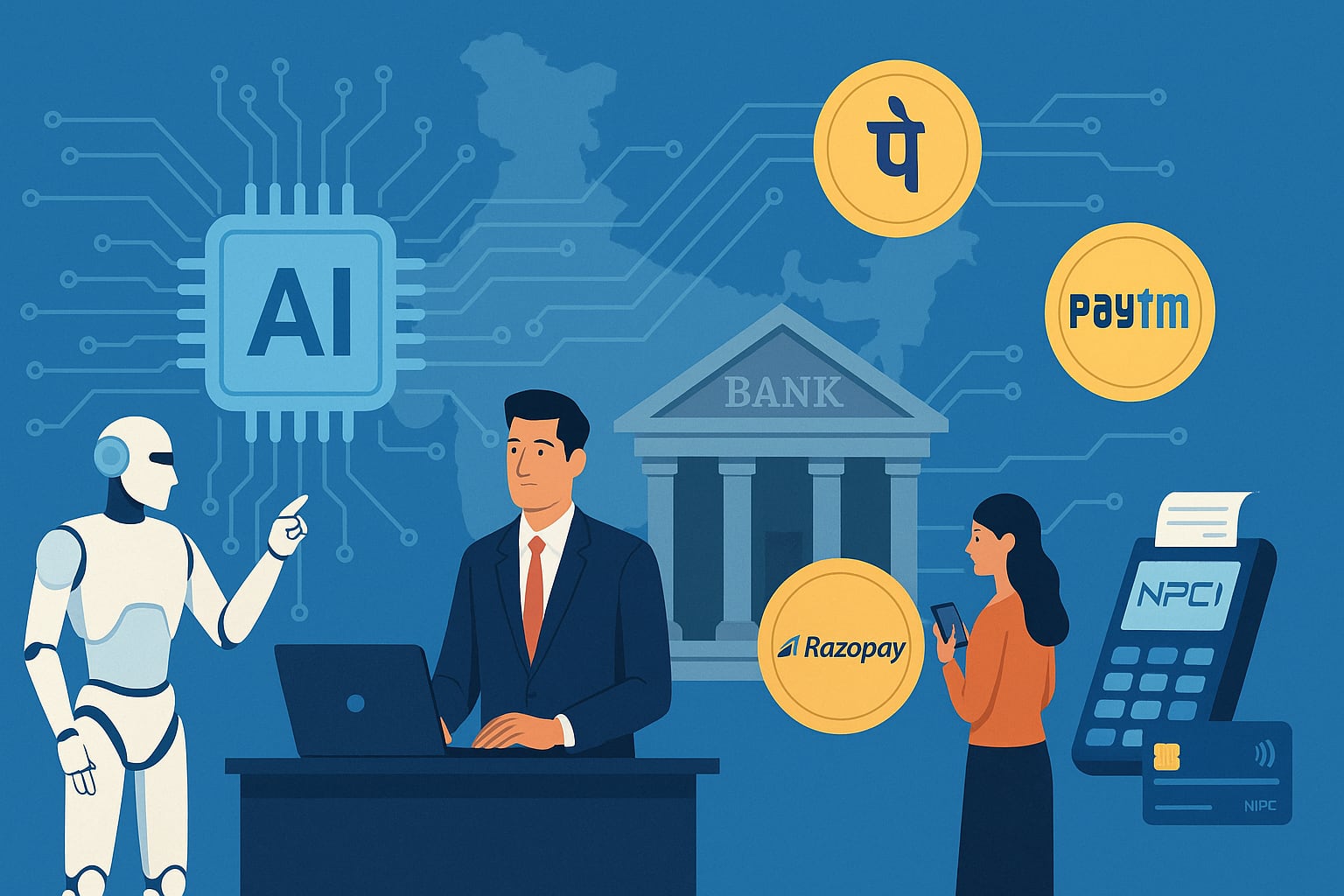
Let's be real...everyone wants to put "AI-powered" on their pitch deck right now. But here's the thing, India's fintech players are being cautious about it. And that might be the smartest move they're making. Because when you're dealing with lakhs of crores in transactions and regulators who actually read the fine print, you can't just YOLO your way into artificial intelligence. Gold rush (but on training wheels): At the recently concluded Global Fintech Fest 2025 in Mumbai, AI was everywhere. NVIDIA and the National Payments Corporation of India (NPCI) built an entire "Bharat AI Experience Zone." DCB Bank showed off multilingual AudioBots. Gnani.ai demoed AI-generated digital humans. But most of it? Still in the lab. "Everyone's talking about AI in banking, but very few are actually using it meaningfully," says Sabyasachi Goswami, CEO of Perfios. For newer fintechs, AI is a clean slate, fresh data, small teams, and quick wins. But for legacy players? Even tiny changes are painful, and ROI is a question mark. “There’s a lot of FOMO,” confessed one founder. “Last year, the RBI wasn’t excited about AI. This year, everyone wants to show they’re doing something. But it’s all very experimental.” Ganesh Gopalan of Gnani.ai hit the nail on the head. "You can wait five seconds for ChatGPT. But if your bank app takes that long to load your balance, you'll slam the phone," Gopalan said. Innovation meets regulation: The biggest blocker isn't tech...it is trust. And regulation. "AI adoption in financial services isn't about letting a thousand flowers bloom...You need a clear top-down blueprint. Random experimentation doesn't scale," explains Neetu Chitkara from BCG. Sahil Kini, CEO of RBI Innovation Hub (RBIH), agrees. "Anyone building AI in fintech without reading the RBI's AI report is doing themselves a massive disservice," Kini said.  The report lays out seven key principles, including trust, people-first design, and explainability, which together form the textbook for responsible AI. Which basically means: innovate fast, but crash the regulator's party and you're done. Cost-cutter, yes, but not a cash cow (yet): Right now, most fintechs are using AI as a back-office upgrade. Automating calls. Writing memos. Summarising data. Useful? Sure. Revolutionary? Not so much. A few companies are using AI for smarter recommendations or voice assistants to improve customer engagement. An even smaller number are creating completely new products powered by AI. “The next frontier,” says Chitkara of BCG, “is when AI helps firms cross-sell smarter or build entirely new digital offerings.” Big players are making moves: While most test the waters, some are diving in headfirst. Paytm recently unveiled an AI-powered POS that talks to merchants in local languages.  "Every founder needs one teammate; this AI will be that,” Vijay Shekhar Sharma said. Razorpay, NPCI, and OpenAI are taking it to the next level. Agentic Payments inside ChatGPT. Imagine searching for products, comparing prices, and paying via UPI, all without leaving the chat. Investors are paying attention: Z47's Vikram Vaidyanathan says a third of the firm's new investments are in AI-led fintechs. "Earlier, trust came from a bank branch. Today, phenomenal digital experiences build trust." TVS Capital’s Gopal Srinivasan sees AI as “a democratising force,” with value in the foundational tools, the “picks and shovels,” that power financial innovation. The long game: AI won't flip India's fintech world overnight. It'll creep in through credit models, fraud detection, voice bots, smarter risk scoring, quietly, deliberately, and always with one eye on compliance. While global tech sprints toward AGI and sentient chatbots, India's fintech ecosystem is running a marathon. Because in finance, slow and sure doesn't just win the race, it keeps you in business. Read the full story Was this newsletter forwarded to you? You can sign up for the AI Edge here

Why Quantum and AI together are a cybersecurity nightmare

Why Quantum and AI together are a cybersecurity nightmare

Remember when we thought AI-powered cyber threat detection was the endgame? Turns out, we were bringing a neural network to a quantum fight.  While enterprises are busy deploying AI to catch hackers faster, a much scarier arms race is brewing in the background, one where quantum computing could crack every encryption standard we rely on and AI might be the accelerant that makes it all happen sooner than we think. The exponential collision no one is ready for: “Think of it as two exponential technologies colliding,” Saugat Sindhu, Global Head of Advisory Services in Cybersecurity & Risk Services at Wipro, told us. “The intersection of Generative AI (Gen AI) and quantum computing will be tenfold more dangerous because of the processing power quantum brings.” Translation: AI makes attacks smarter. Quantum makes them unstoppable. Together? They're rewriting the entire playbook The first thing to break? Encryption, the mathematical lock protecting your bank account, your government's secrets, and basically everything that happens online. The wake-up call: Wipro's latest cybersecurity report doesn't mince words: 75% of enterprises lack the expertise to defend against AI-led attacks, while 86% of recent breaches involved nation-state actors. Sindhu says the fix requires a two-front war.  "It's a two-pronged model involving infrastructure hardening around post-quantum encryption and AI model hardening against adversarial attacks like evasion and data poisoning," he explained.  In other words, you need to quantum-proof your systems and teach your AI not to get fooled. VCs smell opportunity: Where there's existential risk, there's venture capital. Accel's Prayank Swaroop sees this as a greenfield moment for founders.  "If quantum becomes real, existing cybersecurity solutions will fail…That again gives a large surface area for Indian founders to go after. Some founders should start investing time and energy toward it," Swaroop told us. The message is clear: if you're building in security, now's the time to get quantum-serious. Enter Agentic AI: Coforge's Chief Technology Officer Vic Gupta is betting on "opinionated intelligence" as the next line of defence.  "Agentic AI will be central to cyber defence in the coming years," he said. "Our goal is to ensure AI can autonomously detect, respond, and remediate without losing control of its boundaries." But here's the catch: autonomy cuts both ways. Global tech research firm Forrester predicts at least one major public breach caused by Agentic AI within two years, as autonomous systems begin making real-time decisions in production. Security teams, it warns, must secure AI intent and track data origin to avoid cascading failures. Quantum rewrites the rules: Forrester expects quantum-safe spending to exceed 5% of global IT security budgets by 2026.  Governments are moving fast, the US and EU are funding quantum migration programmes, while India is studying its impact on data sovereignty and defence systems The clock is ticking. Even if large-scale quantum computers are years away, the data being stolen today could be decrypted tomorrow once quantum arrives. It's called "harvest now, decrypt later," and it's already happening. The automation paradox: Gartner's Cybersecurity and Risk Outlook 2026 highlights the irony: AI will make systems smarter and faster, but overreliance on automation without human oversight could create new systemic risks. As Sindhu put it: “Threat modelling must now extend beyond networks and data to AI systems themselves.”   The bottom line: The future of cybersecurity will not be code versus code. It will be compute versus compute. Quantum may break encryption, but AI will decide who holds the master key. Dig deeper Was this newsletter forwarded to you? You can sign up for the AI Edge here

Powering India’s AI Mission: The energy question

Powering India’s AI Mission: The energy question

Here's the thing about training world-class AI models: they're incredibly thirsty. Not for data, well, yes for data, but for electricity. India just got a front-row seat to this reality when Google dropped $15 billion on an AI hub in Visakhapatnam. It's Google's biggest investment outside the US, and it's about to stress-test everything we thought we knew about India's energy infrastructure. Clusters, GPUs, and training runs: India's IndiaAI Mission isn't playing small. The initiative has already deployed over 38,000 GPUs across national compute clusters, exceeding its original 10,000-GPU target. For context, training something like GPT-4 ate up around 50 gigawatt-hours in a single run  India's taking a different approach, distributing compute across multiple clusters. “If GPT-4 training consumed ~50 GWh in one continuous run, then each India AI GPU cluster training a similar model may consume 30–70 GWh (including overheads). Ten such clusters would amount to ~300–700 GWh annually, but since they run episodically (weeks or months), the average load shall be much lower, and with intelligent scheduling tied to renewables, the energy burden shall be manageable,” Sunil Gupta, co-founder and CEO of Yotta Data Services told us. AI workloads currently represent less than 10% of India's total data centre power use. But they're doubling every 12–18 months, Gupta added. How hungry is AI, really?: By 2030, India's data centre load is expected to jump from 1.2 GW today to 4.5 GW. AI-driven facilities alone could add another 40–50 terawatt-hours annually.  To put that in perspective: a typical AI data centre uses as much electricity as 100,000 households. The biggest ones under construction? Try 20 times that. As of July 2025, India's total installed capacity stood at 490 GW. Fossil fuels account for 49.7%, non-fossil sources 50.3%. The country hit its 50% renewable target five years ahead of schedule, but the AI boom is about to test that achievement hard. Electricity is only half the battle. AI workloads generate 70–150 kilowatts of heat per rack—far beyond what traditional data centre cooling can handle. And in a water-stressed country like India, the conventional solution (more water cooling) isn't really an option. India’s data centre landscape: India now has 268 operational data centres, ranking eighth globally. But the real action is in the pipeline: Reliance Industries: Building a 3 GW AI facility in Jamnagar, Gujarat, among the world's largest Tata Consultancy Services: Planning 1 GW of AI-grade capacity over 5-7 years OpenAI: Reportedly exploring partnerships with Indian data centre firms to localise its $500 billion Stargate project Andhra Pradesh's pitch: No state is betting harder on AI infrastructure than Andhra Pradesh. State IT Minister Nara Lokesh sees cheap renewable energy and surplus Godavari water as strategic advantages. “We've promoted renewable energies at a big scale. At a gigawatt scale, we've signed with Tatas, we've signed with Renew. GreenCo is a homegrown company and it's not just about solar and wind. We are also doing PSP pump storage projects. We are implementing battery energy storage systems, and there's always going to be a base load that has to come from thermal power,” Lokesh told us in an interview. While several countries have curbed new data centre developments due to resource constraints, Lokesh argued that India should take a different approach.  Lokesh's pitch? Split the grid. Create dedicated renewable-powered infrastructure for data centres  Green money enters the chat: Investors, too, are starting to pay attention to sustainable AI infrastructure. Vasudha Madhavan, founder of Ostara Advisors, says green capital is beginning to flow into AI infrastructure “Investors increasingly recognise that AI’s significant energy and water demands create both a challenge and an opportunity for sustainable innovation," Madhavan said. The bottom line: India's sovereign AI ambitions aren't slowing down. They can't. As Gupta of Yotta put it: “India’s sovereign AI ambition is non-negotiable. But sovereignty must go hand-in-hand with sustainability.” Check out the full story Was this newsletter forwarded to you? You can sign up for the AI Edge here

Your AI Edge Starts Here

Subscribe to read the complete newsletter and get weekly AI insights delivered to your inbox.

Advisory Alert: It has come to our attention that certain individuals are representing themselves as affiliates of Moneycontrol and soliciting funds on the false promise of assured returns on their investments. We wish to reiterate that Moneycontrol does not solicit funds from investors and neither does it promise any assured returns. In case you are approached by anyone making such claims, please write to us at grievanceofficer@nw18.com or call on 02268882347