-
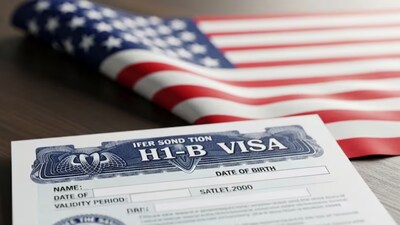
Lives on hold: How H-1B holders stuck in India are navigating legal chaos as US government postpones renewal timelines
While the intent is to streamline the system and curb H-1B abuse, the execution has disproportionately affected legally employed workers with established careers in the US, said experts.
-

Indian H-1B holders stranded after US cancels interviews: What has caused the ‘biggest mess’ in visa renewals this winter
Visa interviews scheduled between December 15 and December 26 were abruptly cancelled across multiple US missions in India. Many applicants later discovered that their rescheduled appointments had been pushed to mid-2026, with some cases reportedly moved as far as 2027.
-
Hundreds of Indian H-1B holders are 'stuck' in India this winter: Why December has become a nightmare for visa renewals
Interviews scheduled between December 15 and December 26 were cancelled or deferred with little warning, leaving applicants stranded after their visas expired.
-
Apply early, expect delays: What’s behind US Embassy’s latest caution on H-1B and H-4 visa delays | Explained
The advisory follows a decision by the United States last week to widen social media and online presence checks for all H-1B and H-4 visa applicants worldwide.
-
‘Fake degrees, forged papers’: Why an Indian-origin US Ddiplomat wants H-1B visas paused
Siddiqui’s comments come amid a broader shift in US H-1B policy that has created uncertainty for applicants and holders.
-
US pushes H-1B and H-4 visa interviews to late 2026: What's behind the move and what Indian applicants can expect
The latest disruptions come after a series of visa-related challenges for Indians. Earlier this year, delays in F-1 student visa processing affected college admission timelines. More recently, proposals to raise work visa fees unsettled the H-1B community.
-
H-1B visa scam: Indian-origin US diplomat warns of widespread fraud, urges pause on new issuance
US diplomat Mahvash Siddiqui exposes widespread H-1B visa fraud in Chennai, urging a pause on new issuances, stricter vetting, and prioritisation of American STEM graduates to curb nepotism and fraud.
-
H-1B visas being ‘prudentially revoked’: Why US is doing this and why Indians are worried | Explained
The move comes at a time when Washington is tightening visa screening, delaying interviews, and expanding social media vetting for visitors and workers.
-
Sudden US move pushes H-1B interviews to 2026: Why travelling to India could cost visa holders their jobs | Explained
Immigration attorneys have warned that travelling at this time could cost many workers their jobs because most US companies cannot legally allow long periods of remote work from outside the country.
-
H-1B visa applicants asked to reschedule appointments as social media vetting begins from Dec 15: How will new checks affect wait times?
The cancellations appear linked to the rollout of the updated vetting system, which requires consular officers to examine applicants’ online activity before approving their visas.
-
IT staffing firm under fire for excluding US workers, hiring only H-1B visa holders
LanceSoft, an IT staffing firm, faced backlash after a job posting restricted applications to H-1B visa holders, excluding US citizens and green card holders, raising discrimination concerns, reported Washington Free Beacon.
-
H-1B programme has 'deviated from its intent', now filled with 'average workers': Ex-US official slams big tech over H-1B use
His remarks follow similar claims last week by former Congressman Dave Brat and former diplomat Mahvash Siddiqui, who alleged widespread fraud within the programme.
-
H-1B visa under fire: Heritage Foundation flags corruption and calls for H-4 work ban
A conservative think tank urges sweeping H-1B reforms, alleging widespread fraud and displacement of US workers, as the administration debates fees, caps and whether the worker programme be scaled back.
-
Trump's 'Project Firewall' marks a turning point for H-1B visas: Why it's causing anxiety among Indians working in US
The move comes at a time of heated political debate over immigration and jobs. The Trump team has repeatedly argued that American workers should not be displaced by cheaper foreign labour.
-
220,000 H-1B visas from one Indian hub: How Indian-American Mahvash Siddiqui flagged fraud in the system
According to Siddiqui, many applications were supported by fake qualifications, forged paperwork or applicants who did not meet the skill level required for specialised roles.
-
Indian-origin US professor says firms prefer H-1B workers as they are 'cheaper, controllable’
While acknowledging that some highly skilled individuals do enter the US through H-1B visa programme, political science professor Dr Ron Hira argued that many roles filled by visa holders could be handled by American workers.
-
IITs see opportunity in Trump’s H-1B curbs
For decades, graduates of the IITs — which accept fewer than 2% of those who apply — have flocked to the US to work in lucrative sectors from finance to technology.
-
Indian techie sues US employer over forced labour, caste bias; calls H-1B visa exploitation a ‘Squid Game’
Vallabhaneni claims that his earnings were so inconsistent that he could not afford rent or basic medical care. The lapse in health insurance left him and his wife without treatment, even when he suffered a severe leg injury.
-
Nikki Haley’s son Nalin says end H-1B visas, stop immigration: ‘Americans deserve jobs first’
Nalin’s stance sharply contrasts with that of his mother, Nikki Haley, who has repeatedly defended legal and merit-based immigration as essential to the American story.
-
H-1B visa curbs lift subcontracting costs for Indian IT firms; Infosys sees steepest rise
Beyond tightening H-1B visa rules, demand uncertainties are also driving IT firms to focus on short-term contractors rather than hiring full-time employees.
-
H-1B visa hopefuls are being shut out of jobs by wary recruiters
The complications have intensified since the Trump administration introduced a sweeping overhaul of the H-1B visa program in September, including a new $100,000 application fee for employers seeking to sponsor skilled foreign workers,
-
US revoked 80,000 visas this year: What it means for Indian students and workers | Explained
The move reflects a sweeping effort by the Trump administration to crack down on foreigners who flout US laws or are deemed a risk to national security.
-
Raghuram Rajan warns US HIRE Act poses bigger risk to India than H-1B visa fee hike
Rajan said the HIRE Act could extend tariffs beyond goods to include outsourced services, directly hitting India’s information technology and services exports.
-
US resumes H-1B and Green Card application processing: What Indian applicants should know | Explained
The resumption marks a crucial relief for industries such as technology, healthcare, and education, which rely heavily on skilled overseas professionals, especially those from India.
-
‘American dream stolen’: Trump administration targets H-1B visa ‘abuse’, cites Indian tech workers
The Trump administration’s Labour Department launched a new campaign and Project Firewall initiative accusing firms of abusing H-1B visas, highlighting India’s dominance and pledging to prioritise American workers.