-
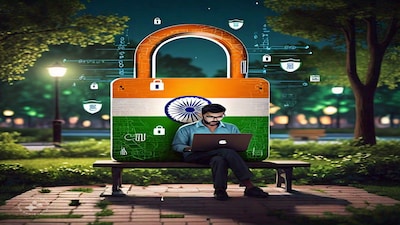
New data protection rules pose compliance and operational hurdles for fintech startups
The new regulations may increase operational costs, slow innovation and would particularly affect smaller firms in the fintech sector, feel most experts
-

India’s Data Localisation for Payment Systems: Origins, evolution, and the road ahead
The author argues that these regulations need to be examined, with a proper assessment of the consistency of the standards they mandate, including any potential ambiguities
-
India can unlock its potential by using data nationalism, localisation, and sovereignty effectively
The society and government would have to work together to protect India’s data sovereignty, and the sooner we start, the better it would be for national interest as well as our individual data protection
-
MeitY looks to set up National Government Cloud to store sensitive govt, defence data locally
The government will establish a network of hyper scale data centres, which are massive facilities built by companies with vast data processing and storage needs, to create the National Government Cloud.
-
Data localisation is no panacea
India’s Data Protection Bill is designed to allow the government to get its hands on any data it demands without any problems
-
Legislations that restrict cross-border data, storage of data outside countries a concern: Google
India is considering a data protection Bill that mandates Big Tech to store a copy of sensitive personal data within the country. Google’s Chief Privacy Officer Keith Enright says such requirements could create impediments to the way the Internet operates.
-
G7 countries reach breakthrough on digital trade principles, mark concern over data localisation, encryption
"We should address unjustified obstacles to cross-border data flows, while continuing to address privacy, data protection, the protection of intellectual property rights, and security," the communique issued following the G7 trade ministers' meeting said.
-
Is data localisation the leverage India needs to regulate Big Tech?
India does not still have a personal data protection law. So, it is an opportunity to craft something strong, durable and all-encompassing, and something that places national interest above anything else
-
Osaka G20 | All issues in India-US ties are solvable
The biggest problem is a lack of transmission of institutional knowledge and a severe capacity deficit on the Indian side, which is sought to be masked by over-the-top petulance and jargon like ‘strategic autonomy’
-
Policy | Data localisation determines taxes, sovereign rights
The RBI and commerce ministry together with tax authorities and technology experts must define the data localisation issue.
-
RBI to examine concerns over data localisation rule: Govt
The Reserve Bank of India (RBI) in April last year asked payment firms to ensure their data are stored exclusively on local servers, setting a tight six-month deadline for compliance.
-
Commerce and industry minister Piyush Goyal meets industry stakeholders on e-commerce and data localisation
The other areas of discussion also included threats from foreign competition and the need for a level playing field and impact of anti-competitive practices like predatory pricing.
-
Reporter's Take | WhatsApp may comply with RBI’s local data storage norms
M Saraswathy gets in a conversation with Moneycontrol's Vaibhavi Khanwalkar to find out more about the development.
-
Powering India’s AI push through sensible data localisation
India, with its population, massively used infrastructure, mobiles, e-commerce and now smartcities has humongous DATA volumes.
-
SEBI may ask foreign brokers to store data locally: Report
The regulator fears that access to such data could be blocked by another country in the event of a data war
-
Opinion | Data colonisation, not data localisation, is the real challenge
To set better privacy standards, and achieve 'data democracy', Indian leaders will have to acquire real insights, and technological vision, in taming foreign data mercenaries, and in stopping an indigenous one from emerging
-
Opinion | In 2019, a digital India can be made a safer India
As India gets digitised, there is an urgent need for it to be made digitally safe as well. In this regard, some of the developments in 2018 need to be analysed and modified in 2019
-
India income of Visa, Mastercard, American Express may attract 15% tax: Report
Most major payment companies have already started looking at ways to deal with the likely tax implication, the report said
-
Explained: What is data localisation?
Watch the video to know what is data localisation.
-
Macro@Moneycontrol I RBI's data localisation mandate
Moneycontrol’s Sakshi Batra in conversation with Gaurav Choudhury, Deputy Executive Editor, Moneycontrol finds out what could be the implications on companies that have missed the RBI deadline.
-
Data localisation policy will adversely impact US businesses in India: Senators
Data localisation is an act of storing data on any device that is physically present within the borders of a particular country where the data was generated
-
Editor's Take | RBI directive on data localisation
Sakshi Batra is in conversation with Gaurav Choudhury, Deputy Executive Editor, Moneycontrol, to find out which companies will be hit the hardest by the RBI's data-localisation push.
-
Opinion| Why data localisation regulations are hastily thought out
While the ink has yet to dry on the final legislation, it appears that the government in this case appears to have perhaps acted hastily in creating the localisation provisions.
-
Opinion | Who will blink first in the data localisation debate?
If the October 15 deadline passes without an agreement between the RBI and global payment companies on storage of payment data locally, credit cards and debit cards could be taken offline in a way that might be reminiscent of demonetisation
-
EXCLUSIVE | RBI wants IT ministry to make Google Pay store Indian data on local servers
Last Sunday, a letter written by Google chief executive officer Sundar Pichai surfaced in the media in which he called for 'free flow of data across borders'