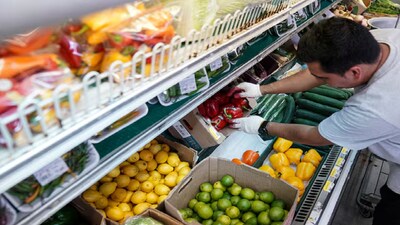
The narrowing of the gap is largely attributable to changes in the weight assigned to food items in the CPI basket
First inflation reading under revised 2024-base series reflects lower food weight and broader consumption basket
Traders expect the rupee to trade between 90.40 and 90.95 in the near term
A key adjustment is the relocation of cooked meals and snacks from the food category to a new restaurants and cafés services subgroup
A key factor is the relatively high weight of non-food expenditure in Kerala’s inflation basket. At roughly 66%, non-food items account for a larger share than in most states
The revised basket also reflects the growing importance of services, discretionary consumption and urban lifestyles, with the weight rising to 30% from 23% earlier
The RBI targets a 4 percent headline inflation rate within a tolerance band of 2 percent to 6 percent.
The weight of food and beverages in the headline index will decline sharply to 36.8 percent from 45.9 percent in the current 2012-based series
A key change in the new CPI series is a sharp reduction in the weight of food and beverages to 36.75 percent from 45.86 percent in the current 2012-based series
While inflation has remained below 2 percent for four consecutive months, not all items have been witnessing a decline
At 2.2%, the 2025 average is the lowest in 12 years. It is the final CPI print under the 2012 base year. Starting January reading (to be released on February 12), the CPI series will shift to a new 2024 base
With food prices easing and GST cuts filtering through, headline inflation averages just 1.8% till November
October marks lowest reading in current series since 2013; RBI trims FY26 inflation forecast to 2.6%
July retail inflation revised to 1.61%
Lower-than-expected revenue loss from the GST rate rationalisation and some scope for interest rate cut could be favourable factors
Moneycontrol had earlier reported that the ministry was considering a four-year revision cycle
Suravaram Sudhakar Reddy, who was 83, is survived by his wife, BV Vijayalakshmi, and two sons – Nikhil Reddy and Kapil Reddy.
India’s retail inflation eased to 1.6 percent in July, the lowest in over eight years, prompting economists to cut FY26 CPI forecasts below the RBI’s estimate.
This is because the weight of food in the CPI basket is likely to come down; therefore, the RBI may continue to target headline inflation, with a mandate of keeping the rate at 4 percent along with a tolerance band of 2 percentage points on either side. The current framework is valid until March 2026.
While the cooling inflation trend strengthens the case for easing, sticky core inflation and cautious growth outlook may slow the RBI’s pace of rate cuts.
The decline in food inflation tracks the trajectory of wholesale prices, which dipped to a near two years low of -0.13 percent in June, as food inflation eased further in June
The updated index will offer granular inflation trends by product and region, including rural-urban splits
May marks the fourth consecutive month that inflation has remained below 4 percent
The change is expected to improve the accuracy and robustness of CPI estimates, particularly in light of the increasing complexity of electricity billing structures across states
The new index, replacing the decade-old inflation measure, is expected to launch in Q1 FY26