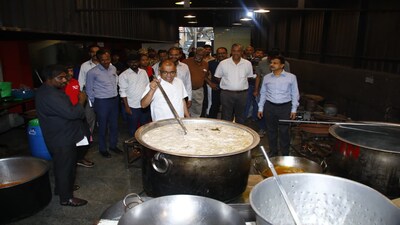
Greater Bengaluru Authority to expand biomethanisation plants across city corporations; gas may also be supplied to households
Uttar Pradesh government will soon send its proposal to the Centre for participating in the electric vehicle (EV) charging infrastructure plan under the PM E-Drive scheme.
India's SATAT scheme, launched six years ago, aims to promote compressed biogas (CBG) as a sustainable fuel alternative. Although the government set a target to establish 5,000 CBG plants by FY 2023-24, only 72 have been commissioned due to the COVID-19 pandemic and limited investor interest. To boost biomass collection, Finance Minister Sitharaman announced financial assistance, allocating Rs 564 crore for biomass machinery from FY24 to FY27. Additionally, starting FY26, a mandatory 1% blending of CBG with CNG will be implemented, which will be increased to 5% by FY29, supporting India’s goal of becoming a net-zero emissions nation by 2070.
The initiative helps in reducing dependence on imported fuel, creating jobs in the alternative fuels industry and reduces of carbon emissions and pollutants from burning of agriculture waste.
Indian oil majors are pivoting towards biofuels like CBG to enhance energy security, reduce greenhouse gas emissions, and achieve net-zero goals.
New Delhi, Apr 21 Indian Biogas Association (IBA) has partnered with Hydrogen Association of India (HAI) to promote bio-based energy solutions with ..
The government is looking at technologies from Germany to process feedstock such as paddy straw and municipal solid waste, said Gaurav Kedia, Chairman of Indian Biogas Association (IBA).
In November 2023, the Indian government announced mandatory blending of compressed biogas in CNG and PNG in a phased manner to promote consumption of biogas in the country.
The government also plans to have 1 per cent sustainable aviation fuel (SAF) in aircraft turbine fuel by 2027, doubling to 2 per cent in 2028.
The association said investments worth Rs 2,755 crore were struck during the Renewable Energy India Expo 2023, double over the last year.
From utilising agro and organic waste to produce biogas and organic fertilisers alongside reducing carbon emissions, the biogas industry is environment friendly and adds value to the economy. The biogas sector hopes big ticket investments will smoothen supply chains, policies, and project clearances for everyone
India has committed to reducing the emission intensity of its GDP (emissions relative to GDP) by 45 percent by 2030 from the 2005 level. It also aims to achieve net zero by 2070
An effort to enable its datacentres to be less reliant on the traditional power grid.