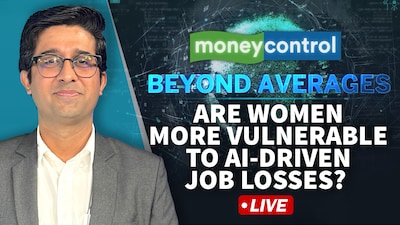
In July, Tata Consultancy Services — one of India’s largest IT firms — shocked the market by laying off over 12,000 employees in response to skill mismatches in an evolving AI landscape. While the gender breakdown of those job cuts remains unknown, a recent United Nations report warns that women globally face disproportionately higher risk from AI and automation: 28 % of women’s jobs are considered vulnerable, compared with 21 % of men’s. In India, where women are already underrepresented in tech and higher-skilled roles, the AI transition could exacerbate existing inequalities. The question is: can India act to narrow the gap, or will women bear more of the fallout — much like in the pandemic years?
Around 70 percent of Indian participants compared to 35 percent of their global counterpart are willing to ask for a promotion, the report said
Many administrative roles contain repetitive tasks – such as scheduling appointments or answering and directing calls - that can be easily replicated by generative AI, the Pearson’s Skills Outlook report said.
Indian managers are 1.6x more likely to say that AI would provide value in the workplace by boosting productivity rather than cutting headcount.