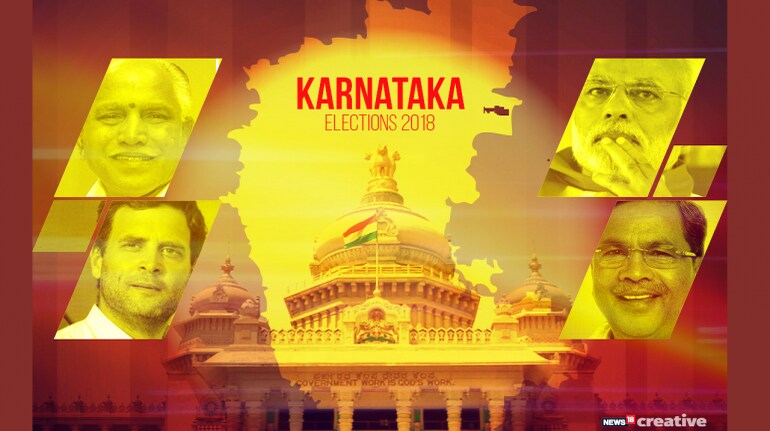
On February 16 this year, about a billion people expectantly eyed the Supreme Court, hoping that a just verdict will be pronounced on an issue that has prolonged for about a century now.
The apex court announced the final verdict on the Cauvery issue where it noted that Karnataka was more deserving than Tamil Nadu on account of acute shortage of drinking water in the city of Bengaluru and replenishable groundwater reserves in Tamil Nadu.
Hence the top court ordered that 14.75 TMC (thousand million cubic feet) of water be taken from Tamil Nadu and be given to Karnataka. The allocation for Kerala and Puducherry was kept unchanged. The Supreme Court had asked the Centre to constitute the Cauvery Management Board (referred to as CMB henceforth) to give effect to its judgement. In effect, this is what the allocation looks like:
Karnataka : 284.75 (270 + 14.75) TMC Tamil Nadu : 404.25 (419 – 14.75) TMC Kerala : 30 TMCUT of Pondicherry : 7 TMC Environmental Protection : 10 TMC Inevitable escapagaes into sea : 4 TMC Total : 740 TMCAlthough the Siddaramaiah government in Karnataka welcomed the top court’s verdict, he strongly opposed the formation of the CMB, saying the state will lose autonomy over its reservoirs in the Cauvery Basin.
Various political parties in Tamil Nadu, including Karunanidhi’s DMK, launched aggressive protests in the state’s capital first expressing their disenchantment with the verdict and also against the Centre’s delay in the formation of the CMB.
The Tamil Nadu government also filed a contempt petition against the Centre for not heeding to the March 31 deadline given by the Supreme Court for the formation of the CMB.
Attorney General KK Venugopal, in response, had attributed the delay to the absence of key parliamentarians, including Prime Minister Narendra Modi as they were busy with campaigns in poll-bound Karnataka. The Centre sought that the decision on the formation of the CMB be deferred until after assembly elections in Karnataka on May 12. The Supreme Court had then reprimanded the Centre calling the delay in the implementation of the draft scheme “sheer contempt” of its directive.
Recently, the Supreme Court had even asked the Karnataka government to release 4 TMC of water to Tamil Nadu.
It is noteworthy that even though the Supreme Court has stated the allocation in its verdict, it is CMB which is responsible for its implementation, and neither the BJP nor the Congress wants to irk its voter base in the poll-bound state.
The Cauvery essentially flows through the Old Mysuru region in southern Karnataka. The contentious river flows through Madikeri, Mandya and Mysuru. It is a bipolar fight in this part of Karnataka between the Congress and the JDS. The Old Mysuru region is dominated by Vokaliggas who form an estimated 15 percent of the state’ population. Traditionally the Vokaliggas vote for the JDS, with the party getting 14 Vokaligga seats of the 40 that it had won in the 2013 assembly elections. Congress has also been trying to make inroads into the region with Siddaramaiah trying to sell his “secular-humanist” image, asserting that he is not casteist, and particularly that he is not against upper castes. The BJP is also not leaving any stone unturned to establish a foothold in the Old Mysuru region.
Hence the contesting parties are doing their best to win the trust of the voter base, procrastinating if not refraining from taking any decision that might turn the sentiment against them.
Catch the latest news, views and analysis on Karnataka Assembly Elections 2018
Discover the latest Business News, Sensex, and Nifty updates. Obtain Personal Finance insights, tax queries, and expert opinions on Moneycontrol or download the Moneycontrol App to stay updated!
Find the best of Al News in one place, specially curated for you every weekend.
Stay on top of the latest tech trends and biggest startup news.