-
My Account









COVID-19 | All you need to understand how oxygen can be stored and transported
As India battles the tsunami that is COVID-19, oxygen is in short supply, leading to a sudden and sharp increase in death toll. We take a look at how this life-saving gas can be stored and transported to facilities where doctors are racing against time to save lives.




1/6

As India battles the tsunami that is COVID-19, oxygen is in short supply, leading to a sudden and sharp increase in death toll. We take a look at how this life-saving gas can be stored and transported to facilities where doctors are racing against time to save lives. (Image: News18 Creative)
2/6
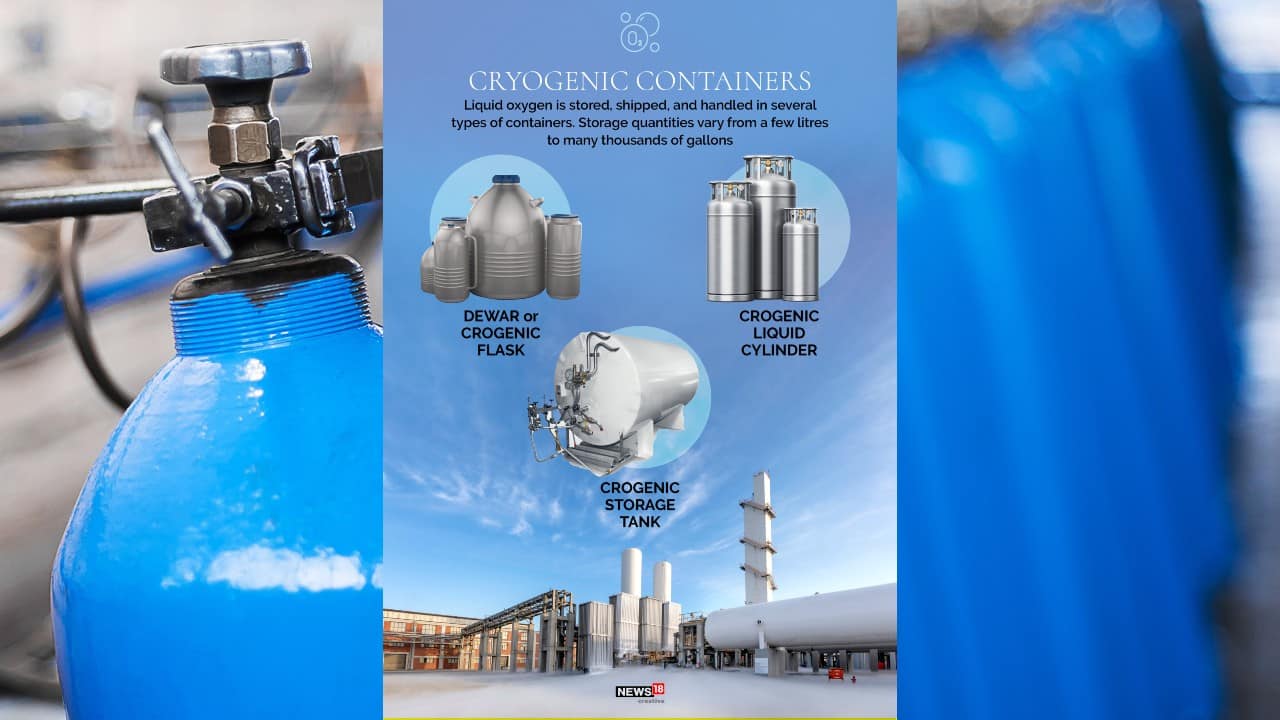
Liquid oxygen is stored, shipped and handled in several types of containers. Storage quantities vary from a few litres to many thousands of gallons. (Image: News18 Creative)
3/6
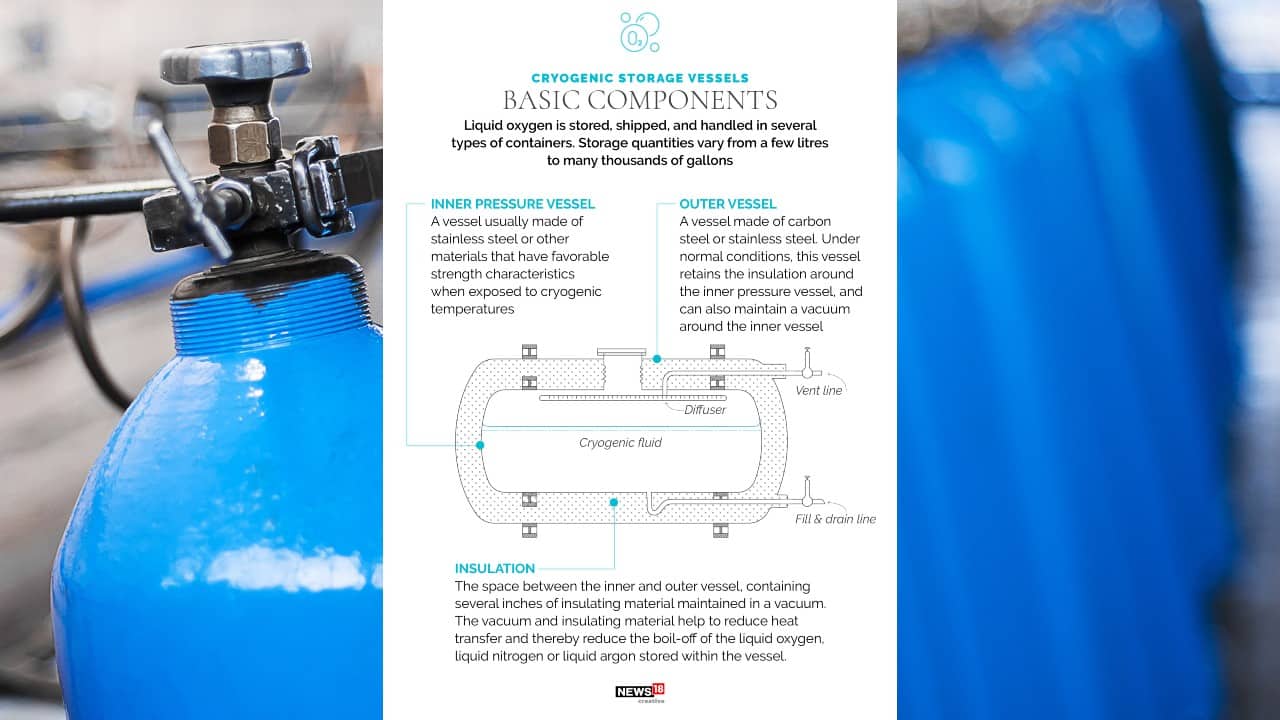
Basic components of the container are inner pressure vessel, outer vessel and insulation. Inner pressure vessel is usually made of stainless steel or other materials that have favourable strength characteristics when exposed to cryogening where as an outer vessel is a vessel made of carbon steel or stainless steel. (Image: News18 Creative)
4/6
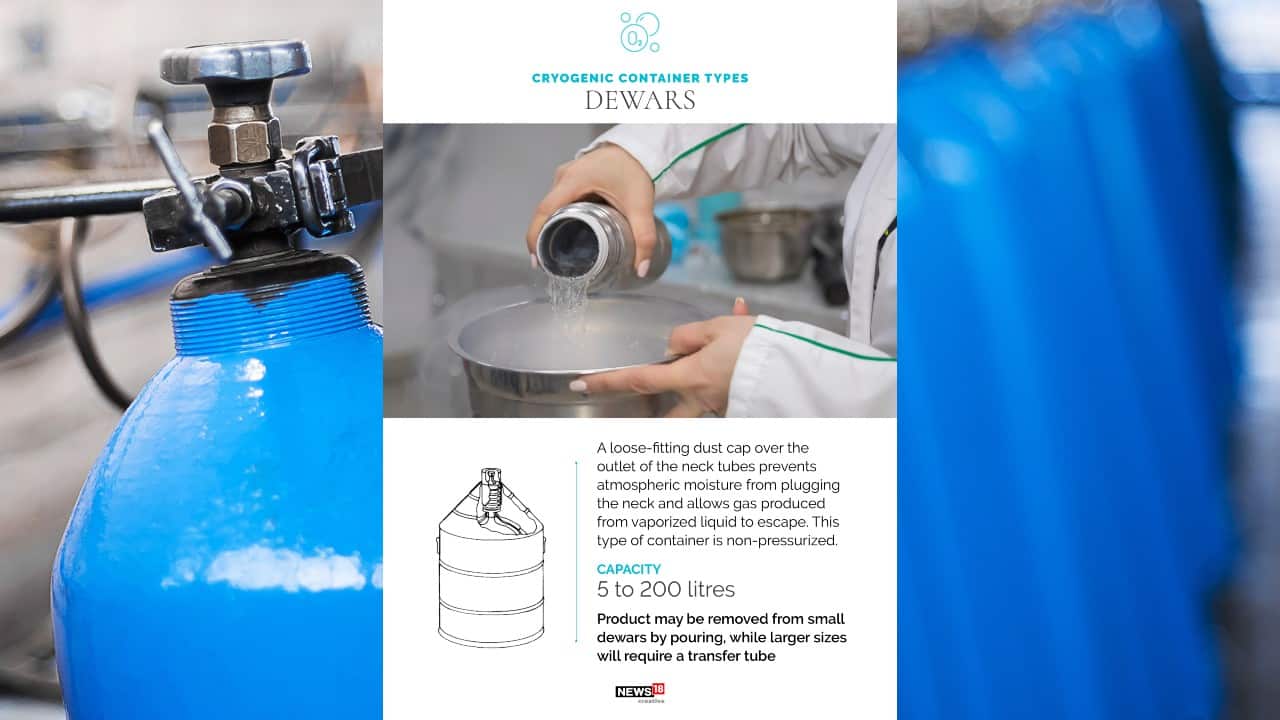
Dewars is a loose-fitting dust cap over the outlet of the neck tubes prevents atmospheric moisture from plugging the neck and allows gas produced from vaporized liquid to escape. This type of container is non-pressurized. (Image: News18 Creative)
5/6
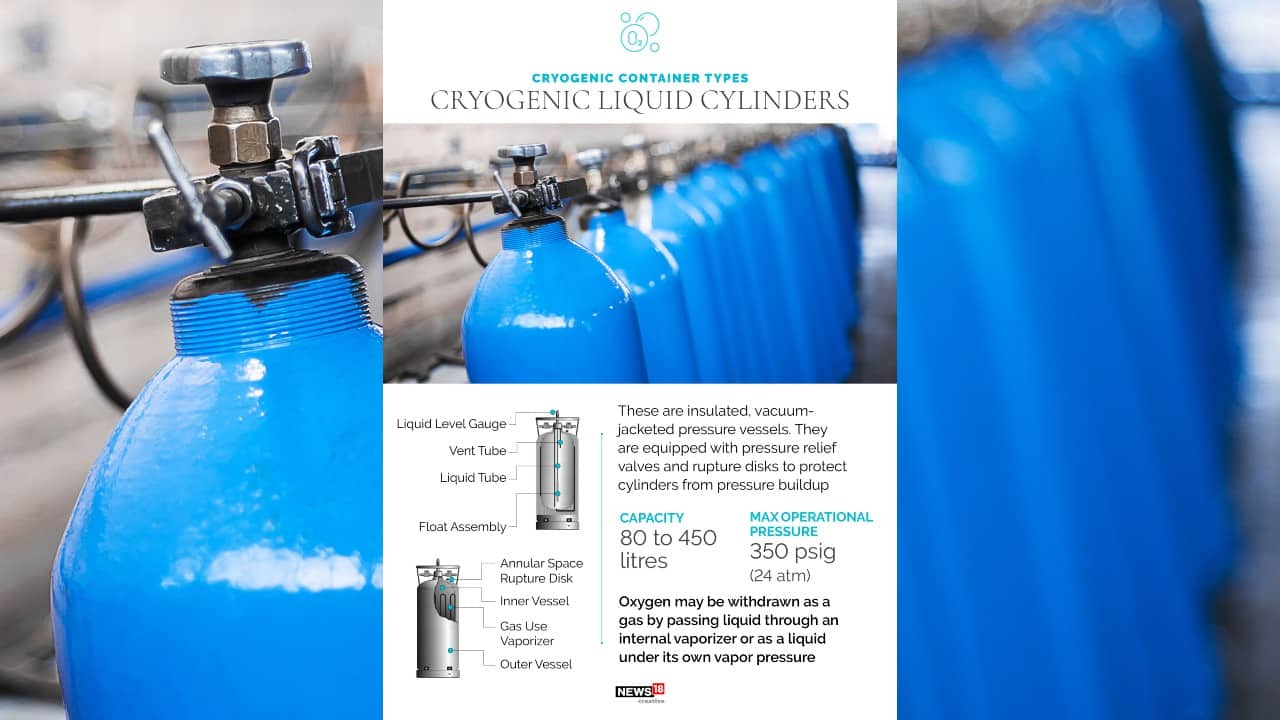
Cryogenic liquid cylinders are insulated, vacuum-jacketed pressure vessels. They are equipped with pressure relief valves and rupture disks to protect cylinders from pressure buildup. (Image: News18 Creative)
6/6
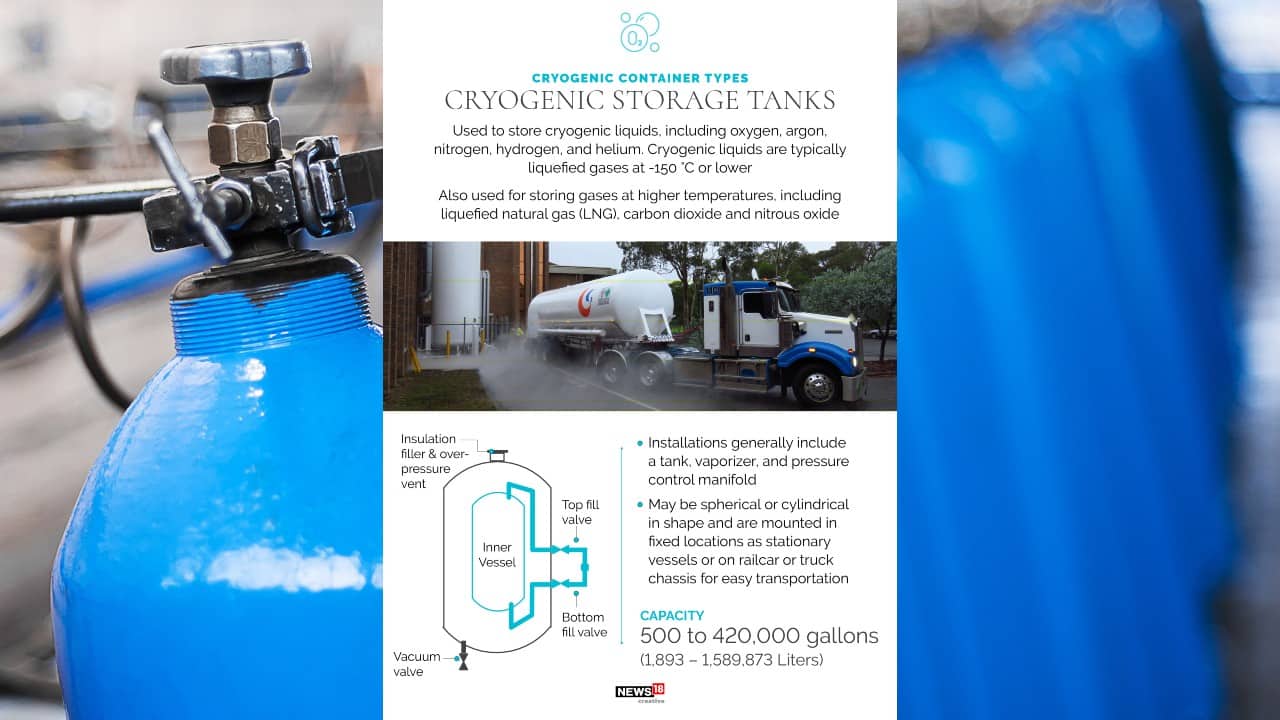
Cryogenic storage tanks are used to store cryogenic liquids, including oxygen, argon, nitrogen, hydrogen, and helium. Cryogenic liquids are typically liquefied gases at minus 150 degree celsius or lower. (Image: News18 Creative)
Discover the latest Business News, Budget 2025 News, Sensex, and Nifty updates. Obtain Personal Finance insights, tax queries, and expert opinions on Moneycontrol or download the Moneycontrol App to stay updated!



